
Recipes & Swaps
Build a High-Protein Charcuterie Board (Plant-Based)
A board that clears 60 grams of protein without cured meat or cheese. The components, the ratios and the layout.
A traditional charcuterie board is a protein delivery system that nobody thinks of as one. Cured meat and hard cheese are both protein-dense, and a decent board easily carries 60–80 g across four people.
Rebuild it plant-based and the protein tends to collapse — most vegan boards are crackers, fruit, nuts and a plant cheese that's largely starch and coconut oil. It looks generous and delivers about 15 g.
Fixing that requires knowing which plant components actually carry protein. Most don't.
The protein audit
What you'd typically put on a plant-based board, ranked by what it actually contributes:
| Component | Serving | Protein |
|---|---|---|
| Roasted edamame | 30 g | 11–13 g |
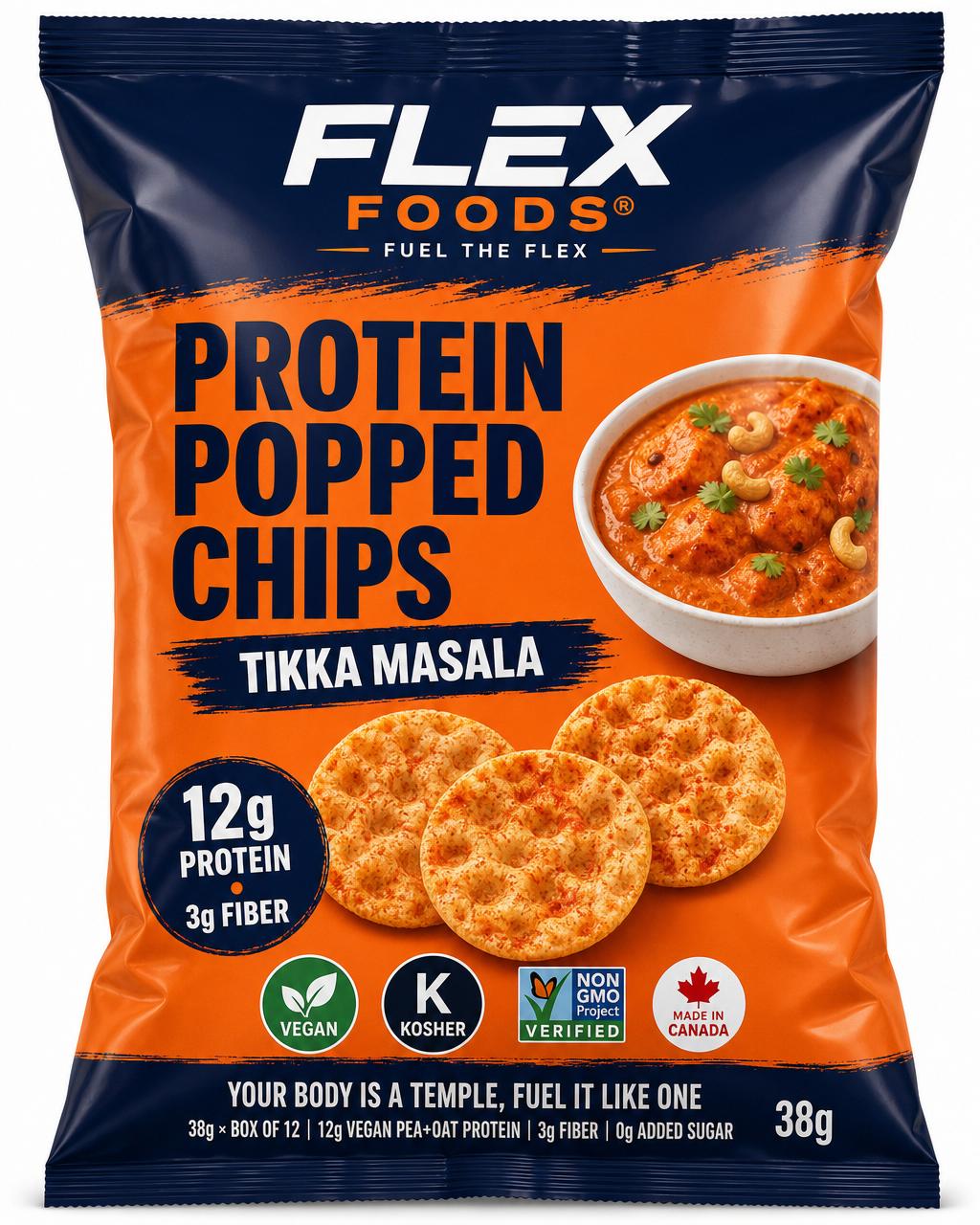
| Protein popped chips | 38 g bag | 12 g |
| Marinated tofu or smoked tofu | 100 g | 12–16 g |
| Hummus | ½ cup | 10 g |
| Roasted chickpeas | 40 g | 8 g |
| Pumpkin seeds | 30 g | 9 g |
| Almonds | 30 g | 6 g |
| Plant deli slices | 50 g | 5–9 g |
| Olives | 50 g | 1 g |
| Plant cheese (coconut/starch base) | 50 g | 1–2 g |
| Crackers | 30 g | 3 g |
| Grapes, figs, dried apricot | any | ~1 g |
Two things stand out.
Plant cheese is the trap. It occupies the most visual space, costs the most per gram, and contributes almost nothing. Most are coconut oil and potato starch. Cashew-based versions carry more — 4–6 g per 50 g — and cost more again. Use it for looks and salt, and don't count on it.
Legumes and seeds do nearly all the work. Edamame, chickpeas, hummus, tofu and pumpkin seeds. Unglamorous, and they're the whole game.
A board for four that clears 60 g
Built to hit the number without looking like a nutrition exercise.
Protein anchors — ~48 g
- Two 38 g bags of Protein Popped Chips — 24 g. Garlic & Onion and Original Sea Salt. These replace crackers, and that swap alone is a 21 g gain over the same volume of crackers.
- 100 g smoked or marinated tofu, cubed — 14 g. Buy it pre-marinated; the firm smoked blocks slice cleanly and hold up on a board.
- 60 g roasted edamame in a small bowl — 22 g. The single most protein-dense thing you can put on a board, and it eats like a bar snack.
That's 60 g before anything else. Everything below is texture, colour and pleasure.
Dips — ~14 g
- Hummus, half cup — 10 g. Swirl olive oil and paprika over it.
- Whipped white bean with lemon and black pepper, half cup — 8 g. Milder counterpoint to the hummus.
Structure and colour
- Roasted chickpeas, a handful — 8 g and the best crunch on the board
- Pumpkin seeds — 9 g and they fill gaps visually
- Olives, cornichons, quick pickled red onion — the acid, which is what stops a rich board becoming monotonous
- Cherry tomatoes, cucumber, radish, endive leaves
- Grapes, fresh figs or dried apricot — a small amount of sweetness
- Plant cheese, if you want it — for looks
Total: roughly 85–95 g of protein across the board, or 21–24 g per person for four. That's a genuine per-sitting protein dose each, from something that reads as an indulgence.
The three layout rules
Anchor first, fill later. Place the bowls — dips, edamame — before anything else, spaced across the board rather than clustered. Then the large items. Then fill gaps with small things. Boards built the other way round end up with dips crammed in a corner.
Break up the beige. This is the practical problem with plant-based boards. Chips, hummus, chickpeas, seeds, tofu and crackers are all variations on tan. Radish, cherry tomato, pickled red onion, endive and fresh herbs are doing visual work as much as culinary work — put them where the beige is worst.
Put the acid in three places. Not one dish of olives in a corner. Pickles, olives and pickled onion distributed across the board means every part of it has something sharp within reach, which is what keeps people eating past the first ten minutes.
What to do about the chips
One practical note. Popped chips are aerated and will crush under other items, so don't build on top of them. Two options that work:
Empty them into a shallow bowl or a fanned pile at the board's edge, placed last. Or leave one bag standing open at the side and refill the pile as it goes — which also solves the staleness problem on a board that sits out for two hours.
They also make a good crumb scattered over the hummus with olive oil, if you want to use the last of a bag.
Scaling and cost
Per person, roughly: half a bag of chips, 25 g tofu, 15 g edamame, a quarter cup of dip, plus vegetables and fruit.
On cost, honestly: the legumes are cheap and the packaged items aren't. If budget matters, expand the hummus, chickpeas and edamame and reduce the tofu, plant cheese and chips. You'll lose some convenience and gain protein per dollar — roasted chickpeas beat almost anything on that measure. Our post on cost per gram of protein ranks the options.
For the small weekday version of the same idea, see five two-minute snack boards.