Brand & Values
Why We Chose Pea Protein Over Whey
Whey is the better protein on several measures. We still didn't use it. Here's the full reasoning, including the trade-offs.
If you rank protein sources purely on how efficiently they build muscle per gram, whey wins. We're not going to pretend otherwise — that would be the kind of claim that makes people distrust everything else a brand says.
We built our chips on pea and oat protein anyway. Four reasons, in descending order of how much they mattered, plus an honest accounting of what we gave up.
First, what whey is actually better at
Whey protein is a by-product of cheesemaking, and it's exceptional in three specific ways.
Leucine density. Whey runs roughly 10–11% leucine, the amino acid most directly implicated in triggering muscle protein synthesis. Pea protein is around 8%. That's a real gap.
Digestibility. Whey scores at or near the top on DIAAS, the current best measure of protein quality, comfortably above single-source plant proteins.
Absorption speed. Whey is soluble and empties from the stomach fast, producing a rapid rise in circulating amino acids. Whether that speed matters much outside of specific athletic contexts is debated, but the property is real.
Anyone telling you plant protein is straightforwardly superior for hypertrophy is overstating it. The honest version is that the gap is modest, and largely closed by eating somewhat more, and by combining sources — as we work through in the pea-plus-oat amino acid story.
Reason one: whey doesn't work in a chip
The most decisive reason is boringly technical.
Whey proteins denature and gel at relatively low temperatures. Under the heat and pressure of the popping process — a sealed mould, a hard temperature spike, then instantaneous decompression — whey forms elastic gels rather than the brittle, aerated matrix a chip requires. What you get is dense and slightly rubbery.
Whey also browns aggressively. Its lactose reacts with amino groups in Maillard reactions, producing off-flavours and a scorched note at popping temperatures. Worse, those reactions can bind lysine into forms the body can't absorb, meaning some of the protein you paid for stops counting.
Pea protein isolate tolerates the process considerably better. This is not a values position — it's the reason the formulation exists at all. Most shelf-stable high-protein savoury snacks use plant isolates for exactly this reason, whatever their marketing says about it.
Reason two: allergen and tolerance reach
Milk is a priority allergen in Canada, and lactose intolerance is common — very common in some populations, with prevalence estimates above 65% globally and considerably higher among people of East Asian, West African, Indigenous and Southeast Asian descent.
Whey protein isolate is low in lactose, so it's often tolerable for people who react to milk. But a dairy-derived ingredient still triggers a mandatory allergen declaration, still excludes anyone with a milk allergy, and still rules the product out for vegans and for anyone keeping kosher who wants a pareve snack.
We also deliberately left out soy — the other obvious complete plant protein — because it's a priority allergen too. Details in the gluten-free and soy-free guide.
Pea and oat means one product covers vegan, dairy-free, soy-free and pareve simultaneously. For a snack meant to sit in a shared office cupboard or a school lunchbox, that reach is worth a modest amount of leucine.
Reason three: digestive comfort
A practical point that shows up in customer feedback more than in nutrition debates.
Dairy protein causes bloating, gas or discomfort for a meaningful share of people, primarily through lactose but also through other mechanisms. Pea protein isolate sidesteps that — and because it's wet-processed, it also has most of the gas-producing legume oligosaccharides washed out, unlike pea concentrate. That distinction is covered in isolate vs concentrate.
A snack that makes you uncomfortable is a snack you won't eat twice, and adherence is a nutrition variable people systematically undervalue.
Reason four: resource footprint
Last, and we'll keep it measured because this area attracts overclaiming.
Lifecycle assessments consistently find that plant protein sources require less land, less water and generate fewer greenhouse gas emissions per unit of protein than dairy-derived protein. The magnitude varies enormously by farming system, region and methodology, and whey's status as a cheesemaking by-product complicates the accounting — a by-product carries a share of its parent product's footprint, not the whole thing.
Peas have a further specific advantage: as legumes, they fix atmospheric nitrogen through root-nodule bacteria, reducing synthetic nitrogen fertiliser needs for themselves and often for the following crop in rotation. Prairie pea production benefits from this, and it's a genuine agronomic argument rather than a marketing one.
We'd put this fourth, not first. It's a real consideration and it wasn't the deciding one.
What we gave up
To be complete about the trade:
- Some leucine density. Around 8% versus 10–11%. Meaningful at the margins, especially for older adults, who show reduced sensitivity to a given protein dose.
- Some digestibility. Plant proteins score lower on DIAAS even after isolation.
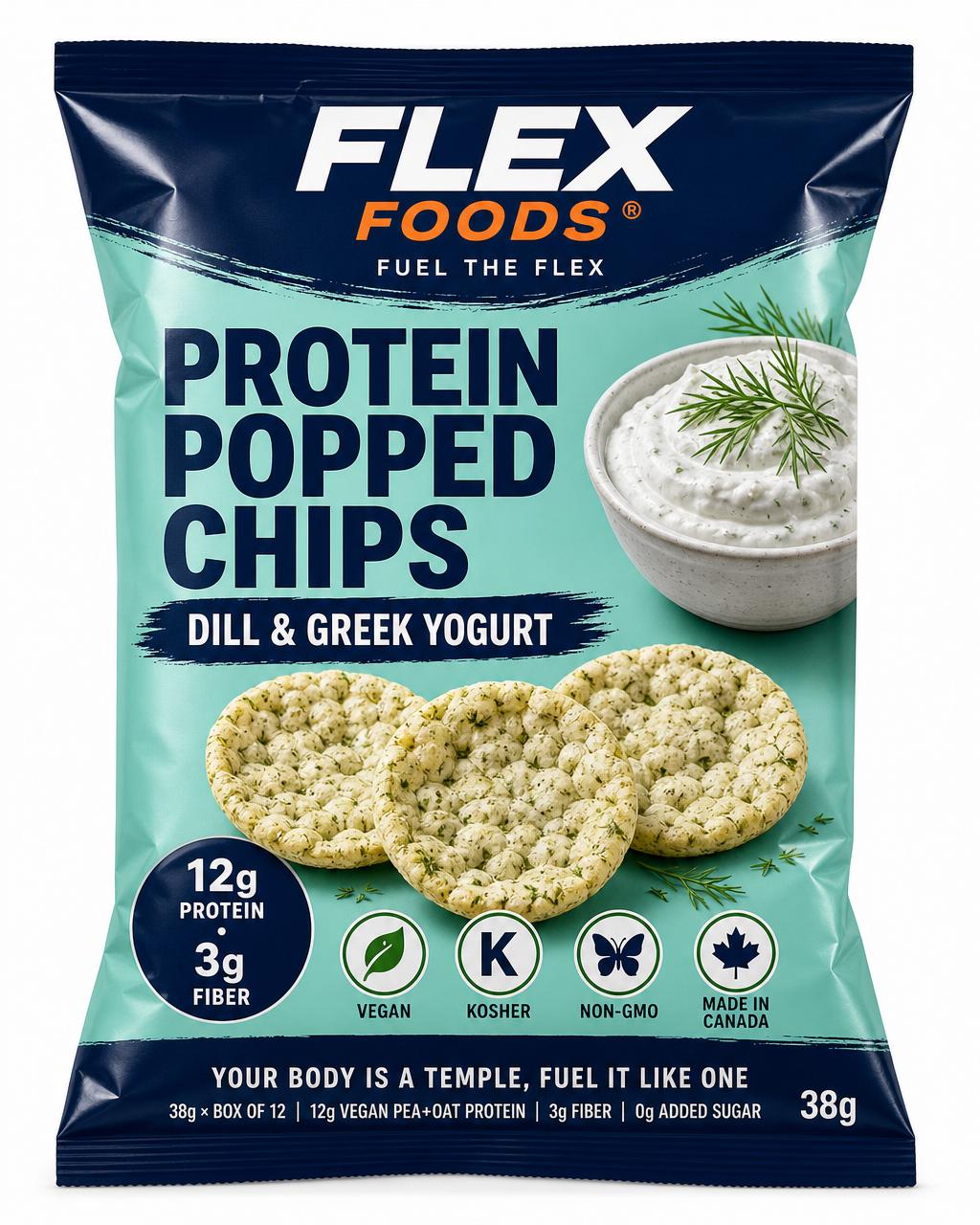
- A larger effective dose. If you're chasing a specific per-meal target, plant protein arguably needs a slightly larger serving to do the same work. Twelve grams from a bag is a contribution to a daily total, not a post-workout dose.
Our position: for a snack whose job is to add 12 g toward a daily total in a form that's shelf-stable, savoury and eatable by almost anyone, the trade is clearly worth it. For a post-workout shake where a single dose has to maximally stimulate synthesis, whey has a defensible edge and we'd say so.
Different tools, different jobs. The mistake is asking one product to be the best at everything.