Brand & Values
What We'd Change About Our Own Label
Five things on our own packaging a sceptical customer should question, written as they'd read it.
Most brand content explains why a label is good. This one goes the other way, because the useful version of label literacy is applying the same scrutiny to the product in your hand as to the competitor's.
Five real limitations on our own packaging.
1. The stability question the label can't answer
The most important one, and it's inherent to the format.
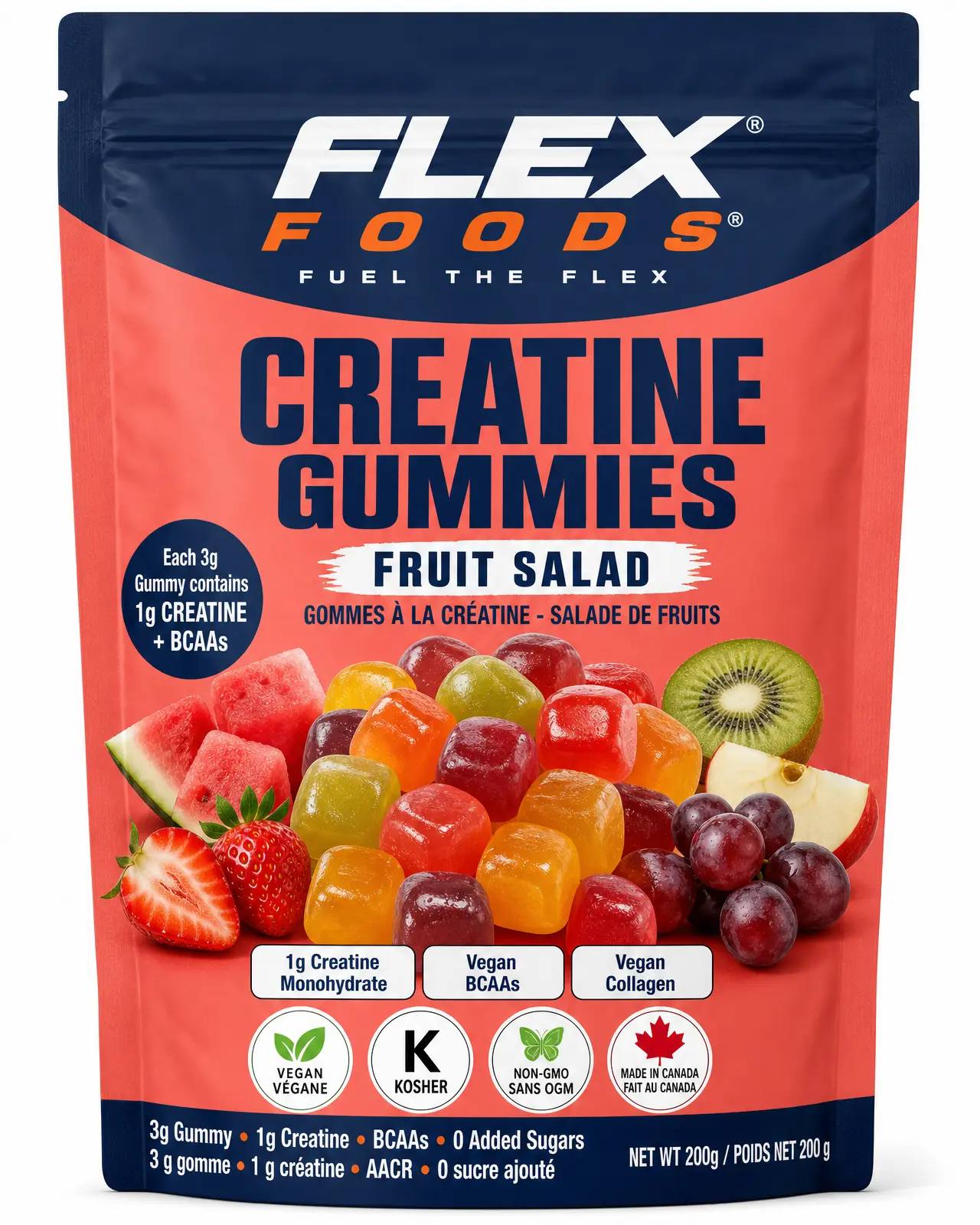
Our label declares creatine monohydrate, 1 g per gummy. That's a statement of what went in — not of what's in the pouch when you open it in month fourteen.
Creatine converts to inert creatinine in the presence of water, acid and heat. A gummy contains water and glycerin, contains citric acid, and is manufactured with heat and an extended warm cure. All three drivers are present by necessity.
Independent testing of creatine gummy products has repeatedly found substantially less creatine than declared. Some test near claim. From the outside they look identical.
What to do about it: ask us — and any brand — for a certificate of analysis showing creatine content in finished product, tested near end of shelf life, with creatinine also quantified. Raw-material testing and day-one results answer a different question. See how to check a creatine gummy.
2. Maltitol is the first non-medicinal ingredient
People read the medicinal ingredient and stop. The non-medicinal list is where the practical information often is.
Maltitol leads ours, and three gummies contain 9 g of sugar alcohols. Two consequences worth knowing:
It's the most likely cause of any digestive symptoms you experience — considerably more likely than the creatine. Polyols draw water into the intestine and are fermented by gut bacteria.
And "0 g sugars" on the panel is accurate but narrower than it sounds. Maltitol is partially digested to glucose with a glycemic index commonly cited between 35 and 52. It is not glycemically inert. See the maltitol post.
If you have IBS or follow a low-FODMAP protocol, polyols are a known trigger category.
3. Our serving is the bottom of the dose range
Three gummies delivers 3 g of creatine. The commonly cited maintenance range is 3–5 g.
That will saturate your muscle stores and hold them — more slowly than 5 g would, and less generously if you're a larger person. A weight-adjusted figure of around 0.03 g per kilogram comfortably covers people up to roughly 85 kg and sits low above 90–100 kg.
We chose the lower serving because scaling up scales the sugar alcohol load. That's a defensible trade and it's still a trade. See the case for 1 g per gummy.
4. Two ingredients are class names
"Natural flavour" is a permitted class name. Canadian labelling allows certain ingredient groups to be declared collectively rather than component by component.
Which means you cannot determine from our label what's in the flavour system. That's a genuine gap, shared with essentially every flavoured product on a shelf — which makes it typical rather than acceptable.
Priority allergens must still be declared regardless of class names, so allergen information isn't hidden. For anything else — a specific extract, a carrier, an ingredient you avoid — email hello@flexfoods.ca and we'll answer specifically.
5. Certification marks are weaker than they look
Two on our packaging deserve scrutiny.
The kosher symbol. A single letter cannot be trademarked, which means a bare "K" carries less evidentiary weight than a registered agency mark — COR (Kashruth Council of Canada), OU, BCK, MK, Kof-K, OK or Star-K, each usable only under licence after actual certification.
If you keep kosher strictly, don't treat a bare K as sufficient from us or from anyone. Ask for the certifying authority and certificate for the lot you're holding.
Non-GMO marks generally. Worth knowing the distinction: Non-GMO Project Verified is a specific registered mark backed by a published standard, ongoing PCR testing of high-risk inputs, traceability requirements and third-party administration. A generic non-GMO statement or unbranded butterfly graphic is a self-declaration with none of that behind it.
Check which any product carries — ours included — rather than treating all non-GMO marks as equivalent.
Why publish this
Two reasons.
The customers most affected by these limitations — someone with IBS, someone keeping kosher, someone comparing cost per gram — will discover them anyway. Better from us than after a purchase.
And a brand that only ever explains why its own label is excellent has taught you nothing transferable. The five checks above work on any package: can the label answer the stability question, what's the first non-medicinal ingredient, where does the serving sit in the evidenced dose range, are class names carrying weight, and are the certification marks real registered marks.
Apply them to us. Then apply them to whatever's next to us on the shelf.
General information about a natural health product, not medical advice.