Brand & Values
Vegan BCAAs: How They're Made
Fermentation versus the older extraction routes. The reason 'vegan BCAA' is a meaningful distinction at all.
"Vegan BCAAs" sounds like marketing that shouldn't be necessary — amino acids are molecules, not animals. The distinction is real, and the reason is unappetising.
The older production route
Amino acids can be obtained by hydrolysing protein — breaking a protein-rich material down into its constituent amino acids and separating them.
That requires a cheap, abundant, protein-rich feedstock. Historically the industry used keratin-rich materials, which are high in certain amino acids and are byproducts of other industries:
- Duck and poultry feathers
- Hog hair and bristles
- Human hair, collected from salons and barbers
That last one is not an urban legend. It has been a documented feedstock in amino acid production, particularly for L-cysteine, which is used in bread improvers and other food applications.
Amino acids obtained this way are chemically identical to those from any other source — a molecule has no memory of its origin. But the source matters for vegan, vegetarian, kosher and halal observance, and for people who'd simply rather not.
The modern route: fermentation
Most commercial amino acid production today uses microbial fermentation.
Bacteria — commonly Corynebacterium glutamicum or engineered E. coli strains — are grown on a carbohydrate substrate, typically plant-derived sugars from corn, cane or beet. The organisms are selected or engineered to overproduce a target amino acid, which is then harvested and purified.
This is the same industrial approach used for monosodium glutamate, lysine for animal feed, and many other amino acids at enormous scale.
The output is vegan, because nothing animal-derived enters the process. It's also generally cheaper and more controllable than extraction, which is why it has largely displaced hydrolysis for most amino acids.
How to verify
The molecule is identical either way, so no test on the finished product will tell you the origin. Verification is documentary.
Look for explicit source language. "Fermented," "fermentation-derived," or "plant-based fermentation" on the label or product page.
Look for vegan certification. A registered vegan certification mark requires supply chain documentation. Note the same caution that applies to any mark: a registered certification is different from a self-declared claim.
Ask. A manufacturer that has verified its supply chain can say so specifically. One that hasn't will answer vaguely. That's informative.
The other thing to check: the delivery format
A frequent oversight. The amino acid may be vegan and the product not.
- Capsule shells are commonly gelatin — animal collagen. Vegetable cellulose (HPMC) is the plant alternative.
- Gummies are traditionally set with gelatin. Pectin, agar and starch are the plant alternatives. See pectin vs gelatin.
- Flavoured powders occasionally contain dairy derivatives, and some use carmine — an insect-derived colour.
Reading only the active ingredient will miss all of these. The non-medicinal list is where dietary status is usually determined. See the non-medicinal ingredients explained.
The same question for creatine
Worth answering since it comes up constantly.
Creatine monohydrate is vegan. Commercial production is chemical synthesis, typically from sarcosine and cyanamide — not extraction from animal tissue. The resulting molecule is identical to what's in meat and what your liver makes.
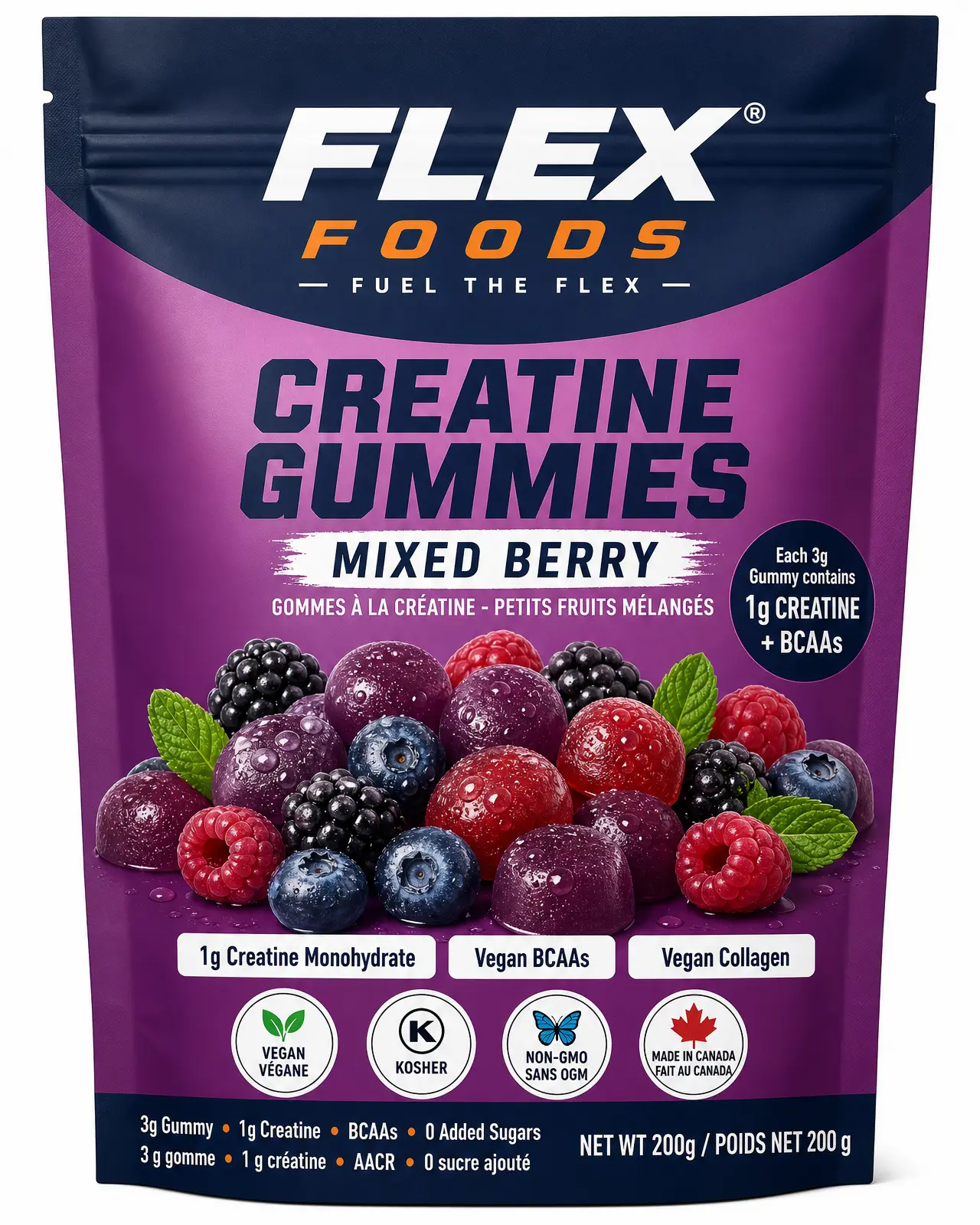
So for creatine, as for fermentation-derived amino acids, the thing to check is the format rather than the active. Ours uses pectin rather than gelatin, which is what makes the product vegan. See creatine for vegans and vegetarians.
Whether to take BCAAs at all
Separate question, and the answer is unenthusiastic. BCAAs supply three of nine essential amino acids and produce a submaximal muscle protein synthesis response compared with whole protein. See do BCAAs work if you eat enough protein.
Our medicinal ingredient is creatine monohydrate, 1 g per gummy.
General information about a natural health product, not medical advice.