
Training
Home Gym Snack Station: What to Keep Within Reach
A small shelf, stocked monthly, that removes the excuse for skipping post-workout food.
Home gyms solve the friction of getting to the gym and introduce a different one: you're now training in a building that contains your entire kitchen, which sounds like an advantage and often isn't.
The commercial gym has a structure — you finish, you shower, you leave, you eat. At home the session ends and you walk into the rest of your life. Post-workout nutrition becomes something you'll get to, and frequently don't.
A dedicated shelf fixes this for about $40 and one order.
Why a separate station rather than the kitchen
Two reasons, both about friction rather than nutrition.
The kitchen is a decision environment. Walking in after a hard session means confronting every food option in the house while your appetite and judgement are both unreliable. A shelf with three items on it is a much easier decision.
Proximity determines behaviour more than intention does. This is consistently the most reliable finding in food environment research — what's within reach gets eaten. A snack six feet from the rack gets consumed; the same snack in a cupboard upstairs frequently doesn't.
The station isn't about having better food available. It's about having adequate food available at zero effort in the fifteen minutes when effort is scarce.
What goes on it
The shelf-stable core
- Protein powder and a clean shaker. The highest-dose, lowest-effort option. Keep the shaker at the station, washed — a shaker in the dishwasher is a shaker that doesn't get used.
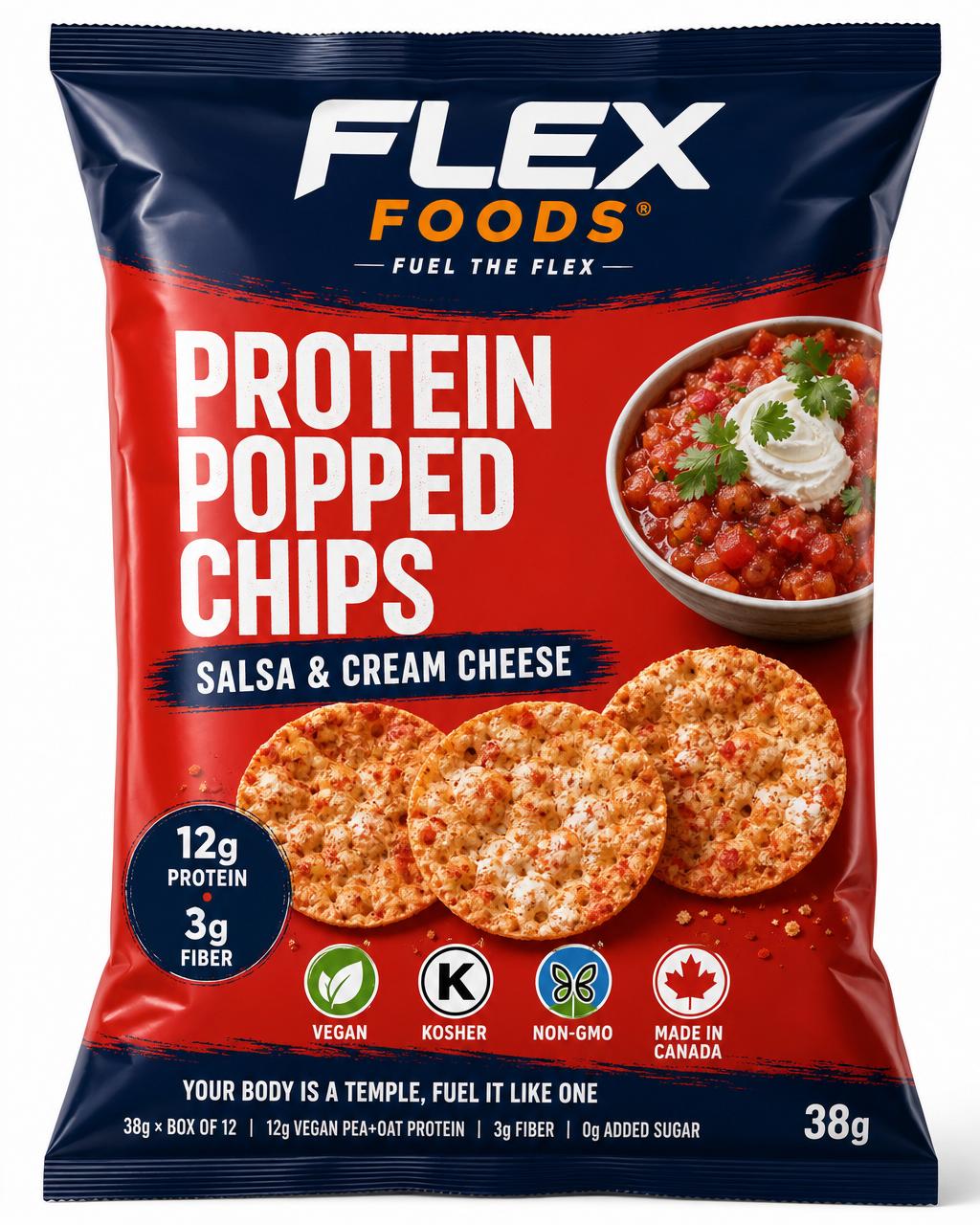
- Single-serve savoury protein snacks. For the days you don't want a shake, which is most days after the first year. A 38 g bag of Protein Popped Chips is 150 calories, 12 g of protein and 3 g of fibre. Buying a case rather than singles is the point here — see why the 24-pack wins.
- Protein bars, one flavour you actually like. The dense option for when the session ran long and dinner is two hours out.
- Roasted edamame or chickpeas. Best protein-per-dollar on the shelf.
- Dried fruit or dates. Fast carbohydrate for the pre-session slot and for glycogen replacement after long sessions.
- Salt. Genuinely. If you sweat heavily in a warm garage or basement, electrolyte replacement matters and plain water alone doesn't cover it.
The fridge item, if you have one nearby
A small fridge in a garage gym is a luxury that earns itself. Plant milk, thick soy yogurt, and cold water. Otherwise, keep one perishable item in the kitchen fridge and accept the walk.
What not to put on it
- Anything in a large bag. Portion decisions get made once per package. An open bag next to a bench gets grazed for a week.
- Sweets and "recovery" confectionery. If it's within reach it becomes a habit rather than an occasional thing.
- More than five items. The whole value is that the decision is small. A well-stocked station becomes a cupboard, and a cupboard is what you were avoiding.
The two slots to stock for
Pre-session, 30–60 minutes out. Small, mostly carbohydrate, low fat and fibre. Dates, dried fruit, half a bag of chips. Digestion slows during exercise, so anything dense or high-fat sits badly — the mechanism is in pre-workout snacks that don't sit like a brick.
Post-session bridge. Protein, and enough of it to matter. The honest framing: a 12 g snack is a bridge to a meal, not a per-meal protein dose — most research points to roughly 20–25 g per sitting to maximally stimulate muscle protein synthesis, and more for older athletes. Pair the snack with something, or accept that the real protein arrives at dinner.
Both slots matter less than people think in absolute terms, because daily protein total dominates. Their value is behavioural: they stop the session from ending in nothing.
Setting it up
Genuinely simple. A wall shelf or a plastic drawer unit, a water bottle, a shaker, and five items. Ten minutes.
Two rules that make it last:
Restock on a date, not on empty. Same day each month. An empty station is discovered post-workout, which is exactly when it fails.
Rotate flavours. Appetite for a specific flavour declines with repeated exposure faster than appetite for food in general, so a case of one thing gets abandoned around week three. This is the most common reason home-gym stations quietly stop working, and it's structural rather than a discipline problem.
The thing the station is actually for
Not optimisation. Consistency.
Someone who trains four times a week and eats something with protein after three of those sessions is doing considerably better than someone with a perfect nutrition plan they execute twice a month. The shelf exists to raise the floor, not the ceiling.
For the desk-based equivalent, see the desk drawer audit.