
Snacking
Feeding a Household With Four Different Diets
Vegan, gluten-free, kosher and picky in one kitchen. Find the overlap instead of cooking four meals.
Modern households frequently contain several sets of dietary requirements at once — some medical, some religious, some ethical, some just a nine-year-old who has opinions.
The instinct is to cook separately, which is exhausting and unsustainable. The better approach is structural.
Sort the requirements by how negotiable they are
This is the step that makes everything else manageable, and it needs doing honestly.
Non-negotiable — safety. Diagnosed allergies, coeliac disease, and medically prescribed restrictions. These are not preferences and cross-contact matters. Everything else bends around them.
Non-negotiable — commitment. Religious observance and ethical positions like veganism. Not safety issues, but treating them as preferences to be negotiated is a good way to damage a relationship.
Negotiable — preference. Dislikes, texture aversions, phases. Real, and they should be accommodated with respect, but they don't require restructuring the household's cooking.
The common household error is treating tier three like tier one — cooking a separate meal for a fussy eater while the actual allergy gets a quick label glance.
The component method
Instead of cooking several dishes, cook one set of components and let people assemble.
A base (rice, potatoes, pasta, tortillas), a protein or two, a vegetable or three, a sauce, and toppings. Everyone builds their own plate.
Formats that work this way naturally: taco and burrito nights, grain bowls, baked potatoes with fillings, pasta with sauce and toppings separate, soup with add-ins, mezze and snack boards, stir-fry with protein cooked separately.
The advantage isn't only dietary. It also handles the picky eater without a separate meal — they can take the components they'll eat, which is a considerably less fraught dinner than negotiating over a plated dish.
Cook to the strictest common denominator
For the shared components, default to whatever restriction is tightest, then let people add.
Practically: make the base vegan and gluten-free, then have dairy, meat or gluten-containing items available as separate additions. A vegan chilli with cheese, sour cream or meat on the side works for everybody. A chilli with meat already in it works for one person.
This is usually cheaper too — legumes, grains and vegetables are the least expensive components and they're the ones doing the shared work.
Cross-contact, where it actually matters
For a diagnosed allergy or coeliac disease, shared preparation carries real risk. The practical measures:
- Separate the equipment that traps residue. Toasters, colanders, wooden utensils, cutting boards, non-stick pans with worn surfaces. Colour-coding works.
- Prepare the restricted food first, on a clean surface, before anything else is out.
- Store it above, not below. Nothing drips upward.
- Watch shared condiments. A butter dish or a peanut butter jar with crumbs in it is a common and easily missed route.
For kosher observance, requirements around separating meat and dairy and around equipment status are more involved than a general post can cover — that's a conversation with your own religious authority. Background on what certification covers is in kosher certification explained.
Snacks are the easier problem
Meals require coordination. Snacks just require finding items that clear multiple restrictions at once.
Things that satisfy vegan, dairy-free, gluten-free, nut-free and kosher-pareve simultaneously:
- Fruit and vegetables, obviously
- Roasted chickpeas, fava beans, edamame
- Rice cakes and corn-based crackers
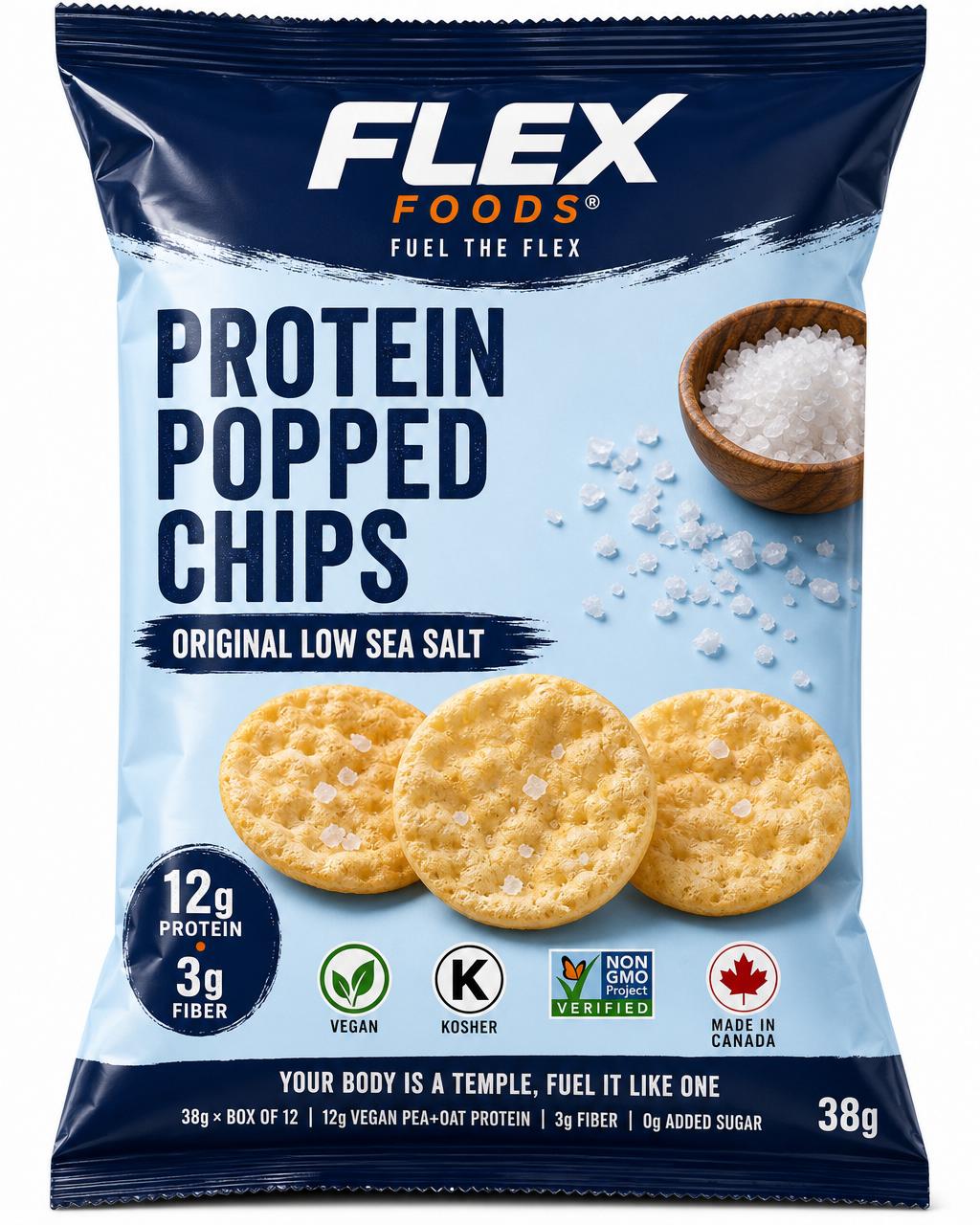
- Certain pea-protein snacks — a bag of Protein Popped Chips is vegan, dairy-free, soy-free and nut-free by ingredient, with a "may contain oats" precautionary statement and a gluten-free claim
- Seeds, if nuts are the restriction
The important caveat: for a diagnosed allergy or coeliac disease, don't rely on a summary like the one above. Read the current label, and contact manufacturers for facility documentation where it matters. We're at hello@flexfoods.ca. Full guide in the may contain decoder.
Three household habits
Label the fridge shelf. One designated shelf for the restricted person's food, above everything else. Removes daily decisions.
Keep one shared safe snack in stock. Something everyone can eat, always available. It's a small thing that prevents the recurring situation where one person can't have what everyone else is having.
Don't make the restricted person the problem. The framing matters, especially with children. "We eat this way" lands very differently from "we can't have that because of your sister" — and the second version does lasting damage for no practical benefit.