Fuel Science
Creatine Gummies vs Capsules vs Chews
Three delivery formats, compared on dose per unit, stability, cost and the thing that actually determines results.
Beyond powder, creatine comes in three solid formats, and they differ more than they appear to. The differences come down to one variable: how much water is in the product.
Capsules
Creatine monohydrate powder in a capsule shell. Essentially powder with a delivery mechanism.
Stability: excellent. The powder inside is dry, so the degradation reaction that affects gummies barely proceeds. Effectively as stable as bulk powder.
Dose per unit: the practical limitation. Capsules typically hold 750 mg to 1 g of creatine, so a 5 g dose means five to seven capsules daily. Loading at 20 g would mean twenty or more.
Shell material: worth checking. Conventional capsule shells are gelatin — animal collagen. Vegetable cellulose (HPMC) shells are the plant-based alternative. If vegan status matters, read this line. See pectin vs gelatin.
Cost: more than powder, less than gummies.
The real drawback: swallowing five to seven capsules daily is a chore, and it's the reason many people abandon them.
Chews and tablets
Compressed powder with binders, or a lower-moisture chewable matrix. A middle category that varies a lot by product.
Stability: generally better than gummies, because water content is lower. How much better depends on the specific formulation — a soft chew with meaningful moisture behaves more like a gummy than like a tablet.
Dose per unit: often higher than capsules, since compression allows more active per unit.
Texture: the honest problem. Compressed creatine is chalky, and covering that flavour without sugar is difficult. Many products in this category are unpleasant, which defeats the purpose of a chewable format.
Gummies
Stability: the weakest of the three, and it isn't close. A gummy contains water and glycerin, contains citric acid, and is manufactured with heat and an extended warm cure. All three degradation drivers are present by necessity.
This is the format's central problem and the reason independent testing has found creatine gummy products well below label claim. See why creatine degrades in water.
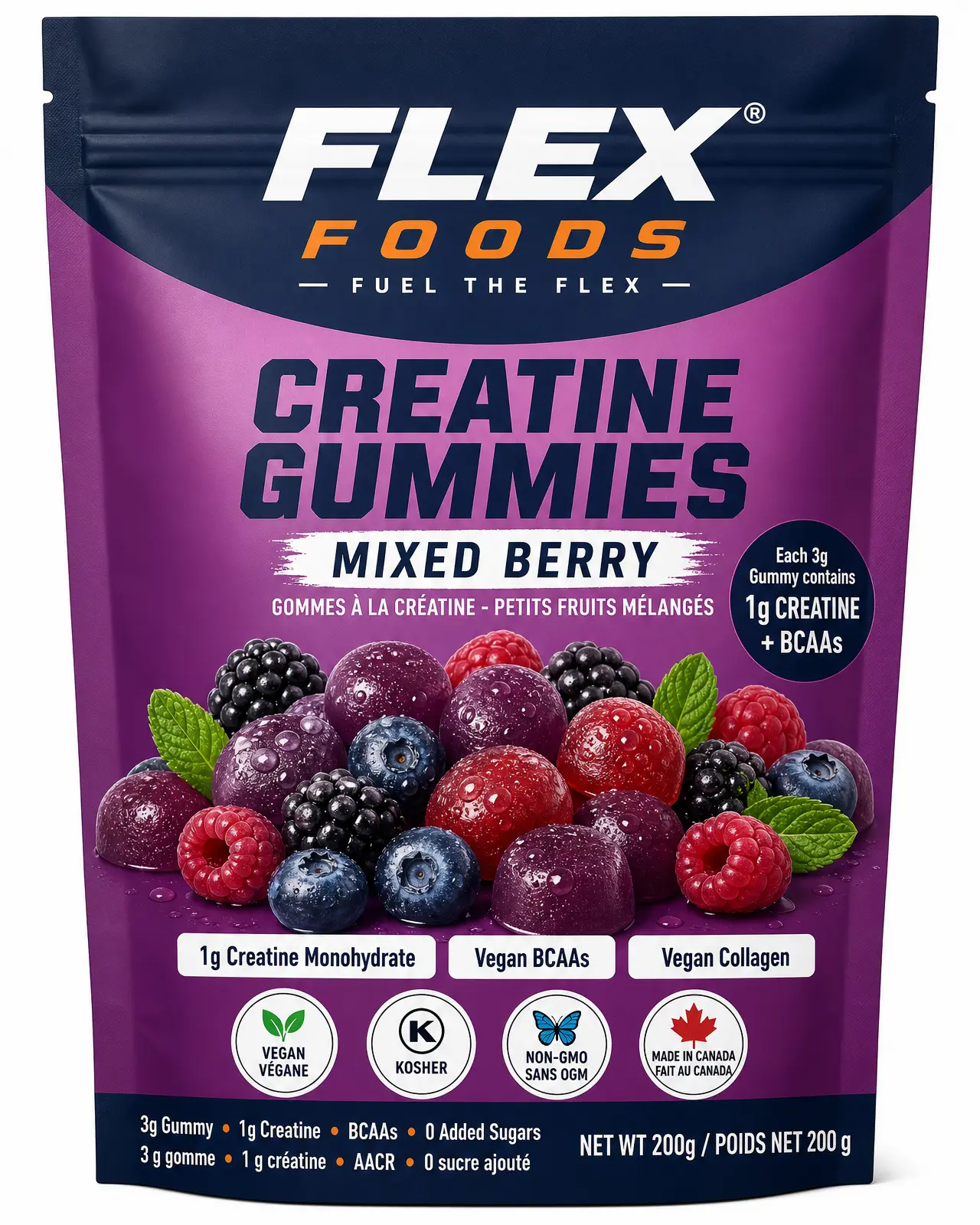
Dose per unit: constrained by the matrix. Ours carry 1 g per 3 g gummy, so the label serving of three gummies delivers 3 g. Higher loading per gummy affects texture and taste.
Cost: highest of the three.
The advantage: palatability and adherence. A gummy is something people take without effort, indefinitely.
Side by side
| Capsules | Chews / tablets | Gummies | |
|---|---|---|---|
| Stability | Excellent | Good | Requires control + testing |
| Units for 5 g | 5–7 | 3–5 | 5 |
| Loading practical | Awkward | Awkward | No |
| Needs water | Yes, to swallow | No | No |
| Taste | None | Often chalky | Good |
| Vegan by default | Check shell | Check binders | Check gelling agent |
| Cost per gram | Moderate | Moderate–high | Highest |
| Adherence over months | Moderate | Moderate | Highest |
The variable that decides it
Since creatine works only through saturation maintained over months, the format you'll actually use every day is the one that works.
A capsule bottle with perfect potency, unopened since February, delivers nothing. That isn't a rhetorical point — supplement adherence is genuinely poor, and format friction is a large part of why.
So the honest decision framework:
- Disciplined, cost-conscious, want to load? Powder. Cheapest, most stable, most flexible.
- Don't mind swallowing several capsules and want stability? Capsules.
- Won't reliably use powder and want something you'll take daily? Gummies — provided you've verified the potency.
That last clause is doing real work. The adherence argument only holds if the product contains what it claims. Both halves have to be true, which is why we wrote how to check a creatine gummy actually contains creatine.
What none of the formats changes
Absorption. Creatine monohydrate is absorbed from the gut at near-complete efficiency regardless of how it arrived — dissolved in water, in a capsule shell, or in a pectin matrix. No format offers an absorption advantage, and claims otherwise are marketing. See creatine absorption.
General information about a natural health product, not medical advice.