
Fuel Science
Creatine Absorption: What Helps and What Doesn't
Insulin and exercise both nudge uptake upward. The marketing around 'enhanced absorption' forms mostly doesn't.
Creatine absorption is a two-step process, and the marketing around it consistently conflates them.
Step one: getting creatine from gut into bloodstream. This is essentially solved. Creatine monohydrate is absorbed at very high efficiency — close to complete at typical doses. There is almost no room to improve here, which makes "better absorbed" claims for alternative forms largely meaningless.
Step two: getting creatine from bloodstream into muscle. This is the actual bottleneck, and it's where the interesting biology lives.
The transporter
Creatine doesn't diffuse into muscle cells. It's carried by a specific protein — the creatine transporter, CreaT — which is sodium- and chloride-dependent and works against a concentration gradient.
Transporter capacity is finite. Which is why flooding your bloodstream with creatine doesn't proportionally flood your muscle: uptake is rate-limited by transport, and excess circulating creatine is converted to creatinine and excreted.
This is the reason a 20 g loading dose is split into four 5 g portions rather than taken at once, and the reason doses beyond saturation are wasted.
What genuinely increases uptake
Insulin
The best-supported factor. Insulin stimulates creatine transport into muscle, and research by Green and colleagues in the 1990s found that co-ingesting creatine with a large carbohydrate dose — around 90–100 g of simple carbohydrate — substantially increased muscle creatine retention compared with creatine alone.
Two caveats that matter. That's a large amount of carbohydrate — roughly 400 calories of sugar, per dose. And later work found that a smaller combination of carbohydrate and protein produced a similar effect with far less sugar.
The practical relevance is also limited: this accelerates how fast you saturate, not the ceiling you reach. If you're taking creatine daily indefinitely, saturating in three weeks instead of four is not worth 400 calories of sugar a day.
Exercise
Training increases blood flow to muscle and appears to enhance creatine uptake in the trained tissue. This is the strongest rationale for taking creatine somewhere near a workout rather than at a random hour — though the effect is modest. See creatine timing.
Starting low
Not an intervention, but the largest single determinant. The further below the storage ceiling you start, the more you take up. Vegetarians and vegans start lowest and generally respond most. See creatine for vegans and vegetarians.
What doesn't help
"Enhanced absorption" forms. HCl, buffered, ethyl ester, nitrate — all marketed on absorption. Since monohydrate is already absorbed at near-complete efficiency from the gut, there's nothing to improve on. Ethyl ester is actively worse, degrading to creatinine in stomach acid faster than monohydrate. Detail in monohydrate vs other forms.
Dissolving it in hot water. Improves dissolution and accelerates conversion to creatinine. Net negative.
Taking it with a specific mineral or "transport matrix." Proprietary uptake blends are a category with more marketing than evidence.
Enormous single doses. Transporter capacity is the limit. Beyond it, you're producing creatinine.
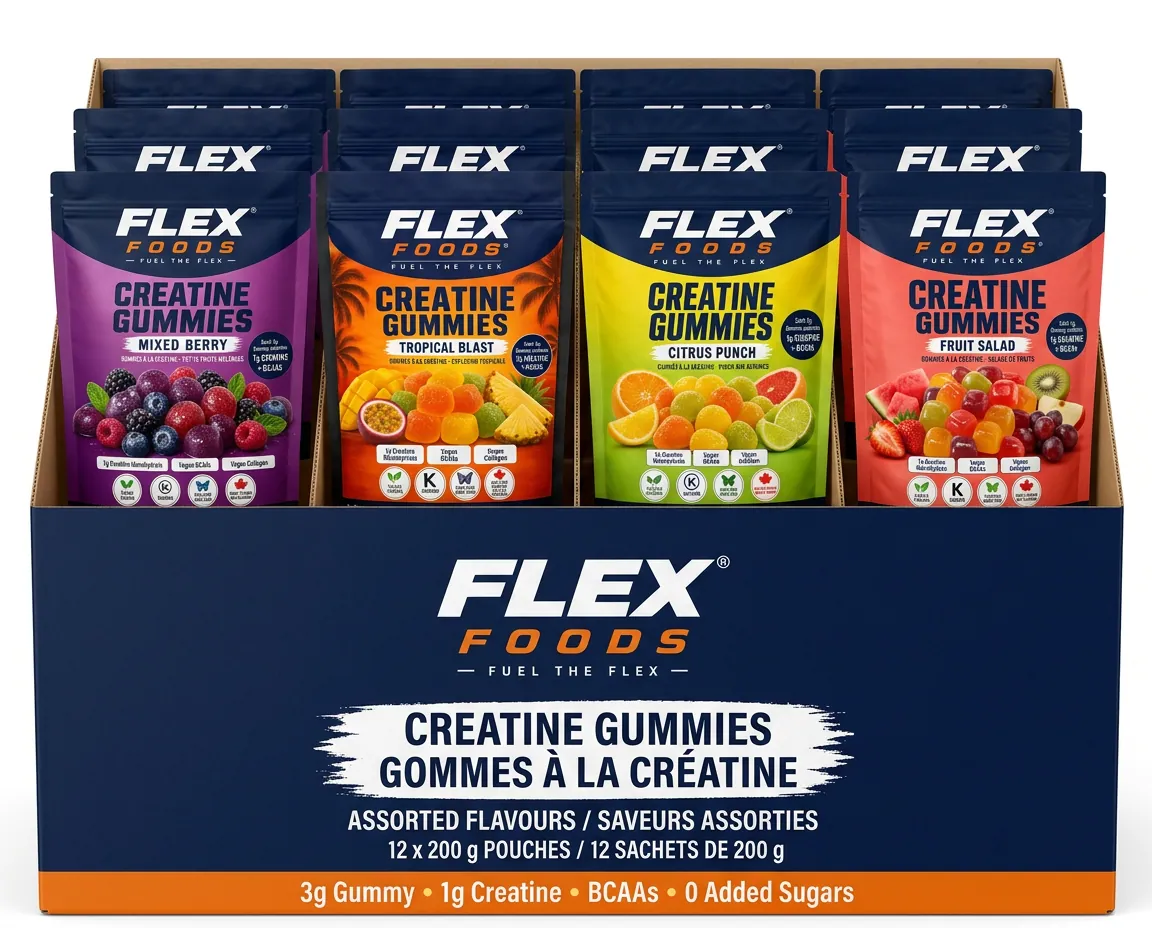
What about a gummy?
A fair question given the format.
Absorption from a chewed, swallowed gummy is not a concern. Creatine monohydrate dissolves in the stomach and is absorbed in the small intestine the same way regardless of whether it arrived as powder in water or in a pectin matrix. There's no barrier introduced by the format.
The relevant question for a gummy is not absorption — it's whether the creatine is still creatine by the time you eat it. Creatine degrades to inert creatinine in the presence of water, acid and heat, all of which are present in gummy manufacturing.
That's a content question, not an uptake question, and it's the one worth asking. Our position on it is in how to check a creatine gummy actually contains creatine.
The practical version
Take 3–5 g daily, with food if convenient, near training if convenient. Don't engineer around it.
Uptake optimisation affects how quickly you saturate, and saturation happens within about four weeks either way. Consistency over months determines your results; absorption tactics adjust the first month at the margins.
General information about a natural health product, not medical advice.