Fuel Science
Collagen: What It Is and What It Isn't
The most abundant protein in your body, a poor-quality dietary protein, and a word doing a lot of work in marketing.
Collagen is having a long commercial moment, and the word is being applied to products that don't contain it. Worth establishing what it actually is.
The protein
Collagen is the most abundant protein in mammals, making up roughly a third of total body protein. It's the structural scaffolding of connective tissue — skin, bone, tendon, ligament, cartilage, blood vessel walls.
Its structure is distinctive: three polypeptide chains wound into a triple helix, built on a repeating pattern where every third residue is glycine, with proline and hydroxyproline appearing frequently in the other positions.
That repeating glycine is structurally necessary — it's the smallest amino acid, and only it fits where the three chains pack together.
The types
Over two dozen types exist. Five matter for most discussions:
| Type | Where |
|---|---|
| I | Skin, bone, tendon — the most abundant |
| II | Cartilage |
| III | Skin, blood vessels, organs |
| IV | Basement membranes |
| V | Cell surfaces, hair, placenta |
Supplements marketed for skin generally supply types I and III; those marketed for joints often type II.
The vitamin C connection
A genuinely important piece of biochemistry.
Building stable collagen requires hydroxylating proline and lysine residues, and the enzymes doing it need vitamin C as a cofactor.
Without vitamin C, collagen can't be properly stabilised. That's the mechanism behind scurvy — the bleeding gums, poor wound healing and connective tissue breakdown are collagen failing.
It's also why vitamin C appears in almost every collagen supplement, and why "collagen builder" products are built around it.
Where supplemental collagen comes from
Animals, necessarily. Common sources:
- Bovine — hide and bone, mostly types I and III
- Porcine — skin
- Marine — fish skin and scales, mostly type I
- Chicken — sternum cartilage, type II
Most supplements are hydrolysed collagen peptides — collagen broken into shorter fragments for solubility and absorption. Gelatin is partially hydrolysed collagen, which is why it's the traditional gummy gelling agent. See pectin vs gelatin.
What collagen isn't
Three clarifications that matter.
It isn't a good dietary protein. Collagen is an incomplete protein — it lacks tryptophan entirely and is low in several other essential amino acids. Nutritionally it's poor quality, and it shouldn't be counted toward a protein target the way whey, eggs or legumes can.
It isn't plant-derived, ever. No plant produces collagen. Products marketed as "vegan collagen" are something else — covered in vegan collagen explained.
Eating it doesn't route it to your skin. Digestion breaks collagen into amino acids and small peptides like any other protein. There's no mechanism directing them to a particular tissue. Whether supplementation does anything at all is a separate question — see does collagen supplementation work.
The label check
Since "collagen" appears on packaging that doesn't contain any:
Look for collagen in the ingredient list — as a medicinal ingredient with a stated quantity, or in the non-medicinal ingredients. If it's in neither, it isn't in the product.
Look at the protein declaration. Collagen is a protein. A meaningful quantity registers on that line. A product declaring 0 g protein cannot contain a meaningful amount of collagen.
That arithmetic works on any package. See amino acids on a label.
About this blog
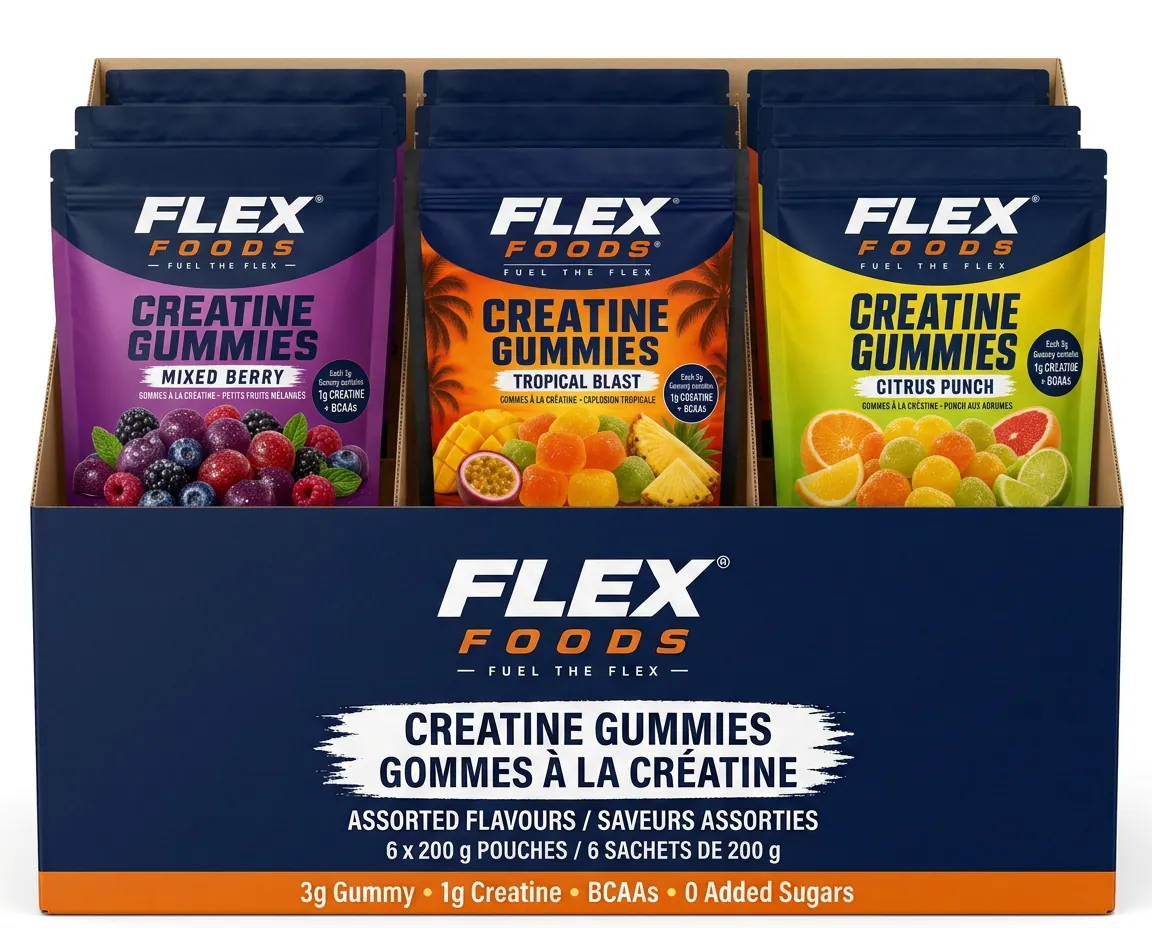
Our medicinal ingredient is creatine monohydrate, 1 g per gummy. Our nutrition panel declares 0 g protein, and our gelling agent is pectin rather than gelatin.
This post is here because collagen is heavily marketed and the basic biology is worth having straight.
General information about a natural health product, not medical advice.