Fuel Science
'Vegan Collagen' Explained: Builders vs Fermented
There is no plant collagen. So what are products using the phrase actually selling?
Collagen is an animal structural protein. No plant produces it, and no plant contains it.
Which makes "vegan collagen" a phrase that requires explanation. There are three distinct things sold under it, and only one contains collagen.
Category one: collagen builders
By far the most common, and they contain no collagen.
The premise is to supply the raw materials and cofactors your body uses to synthesise its own collagen. Typical contents:
- Vitamin C — a genuine requirement, since the enzymes that hydroxylate proline and lysine need it as a cofactor
- Amino acids — glycine, proline, lysine, the residues collagen is rich in
- Zinc and copper — cofactors in collagen synthesis and cross-linking
- Silica, often from bamboo — weaker evidence
- Plant extracts with antioxidant claims
Is the reasoning sound? Partly. Vitamin C deficiency genuinely impairs collagen synthesis, and correcting it matters. But supplying a cofactor to someone who isn't deficient doesn't accelerate the process — an enzyme with adequate cofactor isn't limited by cofactor.
Most people in Canada aren't vitamin C deficient. And glycine, proline and lysine are abundant in ordinary dietary protein.
So a collagen builder is generally supplying nutrients you already have enough of, to support a process that isn't limited by them. That's the honest assessment of the category.
Category two: recombinant or fermented collagen
This one genuinely is collagen, and it's the interesting case.
Microorganisms — commonly engineered yeasts such as Pichia pastoris, or bacteria — can be given the genetic instructions for human collagen sequences and made to produce the protein. The output is real collagen, or collagen-like peptides, with no animal involved.
This is legitimate biotechnology with real applications, primarily in biomedical materials and cosmetics.
Two caveats. It's expensive, so it's uncommon in consumer supplements. And producing correctly folded, properly hydroxylated collagen outside an animal cell is technically demanding, since the hydroxylation machinery has to be engineered in too.
If a product genuinely contains recombinant collagen, it will say so specifically — that's the expensive thing you'd be paying for.
Category three: the word
Products using "collagen" as a positioning term without either collagen or a coherent builder formulation.
No mechanism, no ingredient. The word is doing the work.
How to tell which you're holding
Three checks, in order, taking about a minute.
1. Read the ingredient list for collagen. As a medicinal ingredient with a quantity, or in the non-medicinal list. If the word "collagen" appears only on the front of the pack and nowhere in the ingredients, it's not in the product.
2. Check the protein declaration. Collagen is a protein. A meaningful amount registers on the protein line. A product declaring 0 g protein cannot contain a meaningful amount of collagen.
3. If it's a builder, ask what it's correcting. Vitamin C and amino acids help if you're short of them. If you're not, there's nothing to fix.
Detail in amino acids on a label.
Is the terminology misleading?
Our view: unqualified, yes.
A reasonable consumer reading "vegan collagen" will conclude the product contains collagen from a plant source. That thing does not exist. If a product is a builder, describing it as a "collagen builder" or "collagen support" is accurate; describing it as collagen isn't.
This isn't a technicality. Someone buying it for a specific reason — skin, joints, recovery — has bought something with a different mechanism and a different evidence base from what they thought.
What if you want the actual evidence on collagen?
Covered separately in does collagen supplementation work, where the skin, joint and tendon literature is assessed on its own terms — including a fair account of how heavily industry-funded much of it is.
About this blog
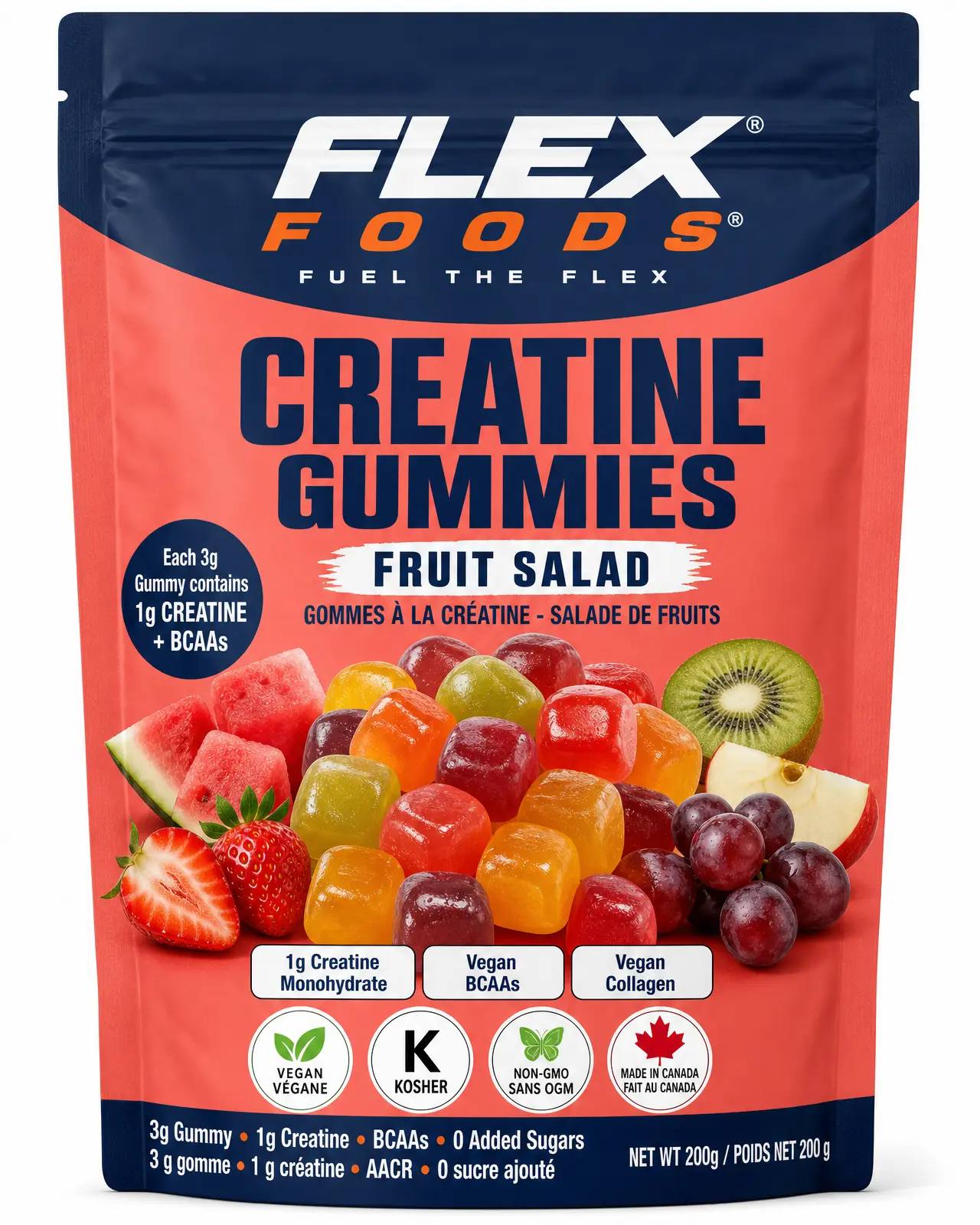
Our medicinal ingredient is creatine monohydrate, 1 g per gummy. Our nutrition panel declares 0 g protein, and our gelling agent is pectin rather than gelatin.
We've written this because the term is widespread and the checks above are useful on any product carrying it — ours included, and anyone else's.
General information about a natural health product, not medical advice.