Nutrition 101
Protein Snacks for Weight Management: The Satiety Math
Why a 150-calorie protein snack can reduce total daily intake more than skipping the snack entirely.
The intuitive approach to eating less is to eat less — cut the snack, save the calories. It works arithmetically and often fails behaviourally, because what happens at the next meal isn't independent of what happened at 3pm.
This is a post about that interaction. General nutrition information, not individual advice — and if food or bodyweight is taking up a large share of your attention, that's worth raising with a doctor or a registered dietitian rather than optimising further.
The counterintuitive arithmetic
Two scenarios, same person, same day.
Scenario A: skip the snack. Nothing between lunch at 12:30 and dinner at 7. Saves 150 calories on paper. Arrives at dinner having gone six and a half hours without food.
Scenario B: a protein-forward snack at 3:30. Costs 150 calories. Arrives at dinner moderately hungry.
The variable that decides which is lower in total is dinner. And research on protein preloads and satiety consistently finds that a protein-containing snack reduces intake at the subsequent meal — often by more than the snack itself contained.
The effect isn't universal or enormous, and it varies between people and contexts. But the general finding is robust enough to matter: what you eat between meals changes how much you eat at them, and pretending otherwise is why so many deficit attempts collapse at 7pm.
Why protein specifically
Protein is the most satiating macronutrient per calorie, and it works through several routes at once.
Hormonal. Amino acids arriving in the small intestine trigger release of GLP-1, peptide YY and cholecystokinin — all of which signal fullness to the brain. This is the same GLP-1 pathway that the current generation of weight-management medications targets pharmacologically, and food stimulates it too, though far more modestly.
Mechanical. Protein slows gastric emptying, so the stomach stays fuller for longer.
Thermic. Protein has the highest thermic effect of feeding — roughly 20–30% of its calories are spent on digesting and processing it, against about 5–10% for carbohydrate and 0–3% for fat. So 12 g of protein costs slightly fewer net calories than the label suggests.
Lean mass. The one that matters over months rather than hours. Adequate protein during weight loss helps preserve muscle, which is the difference between losing fat and losing weight indiscriminately.
Where snacks leak
Run the numbers on a typical day of snacking.
| Snack pattern | Calories | Protein | Fibre |
|---|---|---|---|
| Muffin + latte | 520 | 10 g | 2 g |
| Granola bar + fruit juice | 310 | 3 g | 2 g |
| Standard chips + biscuits | 440 | 4 g | 2 g |
| Protein chips + apple | 245 | 12 g | 7 g |
| Protein chips + bean dip | 325 | 24 g | 13 g |
The bottom two rows aren't lower in calories because they're smaller. They're lower because protein and fibre are doing the work that volume would otherwise have to do.
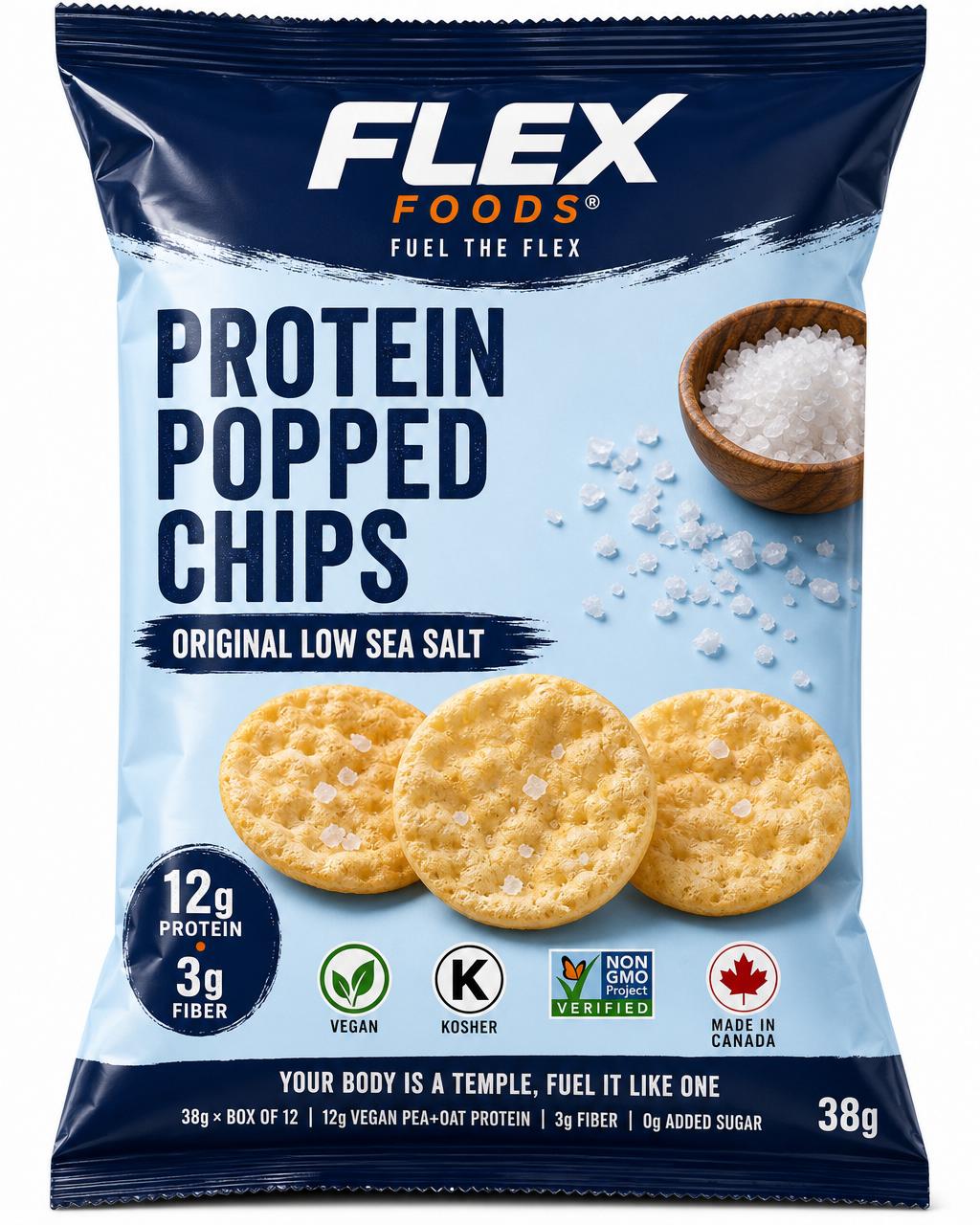
A 38 g bag of Protein Popped Chips is 150 calories, 12 g of protein and 3 g of fibre. Against a 220-calorie bag of standard chips with 2 g of protein, the substitution saves 70 calories and adds 10 g of protein — but the larger effect is probably downstream, at the next meal.
The three levers, ranked
Satiety per calorie is driven by three things you can act on.
1. Energy density. Calories per gram. This is the strongest single lever and it favours watery, bulky food — vegetables, fruit, soup, yogurt. Nothing dry and packaged competes with a bowl of vegetables here, and we're not going to claim otherwise.
2. Protein. The mechanisms above.
3. Fibre. Soluble fibre forms a viscous gel that slows gastric emptying; insoluble adds bulk. It also operates on a longer timescale than protein's hormonal signal, which fades within a couple of hours. See the 3 g fibre detail.
The honest framing for a packaged snack: it can only pull levers two and three. Lever one belongs to whole food. Which is why the useful comparison isn't "chips versus vegetables" — it's "chips versus what you'd actually have eaten from the vending machine."
What actually predicts whether this works
Two things the nutrition panel can't show.
Whether you'll do it repeatedly. Adherence dominates everything else over any real timeframe. A snack you find unpleasant gets abandoned in week three and replaced by whatever's nearby. This is not a soft consideration — it's the main one.
Whether the packaging creates a stopping point. Portion decisions get made once per package, not once per mouthful. An open large bag is a negotiation you'll lose; a sealed single serve isn't. Detail in portion sizes.
Three things not to do
- Don't drink the calories. Liquid calories are markedly less satiating than the same calories eaten. Smoothies and juices are a poor use of a limited budget.
- Don't cut protein to save calories. It's the macronutrient that most reduces hunger and most protects lean mass. Cut refined carbohydrate or fat first.
- Don't skip meals to bank calories. It reliably produces overshoot later, and it concentrates protein into one feeding when three or four works better — see protein distribution.
More on the mechanism in protein and cravings.