
Nutrition 101
Protein Snacking for Seniors: Preserving Muscle After 60
Sarcopenia isn't inevitable. Protein distribution and resistance training are the two levers that matter most.
Muscle loss with age is often described as inevitable. It isn't — or rather, some decline is expected and the rate is substantially modifiable, which is a different claim entirely.
Two levers do most of the work, and one of them isn't food.
What sarcopenia actually is
Age-related loss of muscle mass, strength and function. Muscle mass typically peaks in the late twenties to thirties and declines gradually thereafter, with the rate accelerating past roughly 60.
The consequences aren't cosmetic. Reduced muscle mass and strength are associated with falls, fractures, loss of independence and slower recovery from illness or surgery. Grip strength is one of the better predictors of a range of health outcomes in older adults, which tells you something about how central muscle function is.
Why protein needs rise rather than fall
The mechanism is anabolic resistance: ageing muscle shows a blunted synthetic response to the same protein dose. Give a 25-year-old and a 75-year-old identical 20 g doses and the older person's muscle protein synthesis response is measurably smaller.
Contributing factors include less efficient digestion and absorption, reduced muscle blood flow delivering fewer amino acids to the tissue, and diminished sensitivity of the mTOR signalling pathway.
The practical consequence: a dose that reliably triggers a response in a younger adult may sit below the threshold in an older one.
Commonly cited figures — which vary and remain debated:
- Per meal: 0.4–0.6 g per kilogram of bodyweight for older adults, against 0.24–0.4 for younger ones
- Daily: proposals commonly land at 1.0–1.5 g per kilogram, above the standard adult RDA of 0.8 g/kg
That RDA was set to prevent deficiency, not to preserve muscle. Treating it as a target is a common error in this age group. More mechanism in protein for over-40 athletes.
The lever that matters more than protein
Being clear about relative importance: resistance training is the larger intervention, and protein without it accomplishes little.
Progressive resistance training remains effective into the eighties and nineties, with well-documented gains in strength and muscle mass in older populations — including in frail and institutionalised adults. It also partially reverses anabolic resistance, since trained muscle responds better to protein than untrained muscle at any age.
Two or three sessions a week, using resistance that's genuinely challenging. This is worth discussing with a doctor or a physiotherapist before starting, particularly with existing cardiac, joint or balance concerns — but the starting point is that it's beneficial, not that it's risky.
The three practical obstacles
Knowing the target is easy. These are what actually get in the way.
Appetite declines. The "anorexia of ageing" is well documented — reduced appetite, earlier satiety, changes in taste and smell. Higher protein targets are harder to hit when total food volume is lower, which means protein density matters more than it does for a younger person.
Chewing and swallowing. Dental problems, dentures and dry mouth are common and they steer people away from meat, nuts and raw vegetables — some of the most protein-dense foods available. Softer protein sources become important: yogurt, eggs, tofu, beans, fish, milk, protein drinks.
Worth flagging honestly: a crisp, brittle snack is not the right format for someone with dental difficulty or dysphagia. Our chips suit some people in this group and not others, and that's a real limitation rather than something to talk around.
Cooking for one, and eating alone. Both are associated with lower dietary quality. Preparation effort becomes a genuine barrier, and the social element of eating matters more than nutrition advice usually acknowledges.
What to actually do
Fix breakfast first. Almost universally the lowest-protein meal, and the easiest to improve. Greek yogurt, eggs, milk on cereal instead of water, cottage cheese, soy milk. Getting breakfast from 5 g to 25 g changes the whole day's distribution. Options in a high-protein breakfast that isn't eggs.
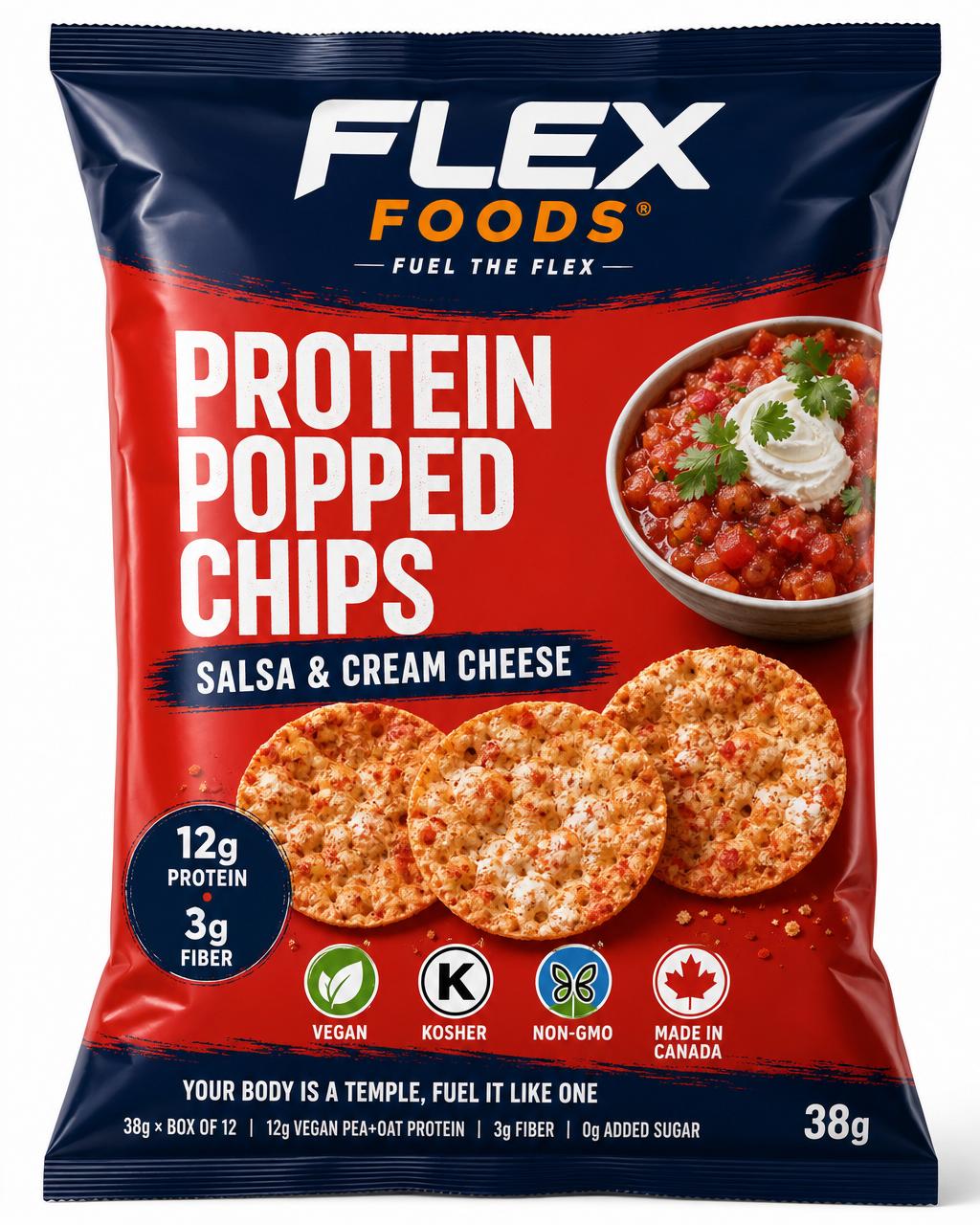
Add a protein-containing snack. Where total food volume is limited, a fourth eating occasion is often easier than making meals bigger. A 38 g bag of Protein Popped Chips is 12 g — below a per-meal threshold for this age group on its own, useful as a component. With a yogurt or bean dip it reaches 21–24 g.
Prefer protein-dense over protein-adjacent. When appetite limits volume, every bite should count. Dairy, eggs, fish, legumes, tofu, protein drinks.
The nutrients to discuss with a doctor
Vitamin D. Skin synthesis declines with age and is negligible at Canadian latitudes for much of the year. Relevant to both bone and muscle function.
Vitamin B12. Absorption declines with age, partly through reduced stomach acid, and deficiency is common in older adults. It's frequently missed because symptoms are non-specific.
Calcium. Requirements rise for women over 50 and men over 70. See bone health.
All three are worth a blood test and a conversation rather than self-supplementation. Kidney function also matters here — anyone with chronic kidney disease should discuss protein intake with their doctor before raising it, since general advice doesn't apply.
General information, not individual advice. This is a life stage where personalised assessment is genuinely worth having.