Snacking
Protein Chips vs Trail Mix: Sugar, Fat and Portion Drift
Trail mix is the easiest snack in the world to overeat. Why portioning matters more than ingredients here.
Trail mix has an unusually strong reputation. It's associated with hiking, it's made of nuts and dried fruit, and it comes in bulk bins and kraft-paper bags — all of which signal wholesome.
The ingredients mostly deserve the reputation. The way people eat it does not.
The calorie density problem
Start with the number that drives everything else: trail mix is around 4.8 calories per gram.
For context, that's more than double an average mixed meal. It sits close to chocolate. The reason is straightforward — nuts are roughly half fat by weight, and fat carries 9 calories per gram against 4 for protein and carbohydrate. Add dried fruit, which is sugar with the water removed, and you have an extremely concentrated food.
That's a feature when you're carrying food up a mountain and a problem when the bag is on your desk.
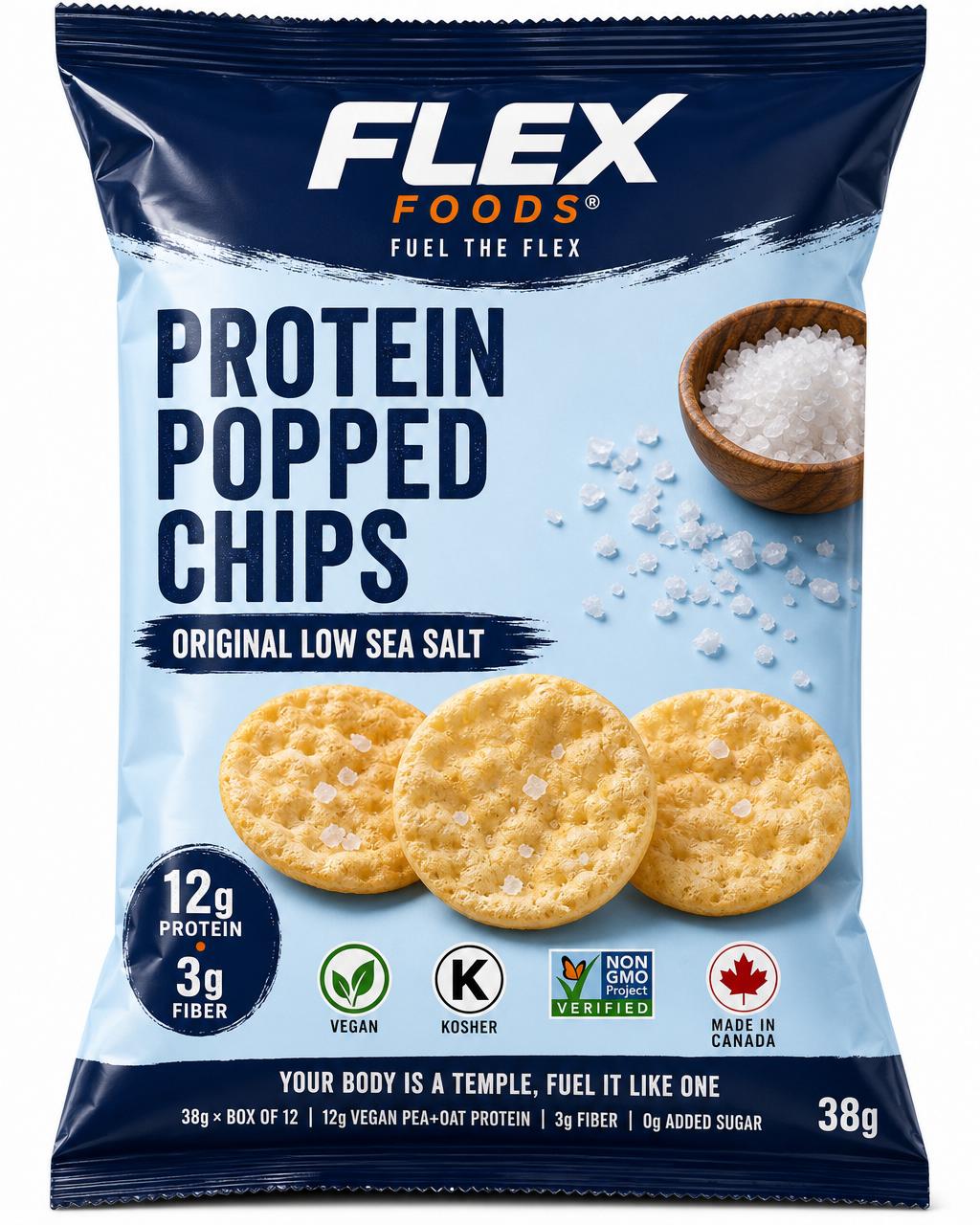
| Trail mix | Protein Popped Chips | |
|---|---|---|
| Calories per gram | ~4.8 | 3.9 |
| Per 40 g serving | ~195 cal | 150 cal (38 g) |
| Protein | ~5 g | 12 g |
| Fibre | ~3 g | 3 g |
| Sugars | 10–15 g | 0 g |
| Protein per 100 cal | ~2.5 g | 8.0 g |
The sugar line is the one people miss. A trail mix with dried cranberries, raisins, banana chips and chocolate can easily carry 12–15 g of sugar per serving. Not added sugar in every case — dried fruit's sugar is naturally occurring — but sweetened dried cranberries almost always have sugar added, and chocolate always does.
Portion drift, which is the actual issue
Here's the mechanism that makes trail mix uniquely difficult.
It's small and irregular. There's no natural unit. A handful is not a defined quantity, and handfuls vary enormously — most people's "handful" of trail mix is 40–60 g, and a generous one is 80 g. At 4.8 calories per gram, an 80 g handful is 384 calories.
It's usually in a large bag or bowl. Portion decisions get made once per package, not once per mouthful. A bulk bag on a counter has no stopping point.
The high-value items get picked out. Everyone knows this. The chocolate, the yogurt-covered pieces and the banana chips go first, which means the fraction you actually eat is more calorie-dense and higher in sugar than the mix's stated average.
Fat is less satiating per calorie than protein. So a 400-calorie handful produces less fullness than 400 calories of a protein-forward food, which is precisely why the second handful happens.
Where trail mix genuinely wins
Three real advantages.
Whole foods. Nuts are one of the better-supported foods in nutritional epidemiology — associated with favourable cardiovascular outcomes across large cohorts, and a source of unsaturated fats, magnesium, vitamin E and polyphenols. A nut-and-seed mix is genuinely good food in a way no packaged protein snack is.
Calorie density, when you want it. Hiking, backpacking, gaining weight, endurance work. Situations where 4.8 calories per gram is the point. Ranking in hiking snacks by weight.
Customisable. Making your own means controlling the ratio exactly.
The fix, if you like trail mix
Not "stop eating trail mix." Three practical changes:
- Portion it once, into small containers or bags. 30 g each. This single change addresses most of the problem, and it's the same logic as single-serve packaging.
- Build your own with a higher protein ratio. Pumpkin seeds (9 g protein per 30 g), almonds (6 g), roasted edamame (11–13 g), roasted chickpeas (8 g). Keep dried fruit to a quarter of the mix and skip the chocolate, or accept it as a treat.
- Never eat it from the bag. The bag is the problem.
The honest comparison
Ingredient for ingredient, trail mix is better food than a protein chip. Nuts and seeds beat a processed snack on micronutrients, unsaturated fats and evidence base, and we're not going to argue otherwise.
Where a single-serve protein snack wins is predictability. You know exactly what 150 calories and 12 g of protein looks like, because it's the whole bag, and there's a stopping point built into the packaging.
For a lot of people that structural difference matters more in practice than the ingredient comparison does. Which is a slightly deflating thing for a food company to admit — the main advantage is the bag.