Snacking
Protein Chips vs Popcorn: Which Snack Holds You Longer
Popcorn wins on volume, fibre and cost. Protein chips win on satiety per calorie. When to pick each.
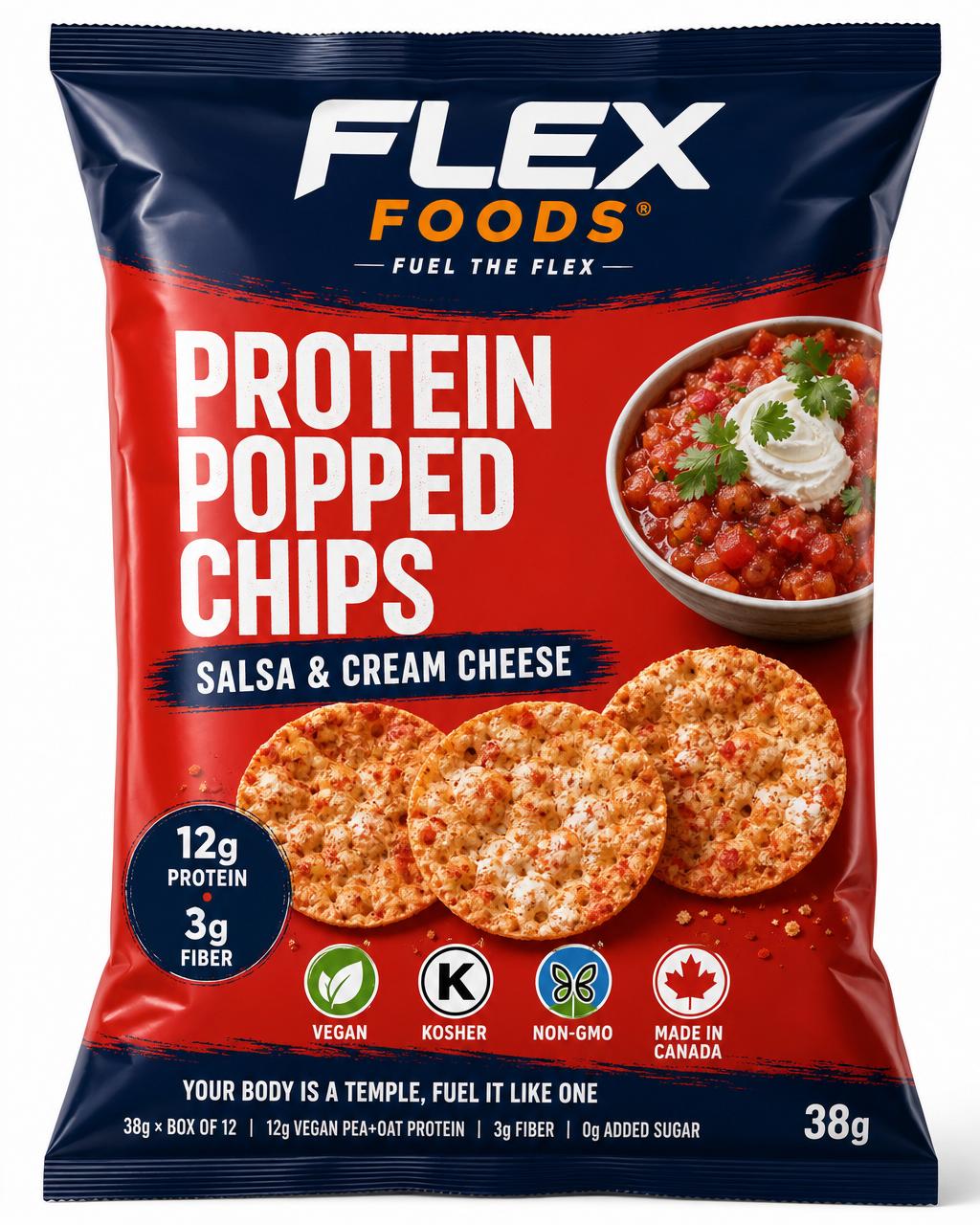
Popcorn is a genuinely excellent snack and one of the few packaged foods that survives nutritional scrutiny without qualification. It's a whole grain, it's high in fibre, it's cheap, and air-popped it's remarkably low in calories for the volume.
We're not going to pretend otherwise. Here's the honest comparison.
The numbers
Air-popped popcorn with nothing on it, scaled to a comparable serving.
| Per ~38 g | Air-popped popcorn | Protein Popped Chips |
|---|---|---|
| Calories | ~150 | 150 |
| Protein | ~5 g | 12 g |
| Fibre | ~5.5 g | 3 g |
| Fat | ~1.7 g | 4 g |
| Whole grain | Yes, entirely | Partly (3rd ingredient) |
| Protein per 100 cal | 3.3 g | 8.0 g |
| Volume | Enormous | Moderate |
Popcorn wins fibre outright — nearly double, and it's the only entry in this whole comparison series where a competitor beats us on it. It's also a whole grain in its entirety, which our chips are not.
We win protein, by a factor of more than two.
Popcorn's real advantage: volume
This is the one that matters most and it doesn't show up well in a table.
Thirty-eight grams of air-popped popcorn is roughly six cups. Thirty-eight grams of popped chips is a modest bag. Same calories, wildly different physical volume.
Volume drives satiety through stomach distension — a direct signal via stretch receptors, independent of the calories involved. It's the reason energy density (calories per gram) is the strongest single lever for fullness per calorie, and popcorn is exceptional on it.
Practically: if what you want is to eat a large amount of something over a long period for few calories — a film, an evening, a craving for volume — popcorn is close to unbeatable. Nothing we make competes on that axis.
Where protein chips win
Protein per calorie. 8.0 g per 100 calories against 3.3. That's the difference between a snack that contributes meaningfully to a daily protein total and one that mostly doesn't.
Satiety duration. Volume produces immediate fullness that fades relatively quickly as the stomach empties. Protein triggers satiety hormones — GLP-1, peptide YY, cholecystokinin — and slows gastric emptying. Popcorn fills you now; protein holds you at 5pm. Mechanism in the satiety science.
Portability. Six cups of popcorn is not a desk snack, a gym bag item or a lunchbox component. This is a practical rather than nutritional advantage, and it's a large one.
The enormous caveat: which popcorn
Everything above describes air-popped, unbuttered popcorn. That's a different food from most popcorn people actually eat.
| Type | Per ~38 g | Notes |
|---|---|---|
| Air-popped, plain | ~150 cal, 1.7 g fat | The version described above |
| Oil-popped | ~210 cal, 12 g fat | Oil is absorbed into the structure |
| Microwave, buttered | ~200–230 cal, 12–14 g fat | Plus 300–500 mg sodium |
| Cinema popcorn | Substantially higher | Large servings, heavy topping |
| Sweet / caramel | ~180–200 cal | Added sugar, often 15 g+ |
Buttered microwave popcorn has roughly three times the fat of our chips and less than half the protein. The health reputation belongs to the plain version and does not transfer — a health halo problem covered in the veggie straws comparison.
Cost
Popcorn wins decisively. Loose kernels are among the cheapest foods per calorie in any Canadian grocery store, and a bag of kernels air-popped at home costs a small fraction of any packaged protein snack.
Ours runs roughly 31 cents per gram of protein at single-bag pricing. Popcorn's cost per gram of protein is lower, and its cost per calorie is dramatically lower. Full ranking in cost per gram of protein.
The genuine recommendation
Keep both, for different jobs.
Popcorn for evening volume snacking, for fibre, for cost, and for any occasion where eating a lot of something for a long time is the point. Air-pop it yourself — the equipment costs less than a few boxes of microwave bags and the nutritional gap is large.
Protein chips for the mid-afternoon bridge, the gym bag, the lunchbox and the desk drawer, where protein and portability matter more than volume.
Or eat both together. A bowl of air-popped popcorn plus a protein snack is around 300 calories with 17 g of protein and 8.5 g of fibre, which is a better snack than either alone.