Brand & Values
Packaging a Supplement: Moisture, Light and Shelf Life
The pouch is a functional component, not a wrapper. Three things it has to block, and one trade-off we accepted.
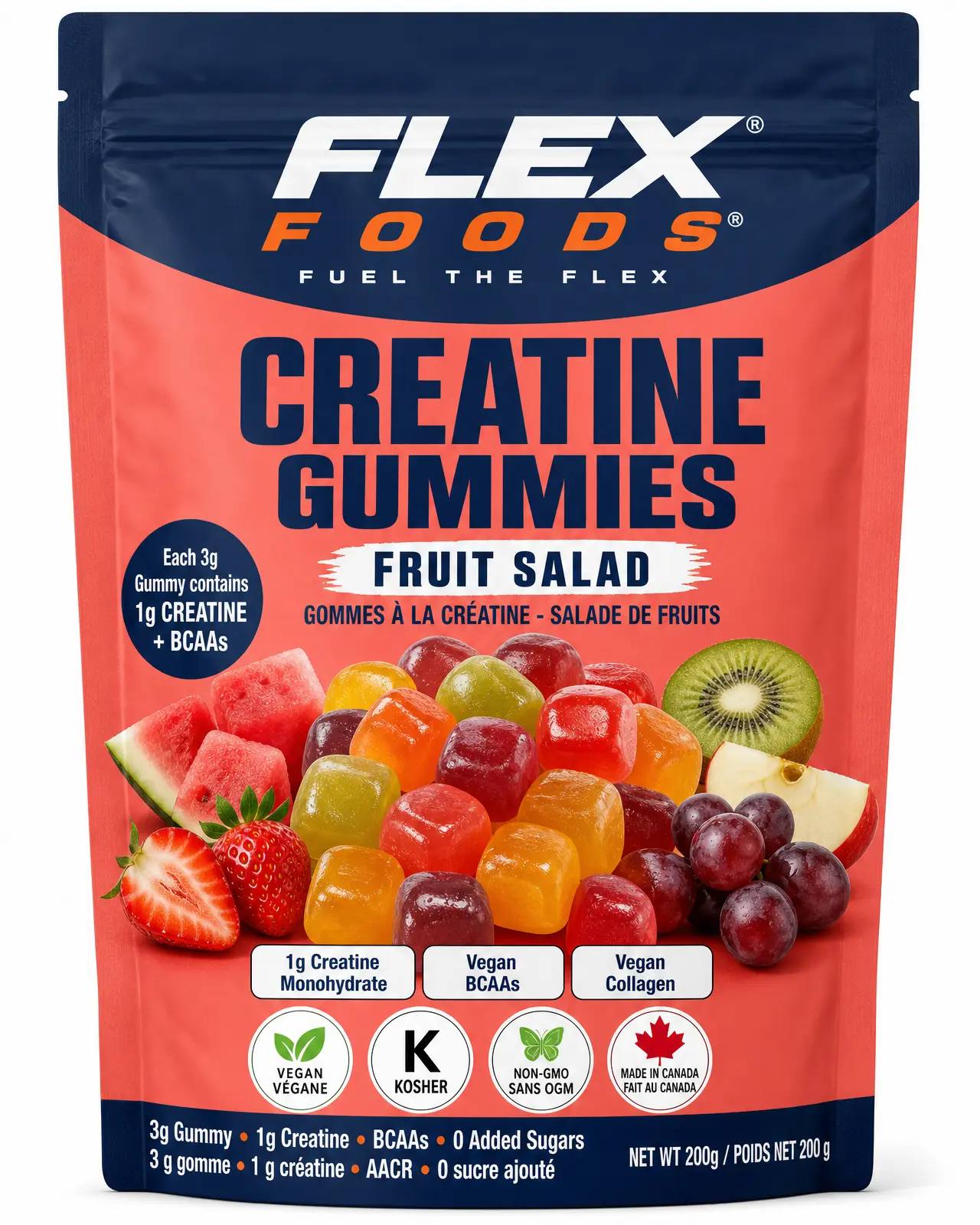
For a product whose active degrades, packaging isn't presentation — it's part of the formulation. The pouch is doing work every day it sits on a shelf.
What it has to block
Moisture, in both directions
The most important one, and it's bidirectional.
Gummies are cured to a specific water activity — low enough to be microbiologically stable without preservatives, high enough to stay chewable.
In a humid environment they absorb moisture: they soften, stick together, and available water rises, which accelerates creatine's conversion to inert creatinine. In a dry environment they lose moisture and harden into something unpleasant.
The pouch has to hold that equilibrium in both directions, which is why it's a barrier film rather than a simple plastic bag.
Light
Two reasons. Light accelerates degradation reactions generally, and anthocyanins — the plant pigments providing colour — are specifically light-sensitive and fade with exposure.
An opaque pouch protects both. It also means you can't see the product, which is a genuine minor cost — customers like seeing what they're buying, and a clear window would come at the price of colour and stability.
Oxygen
Less critical here than for a high-fat product, since the fat content is minimal — the panel declares 0 g. But oxygen contributes to colour degradation and flavour deterioration over months, so a barrier layer earns its place.
Why it reseals
Not a convenience feature. A 200 g pouch is 22 servings — roughly three weeks of daily use.
An unsealed pouch over three weeks means the contents drift toward ambient humidity. In a Vancouver autumn or a Prairie winter, that's a meaningful shift in either direction, and it undoes the water activity the product was engineered to.
The closure is doing chemistry, not marketing. Press it properly. See how to store creatine gummies.
The recyclability trade-off
The honest part.
Multilayer barrier films are among the harder packaging formats to recycle, because they're laminates of dissimilar materials — a sealing layer, a barrier layer, sometimes a printed outer layer. Mechanical recycling struggles to separate them.
We could use a mono-material or paper-based structure with better recyclability. Both would compromise barrier performance — which for a product that degrades with moisture is not a cosmetic concern.
The framing we'd offer, which is also convenient for us so weigh it accordingly: packaging that fails and lets the product degrade is worse than packaging that works and is hard to recycle, because the environmental cost of a wasted product generally exceeds that of the film around it.
That reasoning holds better for food than for a supplement, where the product is small and light. We'd rather state the trade-off than pretend we've solved it.
What to do with the pouch: in British Columbia, Recycle BC handles residential packaging, and flexible plastic packaging is generally managed through depot drop-off rather than curbside collection. Categories change, so check their current list for your area rather than guessing — wish-cycling contaminates streams. Provincial programmes differ elsewhere in Canada.
What we don't do
Claim it's curbside recyclable. It generally isn't.
Print a compostable logo. Compostable films exist and their barrier performance is generally below conventional multilayer. They also typically require industrial composting facilities, and Canadian access is uneven with many facilities refusing them. A compostable pouch in landfill achieves nothing while costing more.
Use a clear window. It would help sales and hurt the product.
What we'd like to change
Mono-material films — recyclable polyethylene structures with barrier coatings rather than laminated dissimilar layers — are the most promising direction and are improving.
The current constraints are barrier performance at the level a moisture-sensitive product requires, cost, and whether recycling infrastructure actually accepts them once labelled.
We're watching it. We're not going to announce a transition we haven't made.
The general point
When you're evaluating any supplement whose active degrades, the packaging tells you something. Opaque, resealable and a genuine barrier film suggests a manufacturer thinking about stability. A clear jar with a loose lid suggests otherwise.
It's a weak signal compared with actual testing data, which remains the thing to ask for. See how to check a creatine gummy.
General information about a natural health product, not medical advice.