
Breakfast
Intermittent Fasting: Breaking a Fast on Protein First
Why protein-first tends to land better than carb-first when the eating window opens — and who shouldn't fast at all.
Before anything practical: intermittent fasting is not appropriate for everyone, and the exclusions are meaningful rather than boilerplate.
Talk to a doctor before fasting if you are pregnant or breastfeeding, have type 1 or type 2 diabetes or take glucose-lowering medication, have a history of disordered eating, are under 18, are underweight, or take medication requiring food. For people with a history of restrictive eating in particular, structured fasting can reinforce patterns that are difficult to unwind — that's a genuine risk rather than a disclaimer.
With that said, here's what's reasonably supported.
What the evidence actually shows
More modest than the popular framing.
Randomised trials comparing time-restricted eating to continuous calorie restriction generally find similar weight loss when total calorie intake is matched. Meta-analyses tend to show no substantial advantage for fasting protocols over conventional restriction on weight or most metabolic markers.
Which doesn't make it useless. For some people a compressed eating window is a simpler rule to follow than counting calories, and adherence dominates outcomes over any real timeframe. If it fits your life, it's a legitimate approach. If it doesn't, you're not missing a metabolic advantage.
The claims that go further — autophagy benefits, metabolic switching, cellular repair — rest largely on animal work and short-term human markers. Interesting, not established as clinically meaningful in humans at the fasting durations most people practise.
The problem a compressed window creates
Two eating occasions instead of four means each has to carry more, and appetite doesn't scale up proportionally.
The consequence is that protein is what gets squeezed. It's the macronutrient people most commonly fall short on when eating occasions are reduced, and it matters most — because muscle protein synthesis responds to per-meal dosing, and there's a ceiling to how much a single feeding contributes.
Practically: someone eating 120 g of protein across four meals is distributing it well. The same 120 g across two meals means 60 g each, and the marginal protein above roughly 0.4 g per kilogram per sitting contributes less to muscle protein synthesis. Detail in protein distribution.
This is the strongest argument for a third eating occasion within the window, even a small one.
Why protein first
Three reasons the first thing you eat should be protein-forward rather than carbohydrate-forward.
Glucose response. A large refined-carbohydrate load into a fasted state produces a bigger glucose excursion than the same food eaten alongside protein and fat. There's reasonable evidence that meal order matters — eating protein and vegetables before carbohydrate produces a lower post-meal glucose response than the reverse, even with identical food.
Satiety and pacing. Breaking a long fast on something sweet or starchy tends to produce fast eating and overshoot. Protein triggers satiety hormones — GLP-1, peptide YY, cholecystokinin — and slows gastric emptying, which gives the lagging fullness signal time to catch up.
Digestive comfort. A large volume of food into an empty stomach commonly causes reflux and bloating. Starting smaller and protein-forward, then pausing before the main meal, works better for most people. This is also the traditional structure of breaking a fast in several religious traditions — see Ramadan and fasting windows.
A structure that works
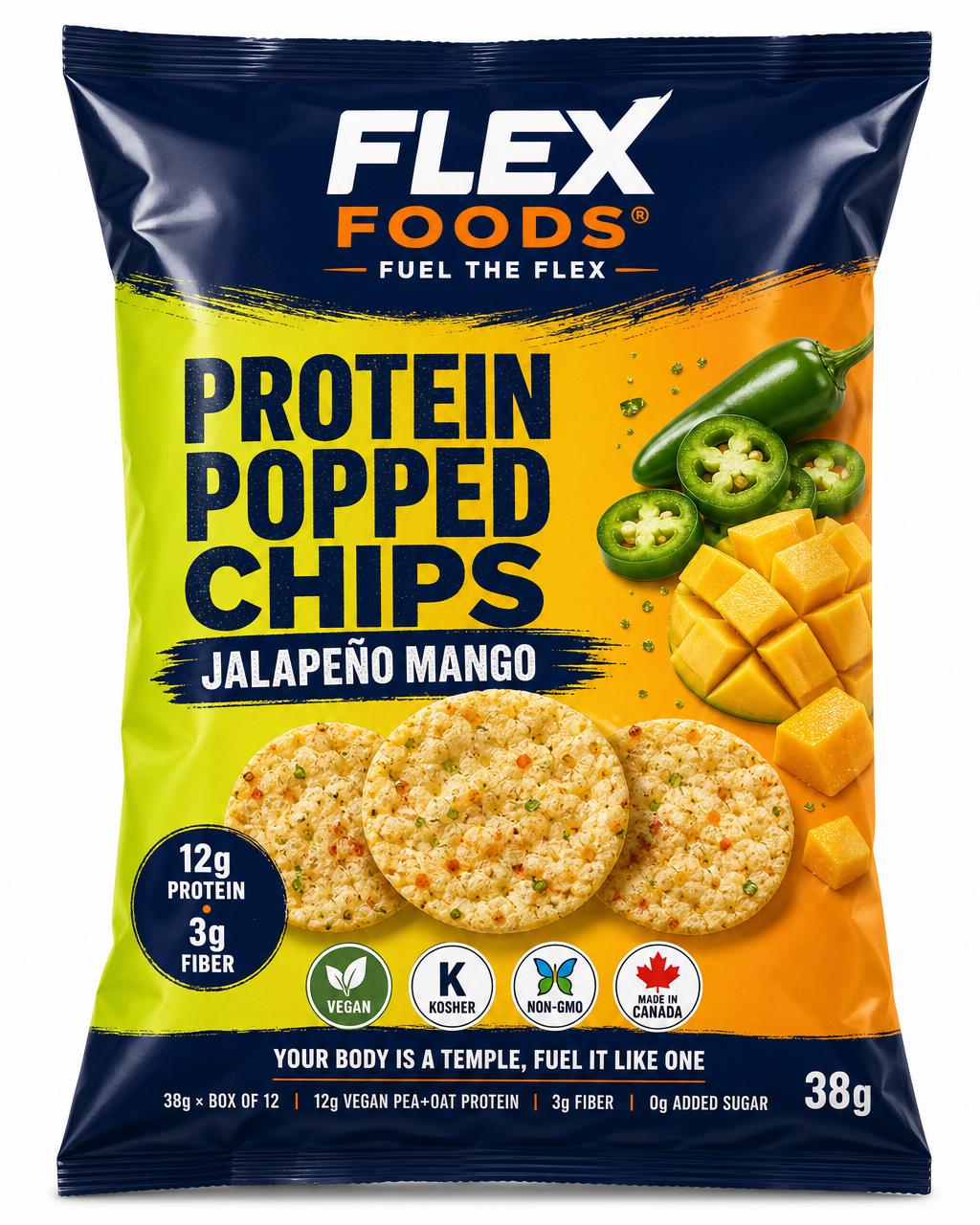
- Break with something modest and protein-containing. Not a full meal. A bag of Protein Popped Chips with a bean dip is around 24 g of protein for 325 calories. Yogurt, edamame or a small protein drink all work equally.
- Pause fifteen minutes. Satiety signalling lags intake considerably. The pause is what prevents overshoot.
- Then the main meal. Protein and vegetables before the carbohydrate portion, if you want the meal-order effect.
- A third feeding later in the window. This is the one people skip and it's what fixes the distribution problem.
Training while fasted
Common, and worth calibrating expectations.
For sessions under an hour at moderate intensity, fasted training makes little measurable difference for most people. For long or high-intensity work, performance is typically reduced — glycogen availability limits output at those durations, and no amount of adaptation removes that.
The claim that fasted training burns more fat is partly true and largely irrelevant: you do oxidise a higher proportion of fat during the session, but total daily energy balance is what determines fat loss, and the difference doesn't persist.
For muscle retention, total daily protein and its distribution matter considerably more than whether you trained fasted. See pre-workout snacks.
When to stop
Signals that a fasting protocol isn't working for you: persistent fatigue, poor sleep, disrupted or absent menstrual cycles, obsessive thinking about food, binge episodes when the window opens, or performance declining despite consistent training.
Any of those is a reason to stop and talk to a doctor or a registered dietitian rather than to push harder. A protocol producing binge–restrict cycling is doing harm, and that's a common enough outcome to name plainly.