
Breakfast
Breakfast on a Commute: What Actually Travels
No-spill, no-smell, no-utensil breakfast that survives transit and still counts as a meal.
The commute breakfast is a genuinely constrained design problem. You're standing on a bus or driving, you have one hand, there's no table, and whatever you eat is being eaten in front of strangers.
Which is why most commute breakfasts are a coffee and a pastry — the only two things that reliably work. Both are almost entirely refined carbohydrate, which produces a glucose rise and dip landing somewhere around 10am.
The five constraints
- One hand. Rules out anything needing cutlery or a bowl.
- No spill. Yogurt, milk, soup, anything liquid without a sealed lid.
- No smell. A shared bus or train is a captive audience. Eggs, fish, anything reheated.
- No crumb catastrophe. Anything that showers your lap.
- No refrigeration on arrival. If it sits in a bag until 8:30, it has to be fine.
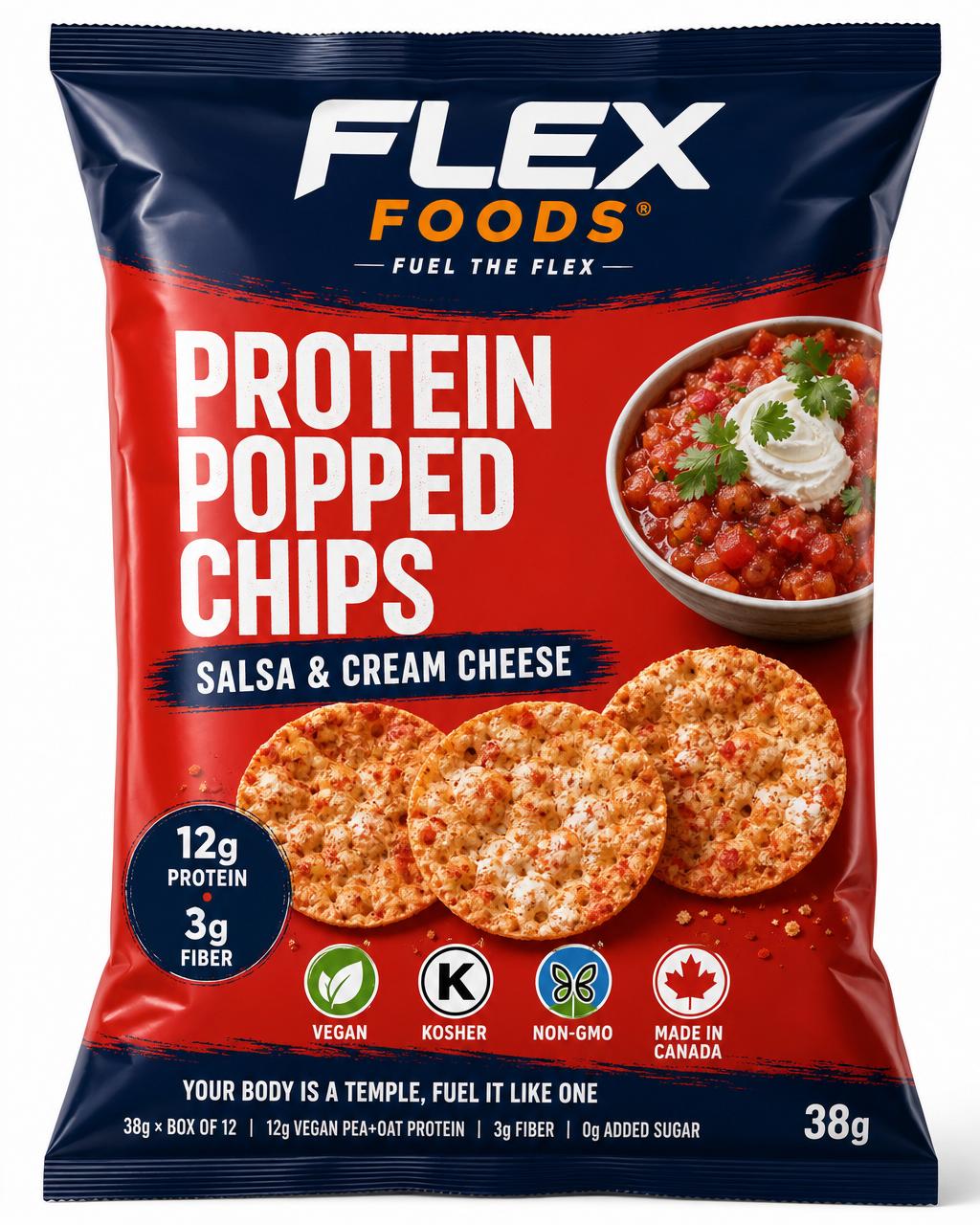
Note that the crumb constraint counts against us. Popped chips are aerated and brittle — eaten from the bag they're fine, but they're not a discreet food on a crowded train. We'd rather say that than pretend the product suits every slot.
What actually travels
Tier 1 — genuinely one-handed
- Overnight oats in a sealed jar with a spoon in your bag. Cheating slightly on the cutlery rule, but a screw-top jar doesn't spill. 80 g oats, soy milk, hemp hearts and berries is around 25 g of protein.
- A wrap or sandwich with a real filling. Hummus and vegetables, bean spread, plant deli slices. Around 15–20 g. Wrap the bottom half in foil and peel down.
- A shelf-stable protein drink. 20–30 g of protein, sealed, one hand. The most efficient option on this list and the least like a meal.
- A protein bar plus a piece of fruit. Compact, crumb-free, around 20 g. Dense and over quickly.
Tier 2 — works if you have a seat
- A savoury snack plate assembled at your desk. A bag of Protein Popped Chips plus a pot of hummus is 18 g of protein, and it works at 8:30am at a desk rather than on the bus.
- Roasted edamame or chickpeas plus fruit. Around 15 g, quiet, no crumbs.
- A hard-boiled egg if smell isn't a factor — in a car, it's fine.
What doesn't work
Cereal in any form. Yogurt pots without a firm lid. Anything requiring assembly. Bananas past hour two in a warm bag. Coffee and a pastry, which works logistically and fails nutritionally.
The two-part structure that solves this
The most practical answer isn't a better commute food. It's splitting breakfast in two.
Something small before you leave. Ninety seconds standing in the kitchen. A glass of soy milk, a spoon of peanut butter, a handful of nuts. Five to ten grams of protein and it stops you arriving ravenous.
The real breakfast at your desk. Where you have a surface, both hands, and nobody's elbow. This is where 20 g-plus actually happens.
Splitting it removes almost every constraint on the list, because the desk portion doesn't need to travel while being eaten — only to survive a bag.
Why the pastry fails
Worth being specific, since it's the default.
A croissant or muffin plus a sweetened coffee runs 400–550 calories with 5–8 g of protein and 1–2 g of fibre. That's a lot of energy delivering very little of what makes a breakfast hold.
Rapidly digestible carbohydrate with no protein, fat or fibre to slow it produces a glucose rise and a subsequent dip, and larger dips correlate with more hunger and eating sooner. The 10:30 hunger that follows a pastry breakfast isn't a lack of discipline — it's the predictable second half of the curve. Detail in the glucose curve post.
Prep, honestly assessed
Every good option here requires some preparation the night before, and that's the actual barrier rather than knowledge.
The lowest-effort version that works: on Sunday, put four jars of overnight oats in the fridge and four sealed protein snacks in your bag. That's ten minutes covering four mornings, and it beats any amount of intending to make a better choice at 7:15am.
The general principle applies across this whole blog — decisions made in advance beat decisions made while rushed. See the desk drawer audit.