
Breakfast
Savoury Breakfast: Chips, Avocado and 20g Before 9am
For people who don't want sweet food in the morning. A savoury plate that still hits the protein target.
Breakfast in most of the English-speaking world is sweet. Cereal, pastries, flavoured yogurt, jam, granola, fruit smoothies — the default flavour direction is sugar, and it's culturally specific rather than physiological.
Plenty of the world eats savoury in the morning. Congee, ful medames, miso soup and rice, dal, beans, cheese and olives, leftover dinner. If sweet food at 7am has never appealed to you, that's not a quirk.
Here's a savoury build that clears 20 g of protein in two minutes.
Why savoury tends to work better for protein
A structural reason, not a preference one.
Sweet breakfast foods are mostly carbohydrate — grains, fruit, sugar — with protein added as an afterthought if at all. Savoury breakfast traditions are built on legumes, eggs, fish and fermented foods, which are protein-dense by default.
So going savoury tends to raise breakfast protein without any deliberate effort. It's the direction the food is already pointing.
The plate
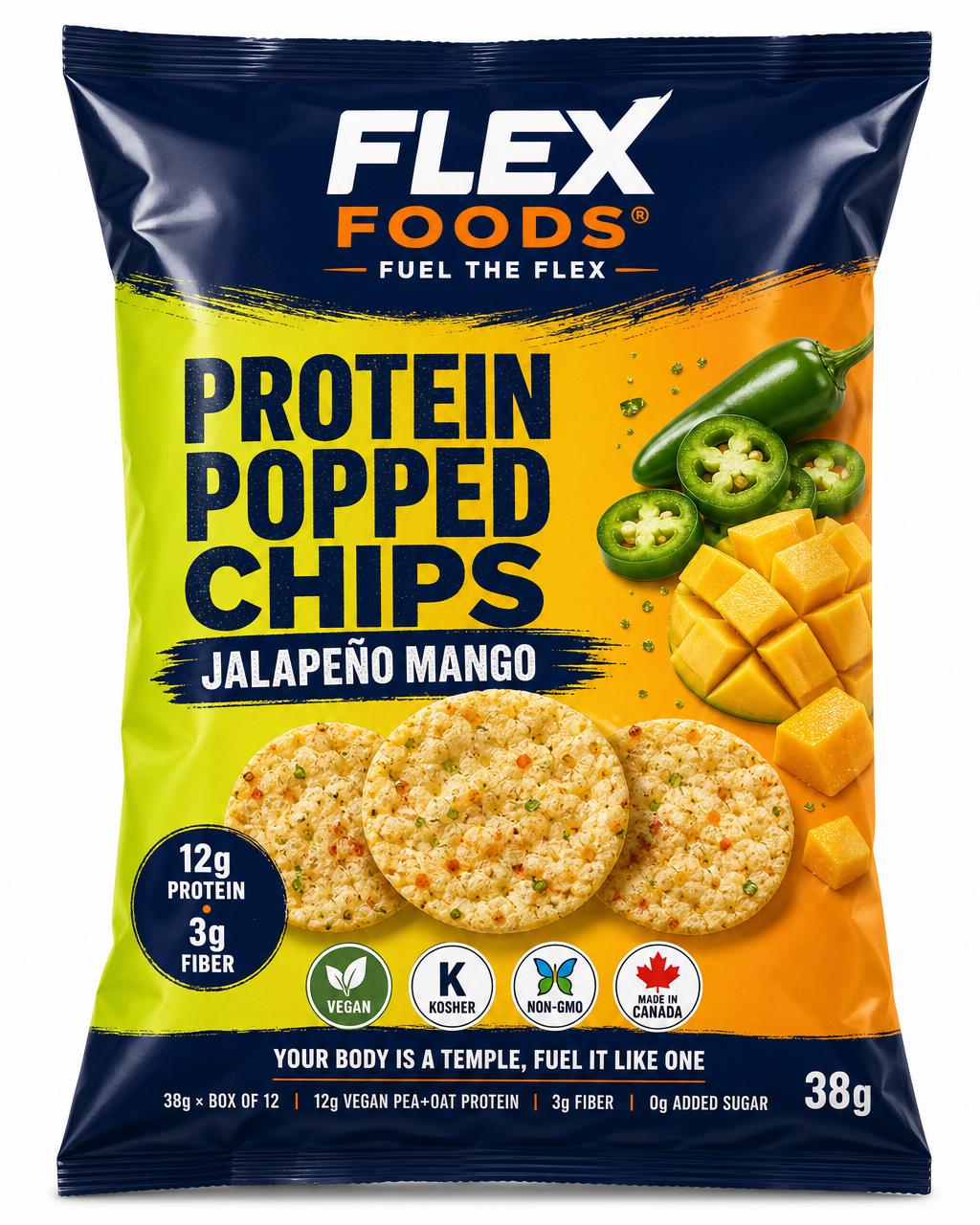
Base: one 38 g bag of Protein Popped Chips — 150 calories, 12 g protein, 3 g fibre. Original Sea Salt or Garlic & Onion work best here; California Limón if you want brightness.
Protein layer: half a tin of black beans, warmed 60 seconds with cumin, lime and salt. 12 g of protein, 10 g of fibre, about 175 calories.
Fat and body: half an avocado, sliced or roughly mashed with lime.
Freshness: cherry tomatoes, coriander, red onion, a wedge of lime. Hot sauce if you want it.
Total: roughly 24 g of protein, 15 g of fibre, around 450 calories. Two minutes, one microwave, no pan.
Why the avocado earns its place
It contributes about 2 g of protein, so it isn't there for that.
Avocado is monounsaturated fat plus a substantial amount of fibre — roughly 7 g in half a fruit. Both slow gastric emptying, which means the plate holds you longer than the protein number alone predicts. It also does something no other component here does: it provides a rich, coating mouthfeel that makes a savoury breakfast feel like a proper meal rather than a snack.
That last part isn't trivial. A breakfast that doesn't register as breakfast leads to eating again at 10am.
Four variations
The Mediterranean. Chips, hummus, cucumber, tomato, olives, plant feta, olive oil, oregano. Around 22 g of protein. The most different from a North American breakfast and the easiest to assemble.
The masala. Tikka Masala chips, warmed chickpeas with garam masala and lemon, plant yogurt with cucumber and mint. Around 25 g. Method in chips with raita.
The scramble plate. Tofu scrambled with turmeric, black salt and nutritional yeast, with chips on the side instead of toast. Around 35 g of protein and the closest thing here to a traditional cooked breakfast.
The five-minute version. Just chips, half a tin of beans, hot sauce. 24 g of protein, roughly 90 seconds, works at a desk.
Why breakfast protein specifically matters
Two reasons worth knowing.
Distribution. Muscle protein synthesis responds to per-meal dosing rather than a daily total alone, and below roughly 0.4 g per kilogram in a sitting the response is muted. The standard pattern — 5 g breakfast, 50 g dinner — clears that threshold once a day. Detail in protein distribution.
The rest of the morning. A carbohydrate-dominant breakfast produces a glucose rise and a dip, and larger post-meal dips correlate with more hunger and eating sooner. A 20 g-plus protein breakfast flattens that curve and generally holds people to lunch. Mechanism in why your chips crash you at 3pm.
The obvious objection
Chips for breakfast reads as a stretch, and it partly is — the framing exists because we sell chips.
The defensible version: the plate above is beans, avocado, tomato and a protein-and-fibre-carrying crisp component. Structurally that's much closer to huevos rancheros or a tostada than to a bag of crisps at 8am, and the crisp element is doing the same job a tortilla or toast would while carrying 12 g of protein instead of 3.
If that framing doesn't convince you, the beans and avocado are the important part and any wholegrain base works. We'd rather you eat a savoury high-protein breakfast than a specific brand of it.