
Training
Cutting Season: Snacks That Keep You Full on Fewer Calories
Three levers of fullness: volume, protein and fibre. How to pull all three when calories are limited.
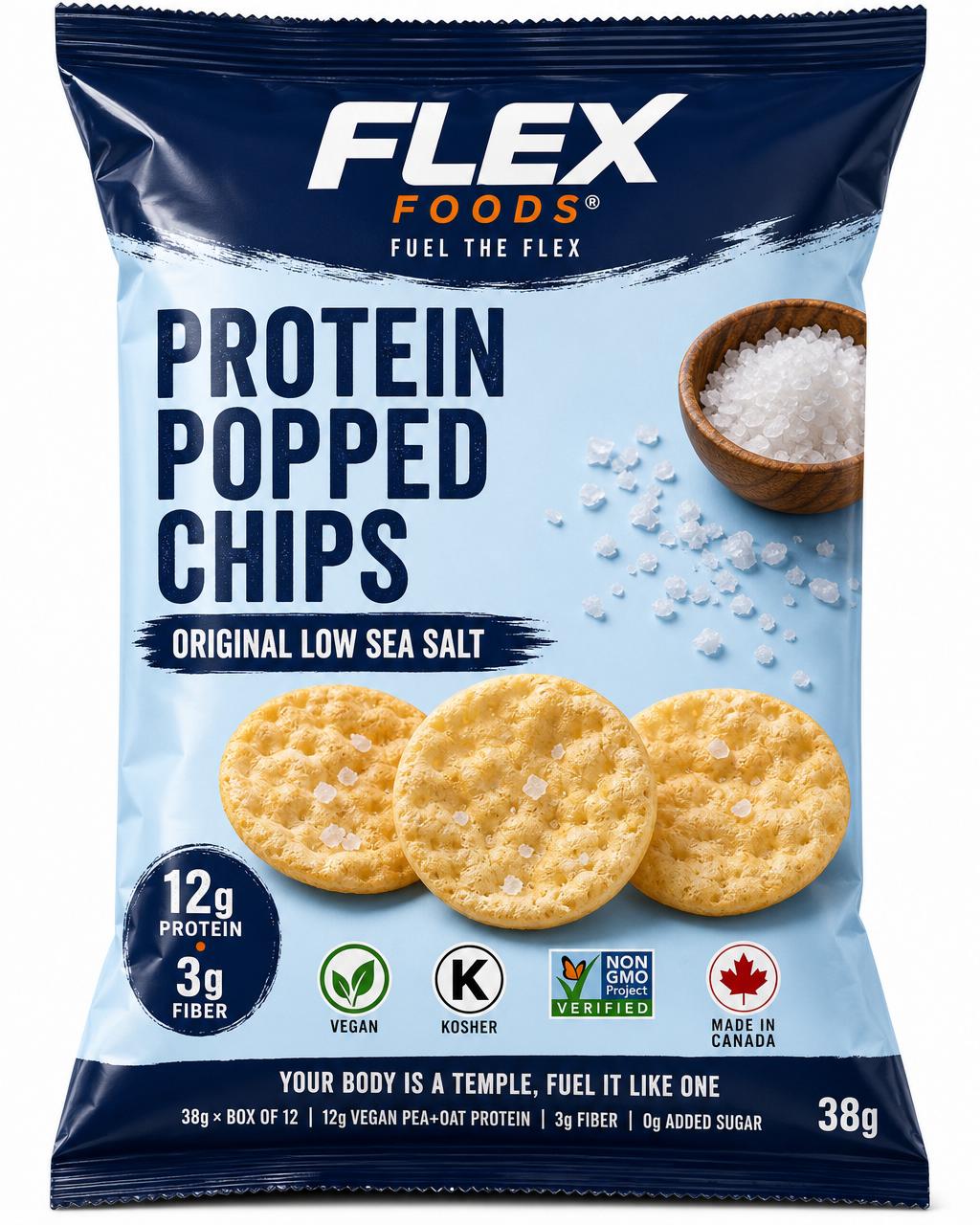
Eating in a calorie deficit is uncomfortable in a specific way — not constant starvation, but a low-grade preoccupation with food that makes every decision harder than it should be. Most of the difficulty is a satiety problem rather than a willpower problem, and satiety is partly manipulable.
A note before the practical part: sustained restriction isn't right for everyone, and the strategies below assume a moderate, time-limited approach alongside training. If food or bodyweight is occupying a large share of your attention, or you find yourself unable to stop restricting, that's worth discussing with a doctor or a registered dietitian rather than optimising further. Nothing here is a substitute for individual advice.
The three levers
Fullness in the short term is driven by a few mechanisms you can actually act on.
Volume
Stomach distension is a direct satiety signal via stretch receptors, independent of the calories involved. Foods with high water and air content produce more distension per calorie.
This is why 400 g of vegetables feels like a meal at 120 calories, and a 60 g chocolate bar does not at 320. Energy density — calories per gram — is the single most useful number for satiety per calorie.
Protein
The most satiating macronutrient per calorie, working through several routes: it triggers release of satiety hormones including GLP-1, peptide YY and cholecystokinin; it slows gastric emptying; and it has the highest thermic effect, meaning a share of its calories are spent on digestion.
Protein also does something specific in a deficit — it helps preserve lean mass, which is the difference between losing fat and losing weight indiscriminately. Protein requirements go up in a deficit, not down. Commonly cited figures for people training while restricting sit around 1.6–2.4 g per kilogram.
Fibre
Soluble fibre forms a viscous gel that slows gastric emptying; insoluble fibre adds bulk. Both extend fullness on a longer timescale than protein's hormonal signal, which fades over a couple of hours. The pairing is the point — the 3 g fibre detail covers why.
Ranking snacks by satiety per calorie
A rough working score combining protein, fibre and energy density:
| Snack | Calories | Protein | Fibre | Cal/g |
|---|---|---|---|---|
| Raw vegetables + hummus | 180 | 7 g | 8 g | 0.9 |
| Roasted edamame, 40 g | 170 | 15 g | 7 g | 4.3 |
| Plant Greek yogurt + berries | 190 | 14 g | 4 g | 1.0 |
| Protein popped chips, 38 g | 150 | 12 g | 3 g | 3.9 |
| Roasted chickpeas, 40 g | 170 | 8 g | 6 g | 4.2 |
| Protein bar | 230 | 18 g | 5 g | 3.9 |
| Almonds, 30 g | 175 | 6 g | 3 g | 5.8 |
| Standard potato chips, 40 g | 220 | 2 g | 1 g | 5.5 |
Note the pattern. Watery, bulky things win outright on satiety per calorie — vegetables and yogurt are unbeatable. Among dry, shelf-stable, portable options, the ranking is driven almost entirely by protein and fibre, and 150 calories for 12 g and 3 g is competitive in that narrower category.
We'd rather be clear about that framing than claim a chip beats a bowl of vegetables. It doesn't. It beats what you'd otherwise eat at the office.
The four practical moves
1. Put protein in every eating occasion, snacks included. This is where most people's deficit diets fail — meals are protein-adequate and snacks are pure carbohydrate. Three snacks at 2 g of protein each is 6 g from roughly 400 calories, and it does nothing for fullness or lean mass.
2. Add volume rather than a second portion. Cucumber, celery, tomatoes, peppers alongside a snack. Near-zero calories, real stomach distension. It sounds trivial and it's the highest-leverage habit on this list.
3. Use single-serve packaging deliberately. Portion decisions get made once per package, not once per mouthful. In a deficit, an open large bag is a lost negotiation. Detail in portion sizes.
4. Rotate flavours. Appetite for a specific flavour declines with repeated exposure faster than appetite for food in general, which is why restrictive diets built on the same three foods collapse in week three. Variety within the same macros is the structural fix.
What not to do
- Don't cut protein to save calories. It's the macronutrient that most protects lean mass and most reduces hunger. Cut fat or refined carbohydrate first.
- Don't drink your calories. Liquid calories are markedly less satiating than the same calories eaten. Smoothies and juices are a poor use of a limited budget.
- Don't go too aggressive. Large deficits accelerate lean mass loss, degrade training quality and are much harder to sustain. Slower is not just kinder; it usually preserves more muscle.
- Don't skip meals to bank calories. It reliably produces overshoot later, and it concentrates protein into one feeding when it works better spread across three or four — see protein distribution.
Our post on protein and cravings goes further into the satiety mechanism.