
Fuel Science
BCAAs Explained: Leucine, Isoleucine and Valine
Three of the nine essential amino acids, with an unusual metabolism and a marketing story that outruns the evidence.
Branched-chain amino acids are among the highest-selling sports supplements in the world. The biochemistry behind them is genuinely interesting; the case for supplementing them is weaker than the shelf space suggests.
Here's what they actually are.
The three
Leucine, isoleucine and valine. They're grouped because they share a branched aliphatic side chain — a structural feature, not a functional category.
All three are essential: your body can't synthesise them, so they must come from diet. That's true of nine amino acids in total. BCAAs are three of the nine.
That "three of nine" framing is the single most useful thing to hold onto, and we'll come back to it.
What makes them unusual
Most amino acids are metabolised primarily in the liver. BCAAs largely aren't — they pass through and are metabolised substantially in skeletal muscle, which has high activity of the enzyme that starts their breakdown.
That's the biochemical basis for the interest. An amino acid group processed in muscle rather than liver looks, at first glance, like it should matter specifically for muscle.
Leucine does the signalling
Of the three, leucine is the one that matters most.
Leucine activates mTORC1, a central signalling complex regulating muscle protein synthesis. Rising leucine concentration functions as a signal that amino acids are available and building can begin.
This is why leucine content is used as a rough marker of a protein's anabolic quality, and why "leucine threshold" appears in nutrition discussion — the idea that a feeding needs enough leucine to meaningfully trigger the response.
Isoleucine has some role in glucose uptake, and valine's specific contributions are less clearly characterised.
The gap between signal and substrate
Here's where the marketing and the physiology separate.
Leucine triggers muscle protein synthesis. But synthesis builds tissue from the full set of amino acids — all twenty, including all nine essential ones.
Supplying only three is like sounding a construction whistle without delivering materials. The signal fires; what's built is limited by what's available.
Researchers including Wolfe have argued that BCAAs alone cannot maximally stimulate muscle protein synthesis, because the other essential amino acids become limiting — and that supplying BCAAs in isolation might even draw on the body's existing pools of the others.
Studies measuring the effect support a version of this. BCAA ingestion after resistance exercise does produce a measurable rise in muscle protein synthesis — but a substantially smaller one than an equivalent dose of whole protein or complete essential amino acids.
Fuller treatment in do BCAAs work if you eat enough protein.
You're already eating them
The practical point that undercuts most BCAA marketing.
BCAAs aren't exotic. They're abundant in ordinary protein — whey is roughly a quarter BCAA by weight, and meat, eggs, dairy, soy and legumes all contain them substantially.
A 25 g serving of whey protein delivers around 5–6 g of BCAAs plus all the other essential amino acids required to actually build with. A typical BCAA supplement serving delivers a similar BCAA quantity and none of the rest.
Which makes the comparison unflattering: for most people, whole protein delivers the same BCAAs and more besides, usually more cheaply.
The ratio marketing
Products advertise 2:1:1, 4:1:1, 8:1:1 — leucine to isoleucine to valine.
2:1:1 approximates the ratio found in muscle protein. Higher-leucine ratios are sold on leucine's signalling role.
There's little good evidence that higher leucine ratios outperform 2:1:1 for practical outcomes, and pushing leucine higher relative to the others arguably worsens the underlying imbalance problem rather than solving it.
Where BCAAs have a genuine role
Two contexts worth distinguishing from sports marketing.
Clinical use. BCAAs have established applications in specific medical settings, including hepatic encephalopathy, managed by clinicians. That's a different use from a tub in a gym bag.
Genuinely inadequate protein intake. If someone is training hard while under-eating protein, BCAAs may do something. But the better solution in that case is more total protein.
What's on our label
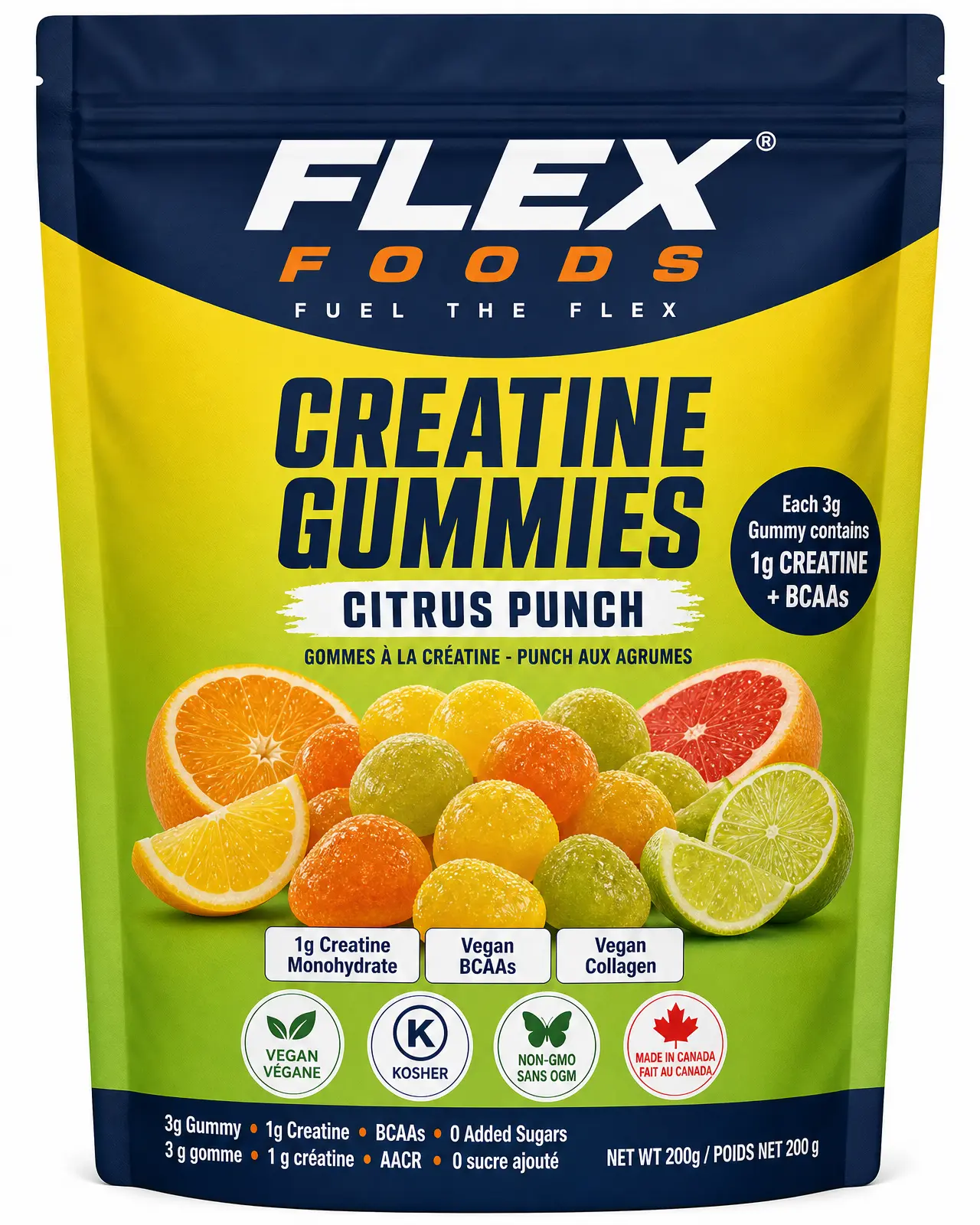
For clarity, since this post appears on a supplement brand's blog: our medicinal ingredient is creatine monohydrate, 1 g per gummy, and our nutrition panel declares 0 g protein.
This post is here because BCAAs are among the most-asked-about supplements and the evidence deserves a fair summary, not because we're selling them.
How to check any amino acid claim against a label is in amino acids on a label.
General information about a natural health product, not medical advice.