
Seasonal
Back to School: A Month of High-Protein Lunch Snacks
Four weeks of lunchbox rotation that survives the trade table, the nut ban and a nine-year-old's opinion.
September lunch-packing starts strong and collapses around week three. Not because parents stop caring — because the first fortnight uses up every idea, and by the third Monday you're putting the same three things in the same box and the box is coming home full.
The fix is a rotation planned once rather than a decision made twenty times. Here's a four-week structure.
Why rotation matters more than nutrition here
The mechanism behind lunchbox failure is sensory-specific satiety — appetite for a specific flavour and texture declines with repeated exposure faster than appetite for food in general. Give a child the same snack five days running and they'll like it measurably less by Friday, and reject it by week three.
Parents read that as fussiness. It's a normal perceptual effect that happens to adults too, and it will defeat any single-item plan no matter how good the item is.
Which means variety isn't a nice-to-have. It's the mechanism that makes the plan survive to October.
Before the rotation: the two non-negotiables
Read your school's actual policy. They vary between boards and even between schools in a district. Many Canadian schools are nut-free or nut-aware; some extend to sesame or other priority allergens; some restrict sweetened drinks.
If a classmate has a severe allergy, default to the strictest requirement. Not "nut-free options" — nut-free.
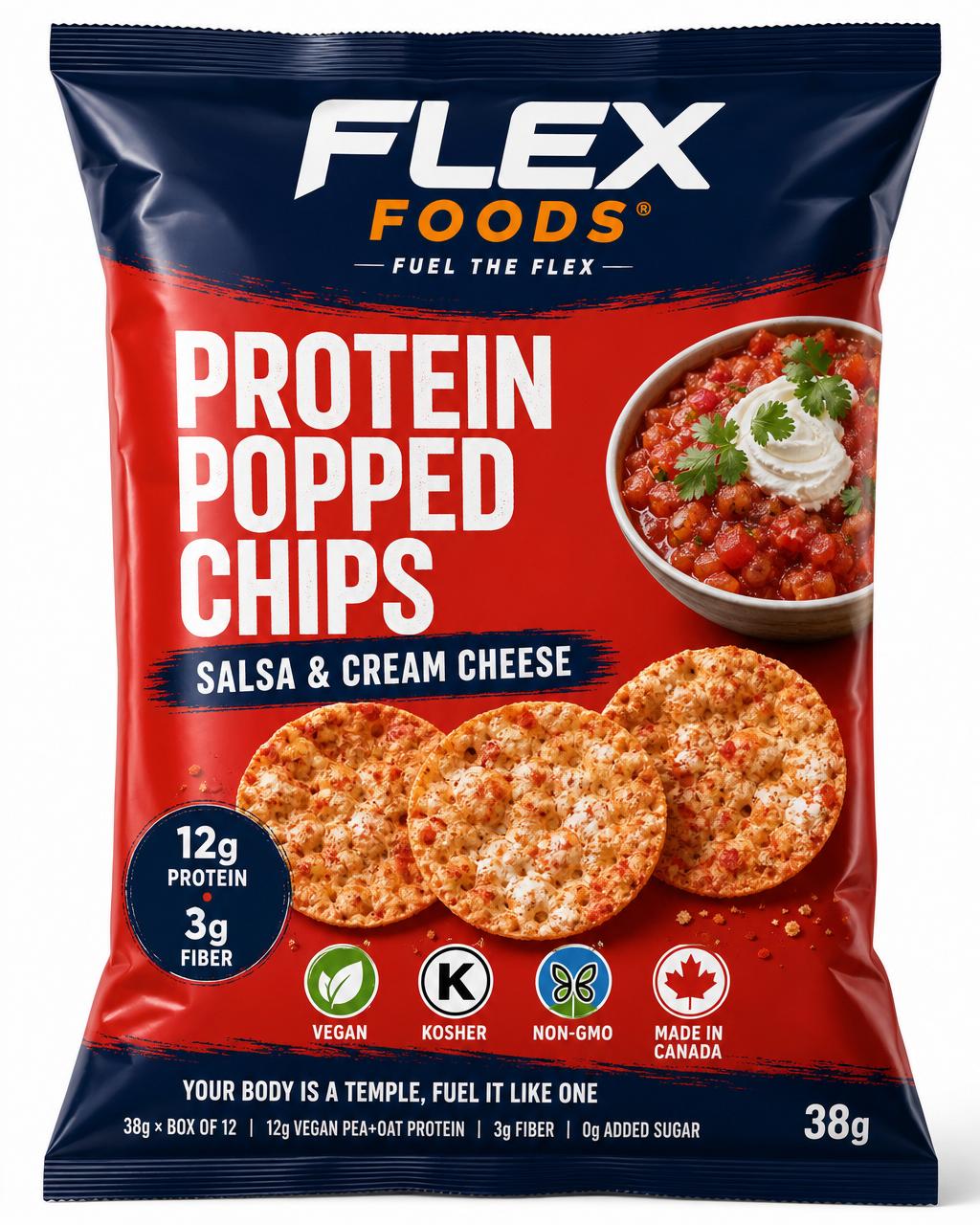
On our own product: the ingredient list for Protein Popped Chips is pea protein isolate, oat protein, brown rice, sunflower oil, natural seasoning, sea salt and spices — no nuts, dairy, egg, soy or wheat, and the only precautionary statement is "may contain oats." For a strict school protocol, email hello@flexfoods.ca for facility documentation rather than trusting a summary. Full guide in the may contain decoder.
The four-week rotation
Each day is a main, a protein snack, a fruit or vegetable, and water. The mains rotate weekly; the snacks rotate daily.
Week 1 — sandwiches and wraps
| Day | Main | Protein snack |
|---|---|---|
| Mon | Hummus and cucumber wrap | Protein chips |
| Tue | Bean spread sandwich | Roasted chickpeas |
| Wed | Plant deli slice sandwich | Soy yogurt tube |
| Thu | Falafel wrap | Protein chips, different flavour |
| Fri | Whatever they'll actually eat | Their pick |
Week 2 — bento boxes
For children who won't eat sandwiches, which is most of them at some point. Compartments beat assembly: several small things get eaten more reliably than one large thing.
Rotate through: chickpea salad, edamame, plant cheese cubes, crackers or chips, cucumber, cherry tomatoes, berries, hard-boiled egg if your school allows it.
Week 3 — thermos week
The one that buys you the most goodwill in cold weather. Lentil soup, chilli, pasta with beans, rice and vegetables. Preheat the thermos with boiling water for five minutes before filling — it roughly doubles how long food stays hot, and lukewarm soup is a lunch that comes home.
Week 4 — leftovers and breakfast-for-lunch
Pancakes with fruit. Overnight oats. Last night's dinner, cold, if it works cold. This week costs the least effort and is often the most popular, which is worth noticing.
Why protein at lunch specifically
Most Canadian children get adequate total protein. The common gap is distribution — very little at breakfast, very little at lunch, and most of the day's protein at dinner.
That matters for the afternoon. A lunch built largely from refined carbohydrate — white bread, fruit snacks, a juice box, crackers — produces a glucose rise and a dip, and the dip lands in the afternoon teaching block. Protein and fibre flatten that curve. The mechanism is in why your chips crash you at 3pm.
This is general nutrition information. A child with specific dietary needs or a growth concern is a conversation for a paediatrician or registered dietitian.
The trade table
Worth being realistic about. Children trade, and they trade on social value rather than nutrition.
What survives: things that look like normal snacks, things in a bag rather than a container, and things a child has an opinion about. A savoury chip in a printed bag reads as a chip. A beige health-food product in clinical packaging gets left in the box.
What doesn't: anything needing cutlery, anything that leaks, and anything cut up at 7am that has since browned.
Three tactics that change behaviour
Let them choose from a shortlist. Not "what do you want" — "which two of these four." Autonomy within constraints gets food eaten and is less work than negotiating from scratch.
Pack the night before. Morning decisions are bad decisions. Fifteen minutes after dinner beats five minutes at 7:15am.
Check the box, don't interrogate. What comes home tells you more than what a child reports. Two weeks of noticing is better data than any conversation.
More on the lunchbox economy in snacks kids will actually trade for.
The honest caveat
The nutritional foundation of a child's lunch should be whole food — beans, eggs, dairy or alternatives, vegetables, fruit, whole grains. Those do more for less money and always will.
A packaged snack occupies the slot where the alternative is a fruit-flavoured gummy. Judge it against that, not against a home-cooked lunch.