
Fuel Science
12g of Protein in a Bag of Chips: How Pea and Oat Protein Make It Possible
Twelve grams is roughly a quarter of the daily value. Getting it into 38 grams of crisp, brittle chip is harder than it sounds.
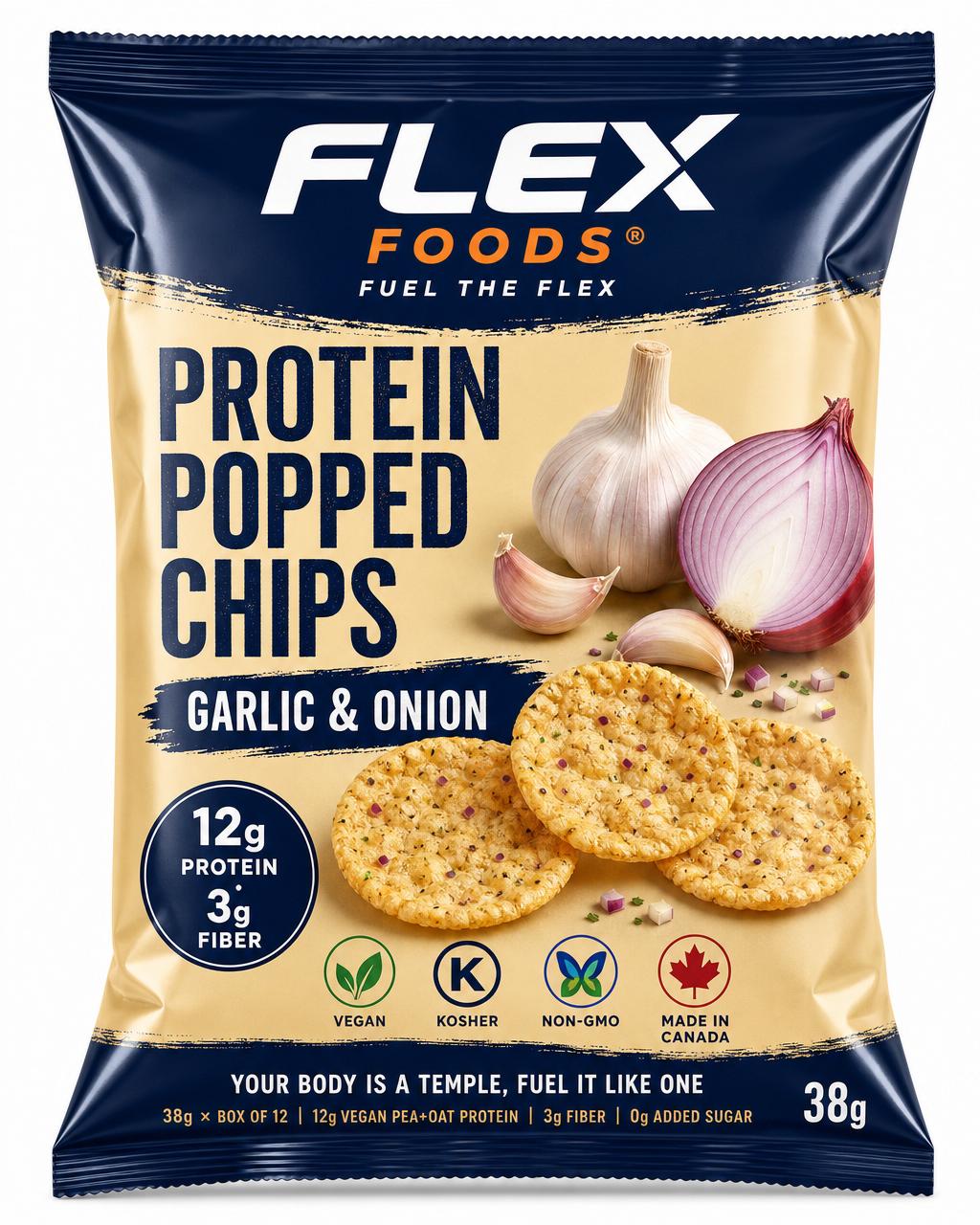
Twelve grams of protein in a bag of chips sounds like a rounding error until you look at what it replaces. It's the protein in two large eggs, or 350 ml of cow's milk, or about 55 g of chicken breast. In a snack that weighs 38 g total, protein makes up nearly a third of the bag by weight.
The interesting question isn't whether you can add protein to a chip. It's why nobody does it well by accident.
Protein fights the thing that makes a chip good
A great chip is brittle. It fractures cleanly under light pressure and shatters rather than bends. That texture comes from a rigid, aerated starch matrix full of tiny air pockets with thin, glassy walls.
Protein wants to do the opposite. Under heat, protein molecules unfold and cross-link into elastic networks — the same chemistry that turns bread dough stretchy and cooks an egg white from liquid to rubber. Add enough protein to a snack and you don't get a crisper chip. You get something dense, tough and slightly chewy, with a faint bean note.
This is why so many high-protein snacks disappoint. Not because the formulators were careless, but because protein and crispness are working against each other, and something has to give.
Why pea protein isolate
Pea protein isolate is roughly 80–85% protein by weight, which matters when your total weight budget is 38 g. Concentrate sits closer to 50–60%, so hitting 12 g would mean filling most of the bag with protein ingredient and leaving no room for structure or flavour.
Pea also brings a useful amino acid profile. It's rich in lysine, one of the essential amino acids most limited in grain-based foods, and it delivers a solid dose of leucine — the amino acid most directly implicated in triggering muscle protein synthesis.
Its weakness is methionine. Pea protein is relatively low in the sulfur-containing amino acids, which is the specific gap behind the old claim that plant proteins are "incomplete."
Why oat protein solves it
Oat protein is the complement. Grains are generally strong in methionine and weak in lysine — precisely the inverse of legumes. Put pea and oat together in one food and the two profiles fill each other's gaps, giving you a full complement of essential amino acids in a single snack rather than across a day.
This isn't a novel discovery. It's the same logic behind rice and beans, hummus and pita, dal and roti — food traditions that arrived at complementary protein pairing centuries before anyone could measure an amino acid. We're just doing it in a chip.
We go into the mechanism further in our guide to complete versus incomplete proteins.
The role brown rice plays
Brown rice is the third structural ingredient, and it's the one that makes the chip a chip. It contributes the starch needed to build an expandable matrix — the scaffolding that traps steam and holds the aerated structure once it cools.
Without it, a pea-and-oat chip would be closer to a protein cracker: dense, hard, unsatisfying to bite. Brown rice is the compromise that buys back the texture protein takes away, and it brings a share of the 3 g of fibre with it.
The full ingredient list, and why it's short
Pea protein isolate, oat protein, brown rice, sunflower oil, natural seasoning, sea salt, spices. Seven lines.
A short list isn't automatically better — that's a real trap in clean-label thinking. But in this case every ingredient has a structural or sensory job:
- Pea protein isolate — the protein load, and most of the leucine
- Oat protein — closes the methionine gap, adds a rounder flavour
- Brown rice — starch matrix, expansion, fibre
- Sunflower oil — a thin finishing coat so seasoning adheres; 4 g total, not a frying medium
- Natural seasoning, sea salt, spices — flavour, and the reason there's 0 g of added sugar
What 12 g actually does for you
Twelve grams is not a meal. It's about half of what most research suggests as a per-serving dose for maximally stimulating muscle protein synthesis in a younger adult — call it 20–25 g. What it is, reliably, is a meaningful contribution toward a daily total.
If you're targeting 1.6 g of protein per kilogram of bodyweight — a reasonable figure for someone training regularly — a 70 kg person needs about 112 g a day. Two bags of chips is 24 g of that, or 21%, from snacks you'd probably have eaten anyway. For most people the daily total is the hard part, not any single meal. Our guide to daily protein needs works through how to find your own number.
Snacks are where most people leak protein. Closing that leak is unglamorous and it works.