Nutrition 101
Vegan Protein Chips: How to Read the Label Before You Buy
Every plain potato chip is technically vegan. That tells you nothing about protein. Here's the thirty-second aisle check.
Here's a fact that undercuts a lot of shelf marketing: a plain salted potato chip is vegan. So is a corn tortilla chip, a pretzel and most crackers. "Vegan" describes what a food excludes, not what it contains.
Which means a bag reading vegan protein chips is making two separate claims, and only one of them is regulated in any meaningful way. This is how to check both in the time it takes to pick up the bag.
Step 1: find the protein source, not the protein number
Skip the front of the bag entirely and go to the ingredient list. Canadian lists run in descending order by weight, so position tells you proportion.
You want a named protein ingredient in the first two positions. Common ones worth recognising:
- Pea protein isolate — 80–85% protein, high in lysine and leucine, low in methionine
- Oat protein — moderate protein density, good methionine, mild flavour
- Soy protein isolate — complete on its own, but a priority allergen in Canada
- Fava bean protein — similar profile to pea, sometimes cheaper
- Brown rice protein — decent methionine, low lysine, slightly gritty texture
- Chickpea flour — this is a flour, not a protein ingredient. Roughly 20% protein. Fine as a base, weak as a protein source.
That last distinction catches a lot of people. "Made with chickpeas" and "made with chickpea protein" are very different statements. We break the sources down further in our plant protein guide.
Step 2: check for a second, complementary source
This is the check that separates a thoughtfully formulated vegan protein snack from one that just dumped isolate into a starch base.
Plant proteins each have a limiting amino acid. Legumes — pea, fava, chickpea, lentil — are short on methionine. Grains and pseudo-grains — oat, rice, corn, quinoa — are short on lysine. Neither is a problem on its own if your overall diet is varied. But within a single snack, a legume-plus-grain pairing gives you a full essential amino acid complement rather than a partial one.
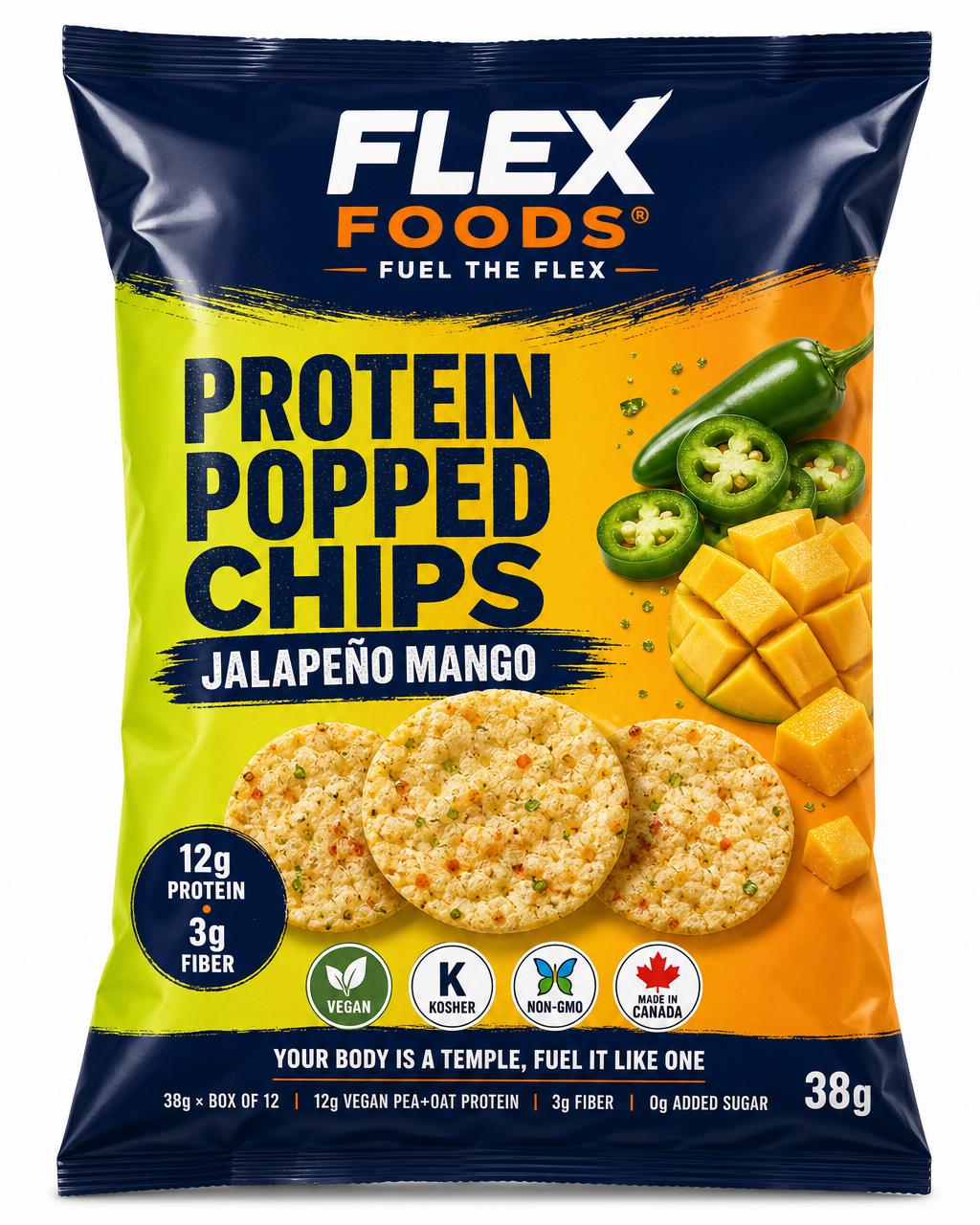
Look for that pairing in the list. Pea and oat. Pea and rice. Fava and quinoa. Our Protein Popped Chips use pea protein isolate plus oat protein for exactly this reason.
Step 3: do the per-100-calorie math
Grams of protein divided by calories, times 100. Under 4 and it's a carbohydrate snack. Over 6 and the protein claim is earned. Ours comes to 8.0.
Do this instead of comparing per-serving numbers, because declared serving sizes aren't standardised between brands and a generously large serving flatters the protein figure.
Step 4: check what 'vegan' is hiding behind
Two things worth a glance on any vegan snack.
Vitamin B12 and D. Not in a chip and not expected to be, but if you eat mostly plant-based, these come from fortified foods or a supplement, not from snacks. Don't let a vegan label do nutritional work it isn't doing.
Certification versus self-declaration. "Vegan" is not a legally defined term in Canada. Most brands using it are being straightforward, but third-party certification — or, more practically, a clean ingredient list you can read yourself — is stronger evidence than the word alone. Our guide to food certifications covers which symbols are audited and which are marketing.
What a good vegan protein chip looks like on paper
Filling in our own numbers as a worked example, per 38 g bag:
| Line | Value | What to look for |
|---|---|---|
| Protein | 12 g (24% DV) | ≥ 10 g, from two sources |
| Calories | 150 | Protein > 6 g per 100 cal |
| Fibre | 3 g (11% DV) | ≥ 3 g |
| Fat | 4 g | Low if baked or popped |
| Added sugars | 0 g | 0 g in a savoury snack |
| Sodium | 200 mg (9% DV) | < 15% DV per serving |
The honest caveat
No chip is the foundation of a plant-based diet. Legumes, tofu, tempeh, seitan and whole grains do that work at a fraction of the cost, and they always will.
What a well-built vegan protein snack does is cover the gap where plant-based eating most often falls short in practice — the 3pm slot, the gym bag, the airport, the moment when the alternative isn't lentils but whatever's in the vending machine. That's a narrow job. Judge it on that.