
Brand & Values
Sourcing Locally in British Columbia: The Supply Chain
How far our ingredients travel, why that number matters less than people think, and where local sourcing hits real limits.
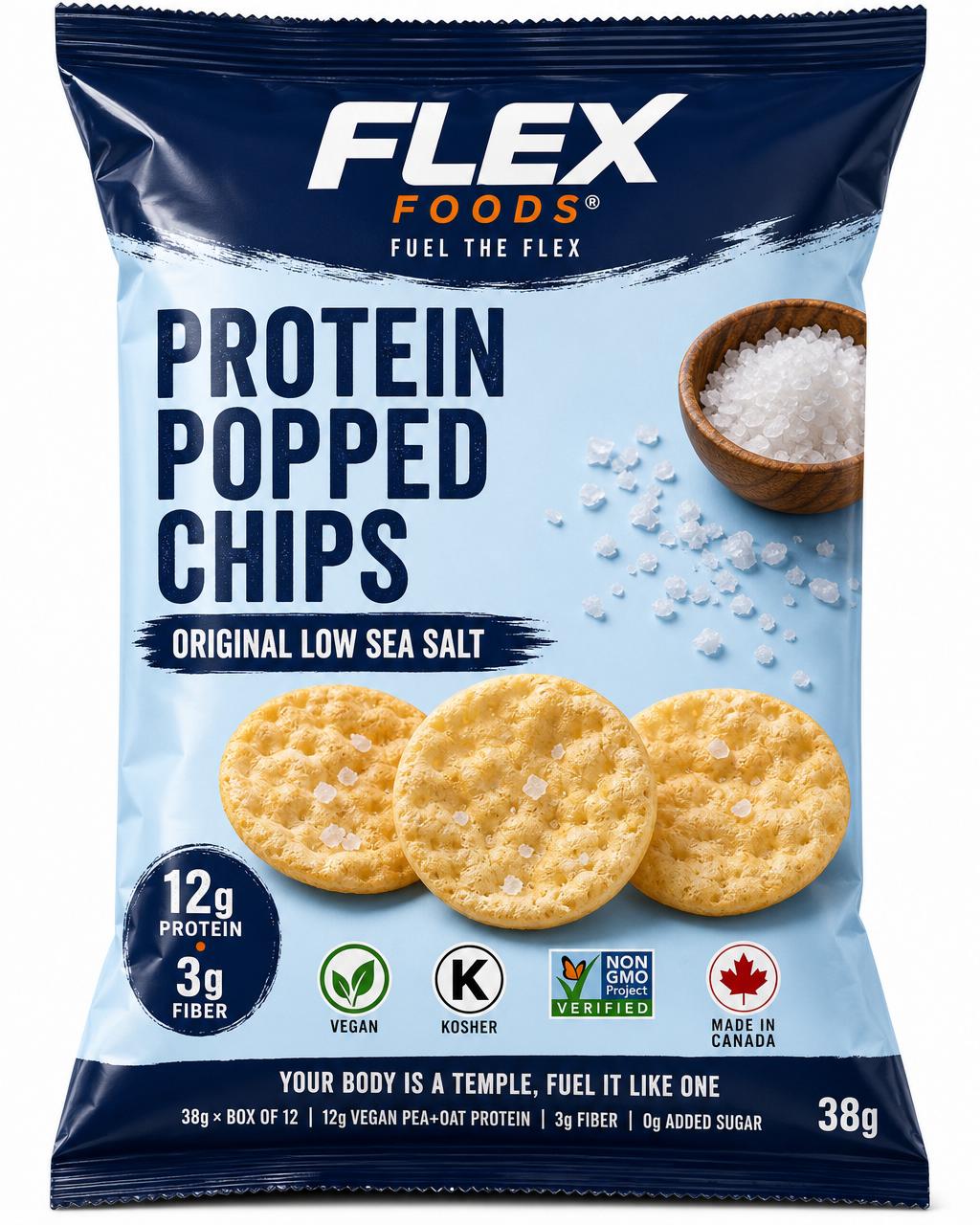
There's a maple leaf on our bag and "Made in Canada" on the front. Both are accurate, and neither tells you where the food inside was grown.
Worth explaining the difference, and being specific about where local sourcing works and where it doesn't.
What the claim legally covers
Under CFIA guidance, "Product of Canada" requires that all or virtually all of the food's contents, processing and labour are Canadian. A high bar.
"Made in Canada" requires that the last substantial transformation happened here. Where ingredients aren't all Canadian, the claim must be qualified — "from imported ingredients," or "from domestic and imported ingredients."
So the phrase describes where the food was made, not where everything in it was grown. Anyone implying otherwise on a spiced product is not being straight with you.
Our seven ingredients, by origin
Peas — genuinely Canadian, and it's a real advantage. Canada is among the world's largest producers and exporters of field peas, with the bulk grown in Saskatchewan and Alberta. Pea protein processing capacity in the Prairies has expanded substantially over the past decade. The largest ingredient in our chips comes from a domestic supply chain — that isn't a marketing coincidence, it's why building on pea protein was practical for a Canadian manufacturer in the first place.
Oats — also strongly Canadian. Again mostly Prairie-grown. Canada is a major oat producer and exporter.
Brown rice — not Canadian. Rice isn't grown commercially here at any scale. This one is imported and there's no domestic alternative.
Sunflower oil — partly domestic, partly imported. Sunflowers are grown in Manitoba, but crushing and refining capacity and global commodity flows mean supply isn't cleanly national.
Spices — almost entirely imported. Black pepper, cumin, coriander, cardamom, chili. None of these grow in British Columbia, and no amount of localism changes the climate.
So: two of the three main structural ingredients are domestic, one isn't, and the flavour system is global. That's the honest picture for any seasoned food made in Canada.
Why Burnaby specifically
Metro Vancouver has one of the denser food manufacturing clusters in the country, and three practical things follow from being in it.
Proximity to the equipment. Popped chips are process-sensitive — moisture content, mould temperature and dwell times measured in fractions of a second, as described in what popping does to a chip. Iterating on that across an ocean by email is slow and expensive. Iterating in person is a Tuesday afternoon.
Port and rail convergence. Vancouver is Canada's largest port. Prairie pea protein arrives by rail; imported spices arrive by sea. Being where those meet shortens the inbound chain.
Regulatory proximity. Federally registered food businesses operate under the Safe Food for Canadians Regulations, requiring a licence, a documented Preventive Control Plan, and traceability one step forward and one step back. Being close to your own facility makes that documentation something you verify rather than receive.
What local manufacturing genuinely changes
Recall speed. The underrated one. If something goes wrong, traceability determines how fast affected lots get identified and pulled. A short, domestic, well-documented chain resolves in hours. A long international one takes days, and days matter.
Audit access. You can walk in. Facilities you can visit unannounced behave differently from facilities you can't.
Verifiable labour standards. BC employment standards, WorkSafeBC, and the ability to meet the people making your product. Offshore contract manufacturing may well be compliant — verification is much harder.
Where the argument runs out
Three limits, because local sourcing gets oversold and we'd rather not do that.
Local does not mean lower carbon. For most foods, transport is a small share of lifecycle emissions and production practices dominate. Shipping by sea is remarkably carbon-efficient per tonne-kilometre. A food grown efficiently far away can carry a lower footprint than one grown inefficiently nearby. "Food miles" is a weaker proxy for environmental impact than it intuitively feels. Our sustainability page takes this further.
Local does not mean higher quality. There are excellent and poor facilities on every continent. Geography isn't a quality system; documented process control is.
Local costs more. Canadian manufacturing labour and facility costs exceed most offshore alternatives, and that shows up in our price. It's a legitimate reason to buy something cheaper. We think the trade is worth it; you're entitled to weigh it differently.
What to ask any brand
- Is it "Product of Canada," "Made in Canada," or "Made in Canada from imported ingredients"?
- Which specific ingredients are domestic?
- Is the manufacturer the brand, or a contract facility? Both are fine; knowing is informative.
- Can you find the city on the package? Vagueness about location is usually deliberate.
Ours is on the back of the bag: manufactured in Burnaby, BC. That's the standard we'd hold anyone else to. More in inside a BC snack facility.