
Seasonal
Snacks That Fit in a Ski Jacket Pocket
Cold weather burns more energy than you think, and a chairlift is a bad place to be hungry.
A day on the hill is deceptively expensive metabolically, and the food situation is deceptively bad. Lodge food is overpriced and mostly fried, the lineup at noon costs you a run, and a chest pocket is not a lunchbox.
Some honest physics, then a pocket list.
Why cold weather costs more energy
Three separate mechanisms, and together they add up more than most people account for.
Thermoregulation. Maintaining core temperature in the cold requires energy. Shivering thermogenesis is the obvious version, but non-shivering thermogenesis runs continuously in cold conditions and has a real metabolic cost.
Load and bulk. Boots, skis, layers. Moving in stiff insulated clothing costs more than moving in a t-shirt, and carrying equipment up stairs and across parking lots adds up over a day.
Altitude, if you're high enough. Above roughly 2,500 m, resting metabolic rate rises modestly and appetite is often suppressed — a genuinely awkward combination. Most Canadian resorts sit below the altitude where this becomes significant, but Rockies terrain can reach it.
The practical effect: cold-weather sport is a situation where under-fuelling is common precisely because you don't feel as hungry as your expenditure warrants. Cold blunts thirst too, which is why dehydration on the hill is more common than people assume.
The pocket constraint, honestly
What actually fits and survives in a jacket pocket is a shorter list than any general snack article suggests.
What a chest pocket does well: it's warm, from body heat, which matters because most things freeze. It's flat and narrow. It holds one or two thin items.
What it does badly: compression. Everything in a chest pocket gets pressed against you every time you tuck, crouch or fall.
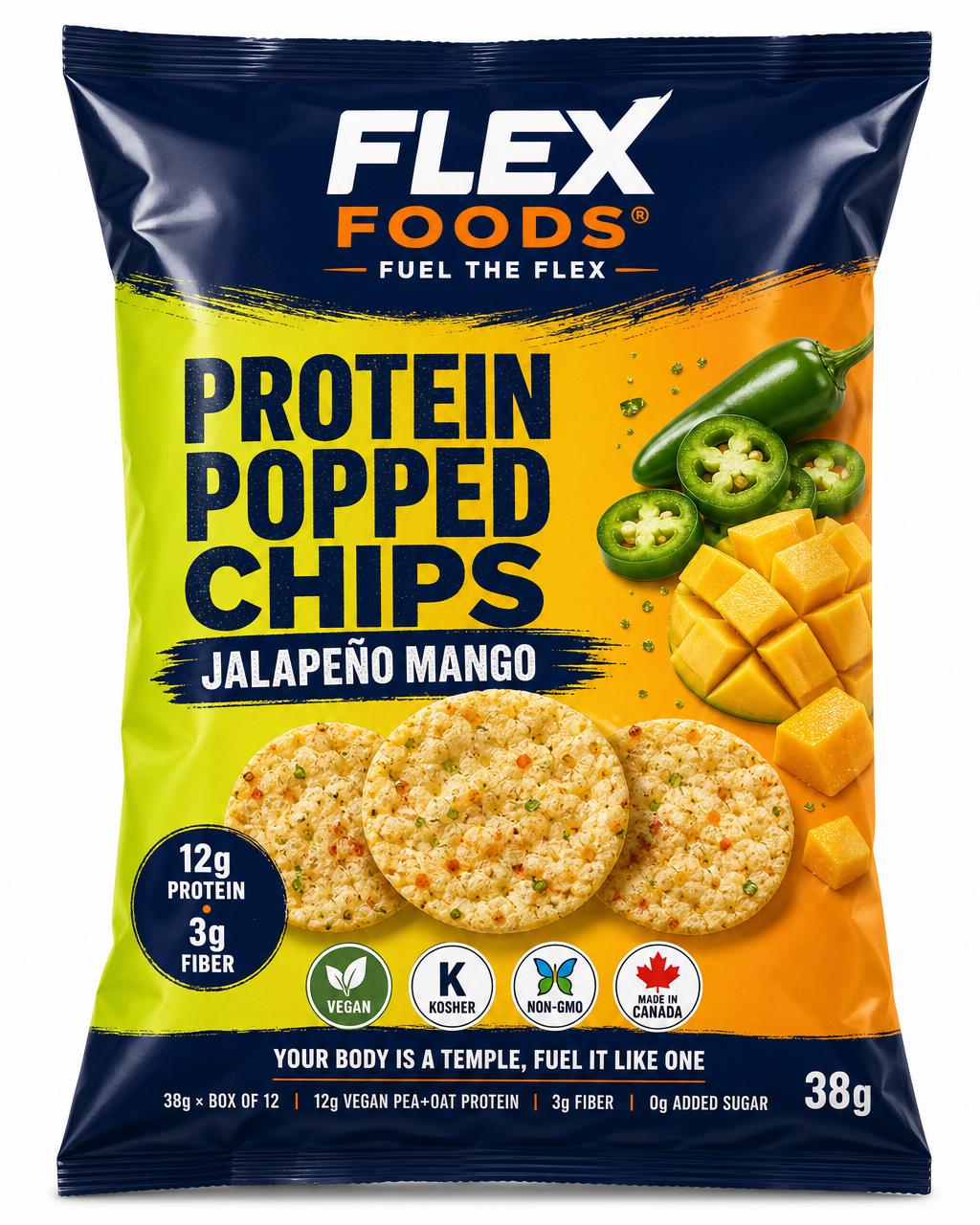
Which means an inflated, aerated snack bag is honestly a poor chest-pocket item. A 38 g bag of Protein Popped Chips is well suited to a jacket's larger cargo pocket, a pack lid or a bag left in the lodge locker for the afternoon reset — the chips are still perfectly edible crushed, but you'd rather they weren't. Bars and jerky are the genuine chest-pocket options.
We'd rather say that than pretend our product is the answer to every slot.
The pocket list
Chest pocket, immediately accessible
- Protein or energy bar. Flat, compression-proof, and body heat keeps it chewable. A frozen bar is genuinely difficult to eat — this is the main argument for the inside pocket over the outside one.
- Plant jerky. Thin, flexible even when cold, high protein, no melt risk.
- Dried fruit or fruit leather. Fast carbohydrate for a genuine energy need, and stays pliable.
Cargo pocket or pack
- Sealed protein chips. 150 calories, 12 g protein, 3 g fibre — a real snack rather than a sugar hit, and boldly seasoned enough to appeal when you're cold and appetite is blunted.
- Roasted chickpeas or nuts. Calorie-dense and durable. Nuts are the best calories-per-gram option on this list.
- A soft flask or insulated bottle. The single most important item, and the one most often skipped.
Locker or lodge bag
The afternoon reset: something with real protein, plus water. This is where a proper snack beats a bar, because by 1pm you want food rather than fuel.
The three mistakes
Skipping breakfast because you're rushing to first chair. The most common and most costly. Fifteen minutes of eating buys you three hours of competence.
Running on sugar all day. The classic hill diet — hot chocolate, gummies, a pastry from the mid-mountain hut — produces a spike-and-dip cycle that leaves you flat and clumsy by mid-afternoon. Fatigue and poor decision-making are not trivial when you're moving fast on hard snow. Some protein and fibre in the mix flattens the curve; the mechanism is in why your chips crash you at 3pm.
Not drinking. Cold suppresses thirst, dry winter air accelerates fluid loss through respiration, and you're sweating under insulation without noticing. Mild dehydration degrades coordination and concentration, and gets mistaken for tiredness or hunger all day.
Timing across a ski day
A rough structure that works for most people:
- Before first chair — a real breakfast with protein. Not a coffee.
- Mid-morning, around 10:30 — a pocket item on the lift. Small.
- Lunch, early rather than at noon — 11:30 beats the queue and beats the crash. A protein-forward snack from your locker is faster and better than the lodge line.
- Mid-afternoon, around 2:30 — the second pocket item. This is the one that determines whether the last hour is fun.
- Après — actual food, with protein. You've earned it and your recovery needs it.
For the equivalent problem on foot with a pack, see hiking snacks ranked by protein per gram carried.