
On The Go
Road-Trip Snacking Across Canada Without a Drive-Thru
The Trans-Canada is 7,800 kilometres of drive-thrus. A glovebox strategy for not eating all of them.
Long-distance driving in Canada presents a specific nutritional problem: the gaps between towns are large, and what's available in those gaps is almost entirely fried, sweetened, or both. Northern Ontario alone will test any dietary intention you brought with you.
The fix is packing, obviously. The interesting part is that a car is a genuinely harsh storage environment, and most road-trip snack advice ignores it entirely.
What a car actually does to food
A parked car in direct summer sun becomes an oven. Interior temperatures can exceed 50 °C within an hour on a hot day, and dashboard and glovebox surfaces run hotter still. In a Prairie August that's not an exaggeration.
Three consequences.
Fats oxidise faster. Rancidity is a temperature-accelerated chemical reaction. Nuts, seeds and anything oil-based degrade considerably faster in a hot car than in a cupboard — you'll notice a paint-like or cardboard note. This is a flavour and quality problem rather than a safety one, but it's the reason the almonds you've been carrying since May taste wrong.
Seasoning and texture degrade. Heat cycling drives moisture migration. A crisp snack held at 45 °C for weeks softens; spices lose volatile aromatics.
Anything perishable becomes unsafe. The food-safety danger zone runs roughly 4–60 °C, and a hot car sits squarely in it. Sandwiches with meat or dairy, cut fruit, cooked rice, pre-mixed protein shakes — none of these belong in an unrefrigerated car for more than a couple of hours.
Winter has the mirror problem: things freeze, thaw, and freeze again. Most dry snacks handle it fine. Anything with moisture doesn't.
The three-container system
The reason road-trip snacking goes wrong isn't the food. It's that everything ends up in one bag on the passenger seat, within reach, and gets grazed continuously for eleven hours.
Split it:
Container one — within reach. One portion per person, per leg of the drive. This is the only food you can access while moving. When it's gone, it's gone until the next stop.
Container two — the trunk. The bulk supply. Refilling container one requires stopping, which is exactly the friction you want. Also keeps the stock out of direct sun.
Container three — the cooler, if you have one. Anything perishable, plus water. A cheap cooler with two ice packs extends the viable food list enormously and costs less than two roadside meals.
This is the same principle as single-serve packaging — put the decision point somewhere useful rather than renegotiating with yourself every ten minutes. More on why that works in portion sizes for high-protein snacking.
What survives the glovebox
Heat-tolerant and shelf-stable
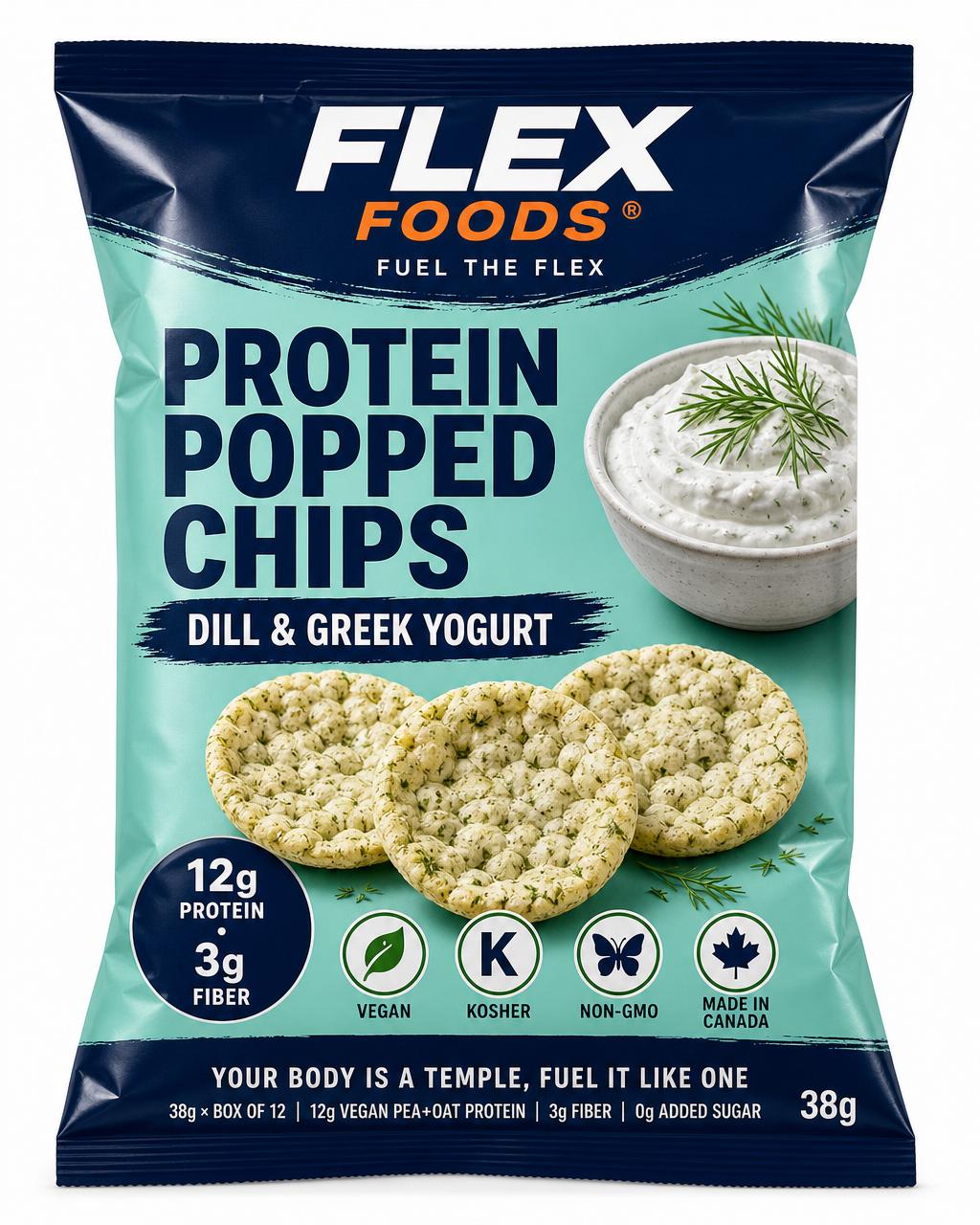
- Sealed single-serve protein chips. Low water activity, sealed barrier film, no refrigeration. A 38 g bag of Protein Popped Chips is 150 calories, 12 g protein, 3 g fibre. Store them in the trunk rather than on the dash — heat won't spoil them but it will dull the seasoning over weeks.
- Roasted chickpeas and fava beans. Among the most heat-tolerant options, and 6 g of fibre per serving.
- Plant jerky. Dense, durable, no melt risk. High sodium, which matters more when you're sitting still all day.
- Rice cakes. Bulky and crushable, but almost indestructible chemically.
- Dried fruit. Stable and useful for a genuine energy need. Concentrated sugar, so pair it with protein rather than eating it alone.
Cooler only
Hummus, plant yogurt, cheese, cut vegetables, boiled eggs, sandwiches, anything mixed. All excellent food. None of it belongs at ambient car temperature.
Leave at home
Chocolate on any summer route. Bananas, which bruise into liquid by hour three. Anything in glass. Anything requiring cutlery you won't have.
Why protein specifically matters on a long drive
Driving is a sustained-attention task, and sustained attention is where blood-sugar swings hurt most.
The standard road-trip snack profile — chips, candy, a sweetened coffee, a pastry from a service station — is almost entirely rapidly digestible carbohydrate. Glucose rises quickly, insulin responds, and glucose then dips. Larger post-meal dips correlate with more hunger and lower reported energy, which on a highway means both more snacking and more fatigue.
Protein and fibre both slow gastric emptying, flattening that curve. It's the same mechanism behind the afternoon slump, which we work through in why your chips crash you at 3pm.
Practical version: make one snack per stop a protein-forward one, and keep the sweet stuff as a genuine treat rather than the baseline.
The Canadian-specific bits
Distances are longer than the map suggests. Between Thunder Bay and Winnipeg, or across northern BC, gaps of two to three hours between meaningful services are normal. Pack for the gap, not the average.
Fuel stops are your restock points. You'll stop every three to four hours regardless. Use those stops to move food from trunk to cabin, refill water, and walk for five minutes — the walk does more for alertness than anything you can eat.
Winter changes the calculus. Keep a genuine emergency food supply in the trunk from November through March on any long route, alongside a blanket and a shovel. Not snacks — actual calories that will keep, in case you're stopped for hours. This is standard advice from provincial transport authorities and it's worth following.
Water is the underrated item. Air conditioning and dry winter air both dehydrate you, mild dehydration reads as hunger, and it degrades concentration. Two litres per person, per day, in the car.