
On The Go
High-Protein Snacks for the Gym Bag That Survive Being Forgotten
A gym bag is a hostile environment. What survives three weeks of being forgotten in one.
The gym bag is where good nutrition intentions go to die. Not because people don't stock it — because what they stock doesn't survive.
A banana lasts two days. A protein shake mixed in advance lasts a few hours before it becomes a science experiment. A sandwich lasts until roughly lunchtime. Then the bag gets zipped, thrown in a car, left in a trunk, and opened again eleven days later.
So the real question isn't what's nutritionally optimal. It's what's still edible when you actually need it.
The four conditions a gym-bag snack has to survive
Compression. Bags get sat on, stacked, and crammed under benches. Anything soft becomes a paste.
Heat cycling. A car trunk in Vancouver in July can exceed 50 °C. In February it drops below freezing. Anything with chocolate, or anything relying on refrigeration, is out.
Time. Realistically weeks, not days. If it needs a best-before date you have to think about, it will go bad before you eat it.
Smell. The bag also contains damp clothes. Anything that absorbs odour, or emits one, is a problem for everyone in the change room.
What actually works
Tier 1 — genuinely bombproof
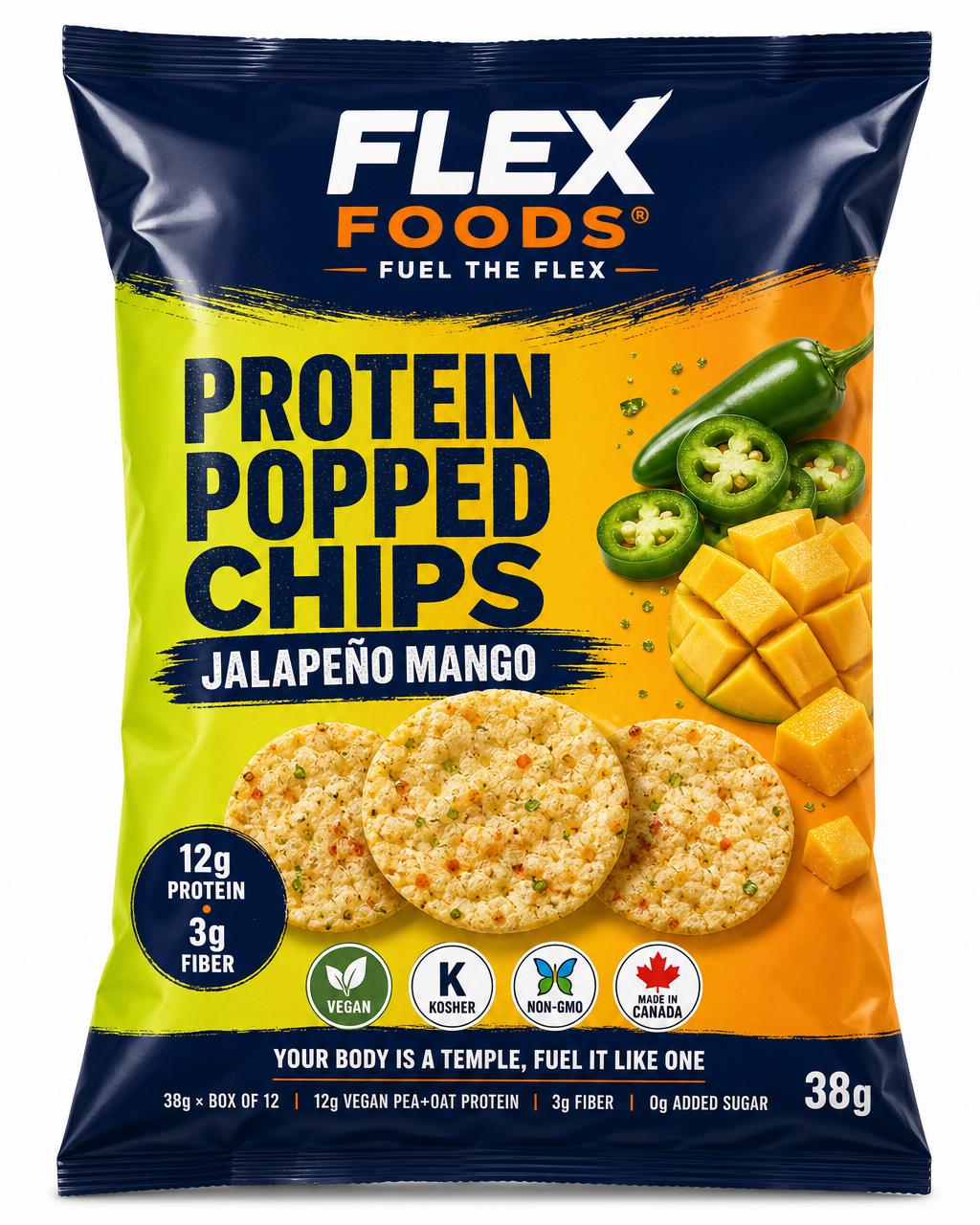
- Sealed single-serve protein chips or crisps. Nitrogen-flushed barrier film, months of shelf stability, no refrigeration, no odour transfer. A 38 g bag of Protein Popped Chips is 150 calories, 12 g of protein and 3 g of fibre. The honest weakness: the bag is puffed and takes up more volume than its weight suggests, and it will crush if you sit on it. Crushed chips are still edible, which is more than can be said for a crushed banana.
- Roasted chickpeas or fava beans. Extremely durable, 7 g protein and 6 g fibre per serving, and the best fibre-per-dollar on this list.
- Plant-based jerky. Compression-proof, dense, high protein. Watch sodium — some run 500 mg+ per serving.
- Protein bars. The single most crush-resistant option. Their weakness is the opposite of the chips': dense, over in ninety seconds, and texture fatigue sets in fast. We compare the two in protein chips vs protein bars.
Tier 2 — good with caveats
- Nuts and seeds. Excellent nutrition and durability. The caveat is oxidation: the fats go rancid over months, especially in heat. Rotate them, and buy small.
- Single-serve nut butter sachets. Survive anything. Messy to eat without a spoon, and 190 calories in two mouthfuls.
- Shelf-stable protein drinks. Nutritionally excellent, 20–30 g of protein. Heavy, bulky, and a leaking one destroys a bag.
What to stop putting in there
- Fruit, unless it's for the same day
- Anything containing chocolate — it melts, then sets around everything else
- Pre-mixed shakes. Milk-based protein in a warm bag is a genuine food-safety issue, not just an unpleasant one.
- Yogurt, cheese, boiled eggs. All fine in a cooler bag; none fine in a gym bag.
- Loose anything. If it isn't sealed, it will end up in the bottom of the bag.
The two slots you're actually filling
Most people stock one snack and use it for both jobs, which is why it never quite fits. They're different problems.
Pre-workout, 30–60 minutes out. You want something light and mostly carbohydrate, small enough not to sit in your stomach. Dense protein and fat both slow gastric emptying, which is useful for satiety and unhelpful when you're about to squat. A modest portion, not a full snack.
Post-workout, within a couple of hours. Here you want protein, and more of it than a single bag provides. The evidence points to roughly 20–25 g per sitting to maximally stimulate muscle protein synthesis in younger adults, higher for older adults. A 12 g snack is a bridge to a meal, not the meal.
The practical answer: keep the durable snack for the post-workout bridge — the gap between finishing and actually eating — and accept that the real protein arrives at dinner. Chasing a perfect post-workout window is less important than most gym-floor conversation implies, as long as your daily total lands. Our guide to daily protein needs covers that.
The restock system that actually holds
Stocking a gym bag is easy. Keeping it stocked is the part that fails.
Three rules that make it stick:
- Restock on a fixed day, not when it runs out. An empty bag is discovered at the worst possible moment — hungry, post-workout, next to a vending machine. Sunday works for most people.
- Keep three, not one. Two for the two slots above, one spare for the day you forget lunch. More than three and the oldest one ages out.
- Rotate flavours. This is the one people skip and it's why bags go stale in every sense. Appetite for a specific flavour declines with repeated exposure faster than appetite for food generally, so the same snack every session gets less appealing within about two weeks. A variety pack solves it structurally — six flavours, identical macros. It's the main practical argument for buying a case rather than single bags.
The bag audit
Open yours now. Take out anything you wouldn't eat today, note what's been in there longer than a month, and count how many of the remaining items need a fridge.
Most people find one viable snack and three things they've been carrying around for no reason. Fixing that takes about four minutes and it's the highest-return nutrition intervention available to anyone who trains after work.