
On The Go
Shift Work Snacking: Fuelling a 3am Break
When your lunch break is at 3am, your body is metabolically somewhere else. Snacking accordingly.
Shift work is one of the genuinely hard nutrition problems, and most advice about it is written by people who have never worked a night.
The difficulty isn't finding food at 3am, though that's annoying. It's that your body processes food differently at 3am than it does at 1pm, and no amount of discipline changes that. Working with it beats fighting it.
What actually happens overnight
Nearly every metabolic process runs on a circadian rhythm, coordinated by a master clock in the hypothalamus and by peripheral clocks in the liver, pancreas, gut and fat tissue. These are entrained mainly by light, and they do not flip when your shift pattern does.
Two consequences that matter for eating.
Glucose tolerance is lower at night. The same meal eaten at 3am produces a larger and longer glucose rise than eaten at midday. Insulin sensitivity follows a daily rhythm and is at its lowest in the biological night. This is well replicated in controlled laboratory studies of simulated shift work.
Digestion slows. Gastric emptying and gut motility both reduce overnight, which is a substantial part of why night workers report reflux, bloating and general gastrointestinal complaint at higher rates than day workers.
Longer term, epidemiological research consistently associates shift work with elevated risk of metabolic syndrome and type 2 diabetes. Diet is one contributor among several — sleep disruption and light exposure matter a great deal too — but it's the one you have most control over on a Tuesday.
To be clear: this is general information. Shift work interacts with individual health in ways worth discussing with your own clinician, especially if you have existing metabolic or sleep concerns.
The three things to actually do
1. Make the overnight meal the smaller one
The most consistent recommendation from shift-work nutrition research: eat your main meal during the biological day, and keep the overnight intake lighter.
In practice, for a night shift, that means a substantial meal before you leave — treat it as dinner even if it's at 6pm and feels like lunch — and then modest, protein-forward snacks across the shift rather than a full meal at 2am.
This runs against the instinct to "have lunch" at the middle of the shift. The instinct is social; the physiology disagrees.
2. Go protein-forward, not carbohydrate-forward
Given that overnight glucose tolerance is reduced, a large refined-carbohydrate load at 3am is the worst-case combination. The vending machine and the 24-hour drive-thru both specialise in exactly that.
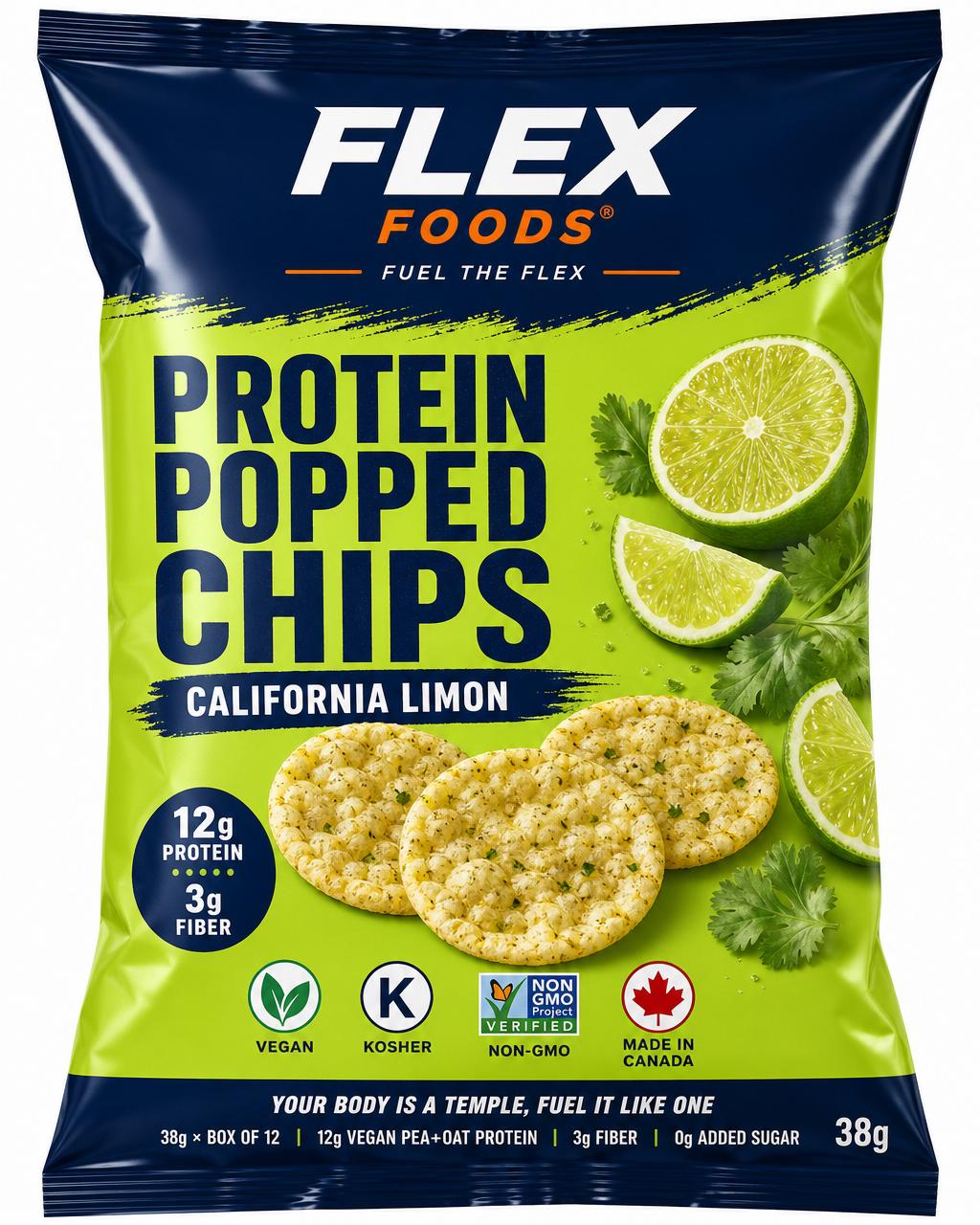
Protein and fibre both slow gastric emptying, which blunts the glucose rise, and protein triggers satiety hormones directly. A 38 g bag of Protein Popped Chips is 150 calories, 12 g protein and 3 g fibre with no added sugar — the specification matters more than the product, and the same logic applies to roasted legumes, plant jerky or a hard-boiled egg if you have a fridge.
The mechanism is the same one behind the afternoon slump, described in why your chips crash you at 3pm. It's just amplified overnight.
3. Stop eating before the drive home
Two reasons. Eating close to sleep worsens sleep quality and reflux, and daytime sleep after a night shift is already compromised. And a large meal at 7am — biologically early morning, when cortisol is rising — is another poorly timed glucose load.
A small protein snack if you're genuinely hungry, then sleep. The real meal comes after.
Caffeine, which deserves its own section
Caffeine has a half-life of roughly five hours, meaning a quarter of a dose is still circulating ten hours later. On a night shift that arithmetic is unforgiving: coffee at 4am is still meaningfully active when you're trying to sleep at 9am.
The practical guidance from shift-work sleep research is to front-load caffeine in the first half of the shift and stop well before the end — commonly cited as at least six hours before intended sleep, though individual metabolism varies substantially and some people need considerably longer.
Naps before a shift are more effective and less costly than caffeine during one, where the job permits it.
The practical shift kit
Assume no fridge, no microwave, and a break that gets interrupted.
- Two protein-forward sealed snacks. Interruptible — you can eat half a bag, seal it, and come back. That matters more than it sounds when a break gets cut short.
- One piece of fruit or some cut vegetables if you have any cold storage.
- A large water bottle. Dehydration is common on nights, and it reads as fatigue and as hunger.
- Something warm that isn't caffeinated for the back half — herbal tea or broth. The ritual of a hot drink does real work for alertness and comfort without the sleep cost.
Rotating shifts, the hardest case
If your schedule rotates, your circadian system never fully adapts to anything, and strategies built around a stable night pattern don't apply.
The most defensible approach is consistency in what you can control: keep meal composition stable even when timing can't be, anchor eating to a consistent point in each shift rather than to clock time, and protect sleep opportunity aggressively. Light exposure management — bright light during shifts, dark glasses on the commute home, blackout curtains — probably does more than any dietary change.
For the food-logistics side of odd schedules, our desk drawer audit covers building a stash that survives irregular hours.