
On The Go
Office Snack Ideas That Aren't Doughnuts: A High-Protein Restock List
A restock list for breakrooms and home offices, built around shelf-stable food that doesn't cause a 3pm crash.
Office snacking is a systems problem disguised as a willpower problem. Nobody chooses a doughnut at 3pm because they've thought it through. They choose it because it's the only thing within reach, and reaching is the whole decision.
Which means the fix is upstream: what's in the cupboard when the decision gets made. Here's a restock list built for that.
What an office snack actually has to do
Five constraints, and most snack advice ignores at least three of them.
- No refrigeration. Shared fridges are contested, unreliable and occasionally biohazardous. Assume you don't have one.
- No preparation. If it needs a knife, a plate or a rinse, it won't happen on a busy day.
- No smell. This is a social constraint but a real one. Fish, eggs and reheated curry make you unpopular.
- No sugar crash. A snack that spikes and drops leaves you worse off at 4pm than if you'd eaten nothing. See the science of sugar crashes.
- Portion-defined. Open bags on a shared table get grazed continuously. Single-serve stops it.
Protein and fibre are what deliver on the fourth point. Single-serve packaging delivers on the fifth. Everything below is filtered on all five.
The core restock list
Tier 1 — always in stock
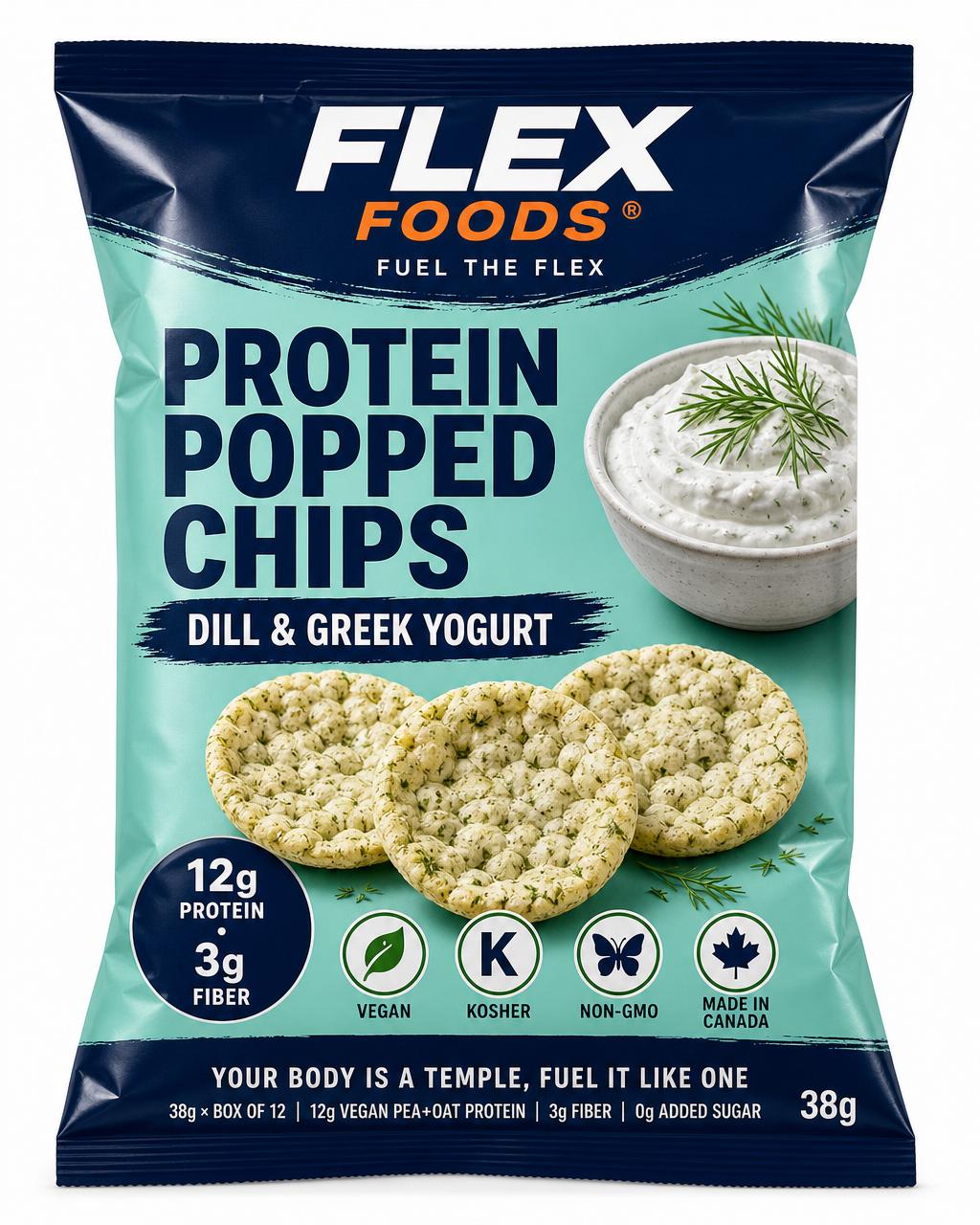
- Protein popped chips or crisps — 12 g protein, 3 g fibre, 150 calories, savoury, single-serve, no smell. The variety pack matters more than you'd expect, for reasons below.
- Roasted chickpeas or fava beans — 7 g protein, 6 g fibre per serving. Best fibre-to-calorie ratio on this list, and cheap.
- Mixed nuts, portioned — high protein and fat, very energy-dense. Portion into small containers or buy single-serve; a shared bowl of nuts is 800 calories nobody accounted for.
- Protein bars, one flavour you actually like — for the day a meeting eats your lunch hour. Read the sugar line; the range across the category is enormous.
Tier 2 — rotate through
- Roasted edamame — 11–13 g protein per 30 g serving, among the best in the category
- Pumpkin seeds — 9 g protein per 30 g, plus magnesium and iron
- Plant-based jerky — savoury, high protein, watch the sodium
- Whole fruit — apples and oranges specifically, because they survive a desk drawer
- Rice cakes plus single-serve nut butter — the only Tier 2 item needing assembly, and it's minimal
What to actively remove
- Anything in a bowl on a shared surface. Visibility drives consumption more than hunger does.
- Bulk candy, biscuits and the perpetual cookie tin
- Flavoured yogurts and granola bars marketed as healthy — frequently 12–18 g of sugar with 2–4 g of protein
- Large shared bags of anything, protein snacks included. The packaging format is the intervention.
The variety point, which is the actual insight
Most office snack initiatives fail the same way. Someone buys a case of one sensible item, everyone eats it enthusiastically for eight days, and by week three it sits untouched while the doughnut box empties.
The mechanism is sensory-specific satiety: appetite for a specific flavour and texture declines with repeated exposure faster than appetite for food in general. It's not a failure of discipline. It's a well-documented perceptual effect, and it will defeat any single-item restocking plan.
The fix is rotation. Stock three to four different items rather than a case of one, and prefer variety packs where they exist. Six flavours of the same chip means the sensory experience changes daily while the nutrition doesn't — 12 g of protein whether it's Tikka Masala or Original Sea Salt.
This one change does more for long-term adherence than upgrading the nutritional quality of any single item.
Quantities, if you're buying for a team
A workable starting estimate: 0.7 snacks per person per day in the office. For a team of ten on a hybrid schedule averaging three days in, that's about 21 units a week — so a 24-pack roughly covers a week, and a monthly order of four cases plus two Tier 2 items runs the cupboard without waste.
Restock on a fixed day rather than when things run out. Empty cupboards are when the doughnuts win, and "we'll order more soon" is how a good system dies.
The home office version
Different failure mode. The problem isn't scarcity, it's that the entire kitchen is fifteen feet away and boredom reads as hunger.
Two adjustments:
Keep snacks out of the kitchen. Put a small box of single-serve items on the desk. Counterintuitive, but the point is that going to the kitchen should be a deliberate act, not the default response to a dull email.
Portion the day's snacks in the morning. Two items on the desk, decided once while you're not hungry. Decisions made in advance are better than decisions made at 3pm, which is the whole principle behind meal prep applied at a smaller scale.
Our list of high-protein snacks for busy Canadians has more options if you're building a longer rotation.
The one-line version
Stock three or four single-serve, protein-forward items, rotate the flavours, restock on a schedule, and remove the shared bowl. The snack you eat is determined mostly by what's within reach — so manage reach, not willpower.