Nutrition 101
Are Popped Chips Healthier Than Fried Potato Chips? An Honest Breakdown
'Popped' is a process, not a health claim. Here's what it actually changes on the label — and what it doesn't.
Walk down any Canadian snack aisle and you'll see the word popped on a dozen bags. It sounds healthier than fried, and in most cases it is — but the word alone guarantees nothing. Popping is a manufacturing method. Whether the finished snack is worth eating depends on what went into the machine.
So let's do the comparison properly, using numbers instead of adjectives.
What frying does to a chip
A conventional potato chip is submerged in oil at roughly 175 °C. The potato slice loses most of its water and takes on oil in its place. That's the entire trick, and it's why fried chips taste so good — fat carries flavour and creates the specific brittle-then-greasy mouthfeel we're all trained to crave.
The cost shows up in the nutrition panel. A typical 40 g serving of fried potato chips lands around 220 calories with 13–15 g of fat, 2 g of protein and 1 g of fibre. Roughly 55% of the calories come from the oil the chip absorbed in the last ninety seconds of its life.
What popping does instead
Popping uses heat and pressure rather than an oil bath. A dough or grain is loaded into a mould, heated hard and fast, and the water inside flashes to steam. That steam expands the structure from the inside out and leaves behind an aerated, brittle disc. Oil, if it's used at all, is applied afterward in a thin coating — measured in grams, not as a cooking medium.
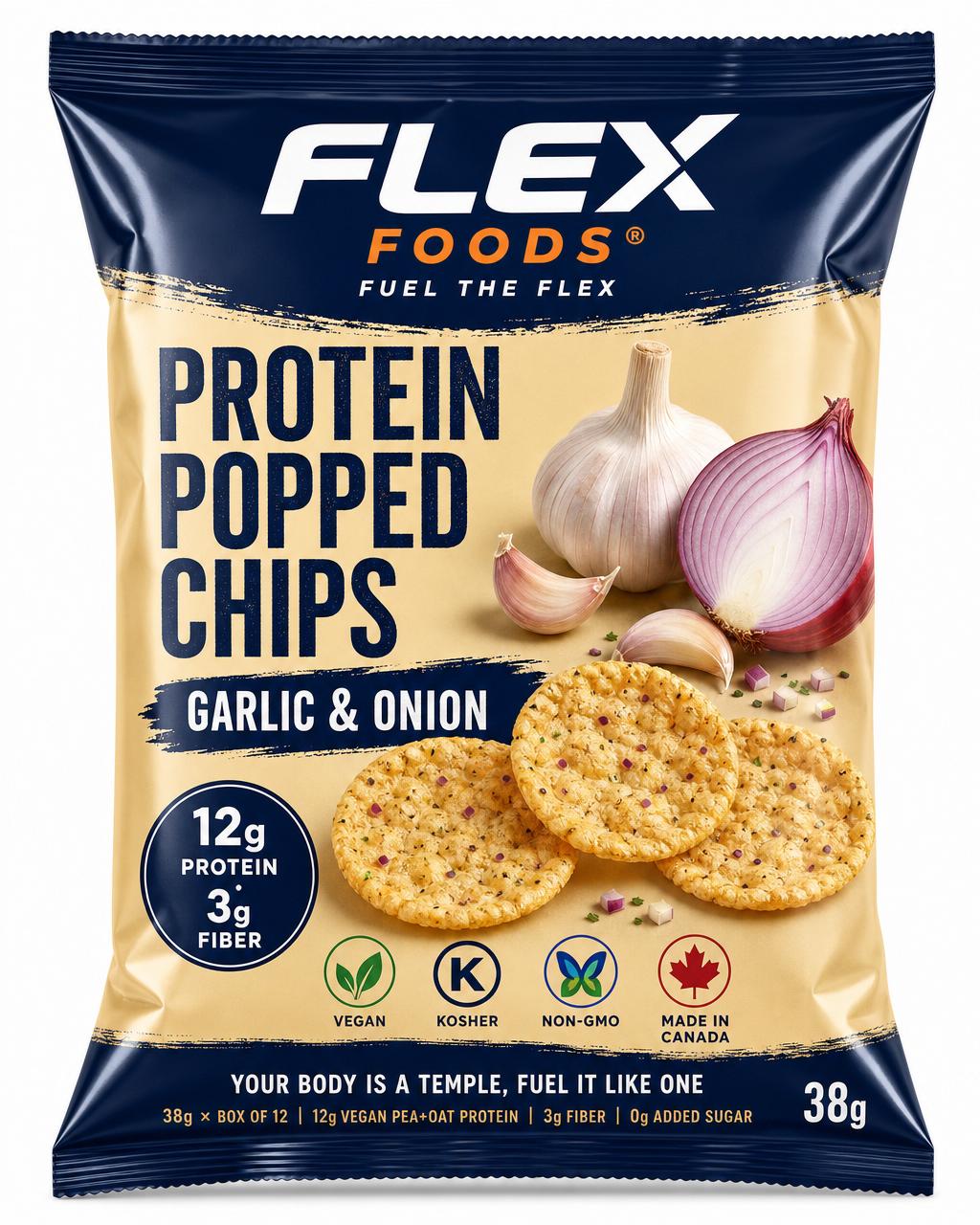
For our Protein Popped Chips, a 38 g bag comes to 150 calories with 4 g of fat. Same snack category, roughly a third of the fat.
The comparison that actually matters
| Per ~38–40 g serving | Fried potato chips | Protein Popped Chips |
|---|---|---|
| Calories | ~220 | 150 |
| Fat | 13–15 g | 4 g |
| Protein | 2 g | 12 g |
| Fibre | ~1 g | 3 g |
| Added sugars | 0–2 g | 0 g |
Notice which line moved the most. It isn't calories — it's protein, from 2 g to 12 g. And that has nothing to do with popping. It comes from building the chip out of pea protein isolate and oat protein instead of potato.
Where 'popped' gets oversold
This is the honest part. Popping is a genuinely lower-fat process, but plenty of popped snacks on the shelf are still nutritionally thin:
- Popped but starch-based. If the first ingredient is potato starch, corn meal or tapioca, you've swapped fat for refined carbohydrate. Fewer calories, similar lack of protein.
- Popped then heavily oiled. Some products spray on enough finishing oil to close most of the gap with frying. Check the fat line, not the process claim.
- Popped and sugared. Sweet seasonings are common, and 4–6 g of added sugar in a savoury snack isn't unusual.
The process word on the front tells you how the food was cooked. The panel on the back tells you whether it's worth eating. Those are different questions, and only one of them is answered on the front of the bag.
So are popped chips healthy?
Healthier than deep-fried chips, almost always. Healthy in isolation? That depends on what you're asking the snack to do.
If the job is "hold me from 3pm to dinner without a crash," a snack needs protein and fibre, because those are the two components most strongly linked to short-term satiety. A 150-calorie snack with 12 g of protein and 3 g of fibre is built for that job. A 220-calorie snack with 2 g of protein is built for pleasure, which is a legitimate thing to want — just not the same thing.
Our take, and we're obviously not neutral: stop asking whether a snack is healthy and start asking what it's for. Then read the panel and check whether it's actually equipped for the job.
Three checks before you buy any popped snack
- First ingredient. Is it a protein or a starch? That single line predicts most of the panel.
- Protein per 100 calories. Divide protein by calories and multiply by 100. Under 4 g is a carbohydrate snack. Over 6 g is a genuine protein snack. Ours works out to 8.
- Sodium against serving size. Compare on a per-100 g basis, because serving sizes are not standardised and a small declared serving flatters the number.
That's a fifteen-second read, and it will tell you more than any word on the front of the package.