Fuel Science
Zero Added Sugar, Still Sweet: Monk Fruit and Stevia, Explained
How a gummy tastes like candy and a smoothie tastes like dessert with 0g added sugar.
It's the question we get most: how is this sweet if there's no added sugar? The answer is two plants — and the craft of balancing them.
Meet the sweeteners
Monk fruit is a small gourd from Southeast Asia. Its sweetness comes from natural compounds called mogrosides, which are intensely sweet but contribute essentially no sugar or calories. Stevia comes from the leaf of the stevia plant, and works similarly — very sweet, plant-derived, no added sugar.
Why we blend the two
On their own, each has a signature. Some people notice a slight bitterness or a lingering note from stevia; monk fruit is rounder but pricier. Blended and balanced correctly, they cover each other's weak spots — you get clean sweetness without the "diet aftertaste" that gives sugar-free products a bad name. Getting that ratio right, per product, is a real part of our formulation work.
What "0g added sugar" does and doesn't mean
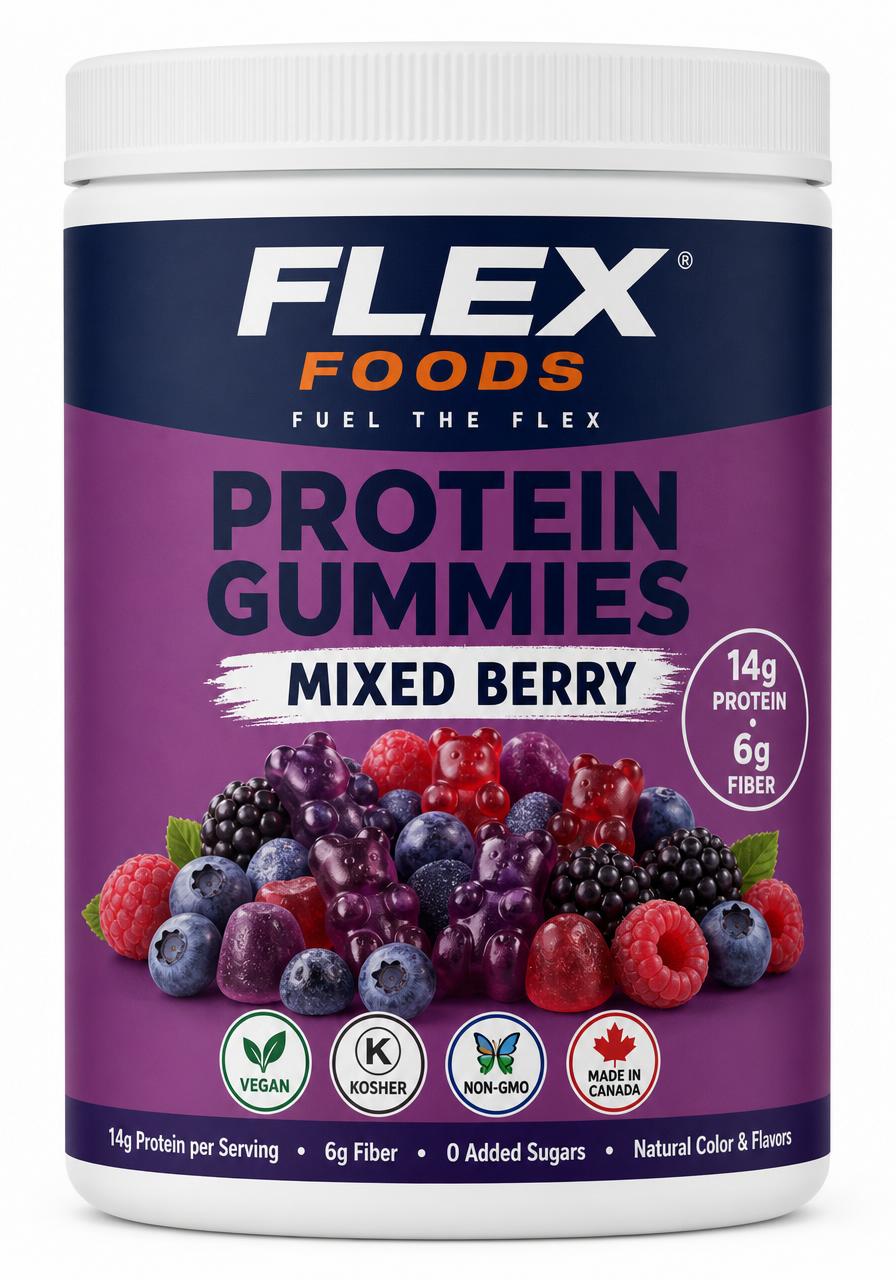
Zero added sugar means we're not pouring cane sugar, syrups or concentrates into the recipe to make it palatable. It doesn't mean flavorless — our Bricks taste like a cream cookie, our Gummies taste like candy, our Frozen Dessert tastes like ice cream. It also tends to mean no blood-sugar spike from added sugars and no mid-afternoon crash, which is a big part of why people keep these in the drawer.
The bigger point
Sugar is the lazy way to make food taste good. Removing it and keeping the crave-factor is harder — which is exactly why we bothered. Read our labels: the sweetness is real, the added sugar isn't.
Taste it for yourself — start with Flex Gummies or Flex Bricks.